
Waymo recalls entire driverless fleet to fix flood risk malfunction
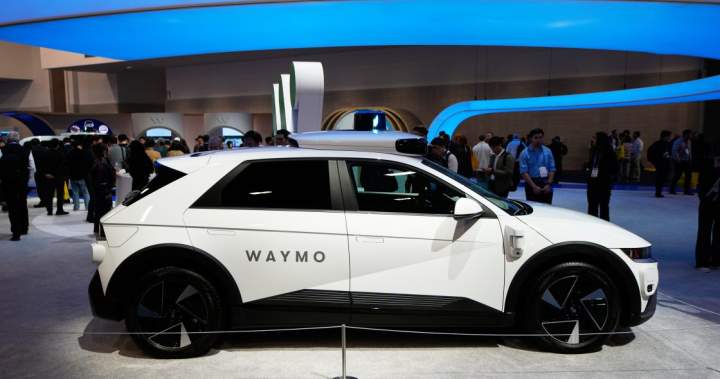
In a significant development for the burgeoning autonomous vehicle industry, Waymo, the commercial driverless taxi service, has announced a sweeping Waymo recall impacting its entire fleet. This critical safety measure addresses a software malfunction that could, alarmingly, direct its vehicles into flooded roadways, raising serious concerns about passenger and public safety.
The U.S. Department of Transportation outlined the issue in a recent correspondence, revealing that all 3,791 vehicles operated by Alphabet Inc.’s subsidiary are subject to the recall. The core problem? A software glitch that “may allow the vehicle to slow and then drive into standing water on higher speed roadways.” Such an oversight, the letter unequivocally states, dramatically increases the “risk of a crash or injury” by causing a loss of vehicle control.
This isn’t merely a theoretical concern. The recall follows an incident reported in April where a Waymo vehicle, devoid of passengers, brazenly navigated an “untraversable” flooded road in San Antonio during a torrential rainstorm. It’s a stark reminder of the unpredictable challenges autonomous systems face in real-world conditions.
Understanding the Waymo Recall
Waymo spokesperson Chris Bonelli acknowledged the company’s robust operations, stating they “provides over half a million trips every week in some of the most challenging driving environments across the U.S., and safety is our primary priority.” He further indicated that Waymo had “identified an area of improvement” concerning vehicle interaction with flooded major roadways. Swift action is underway: the company is “working to implement additional software safeguards” and has “put mitigations in place,” including refining extreme weather operations and restricting access to areas prone to flash flooding. For instance, public rides in San Antonio have been temporarily paused.
Fortunately, the software update won’t disrupt the continuous operation of Waymo’s services, which span numerous major U.S. cities like Phoenix, San Francisco, and Dallas. Updates will be seamlessly integrated when vehicles return to warehouses for routine maintenance, a testament to the agile nature of modern tech solutions.
Yet, this Waymo recall underscores a broader pattern of safety incidents plaguing the driverless car sector. Waymo itself is currently under federal investigation after one of its vehicles struck a 9-year-old girl at a pedestrian crossing in Santa Monica. Earlier, a voluntary investigation was launched last October due to reports of its taxis illegally passing stopped school buses. Beyond these, the company’s autonomous cars have been implicated in various other incidents, from obstructing emergency services at a shooting scene in Austin, Texas, to striking and killing a cat in San Francisco. There was even a peculiar moment where a self-driving car executed an illegal U-turn near a police vehicle, leaving officers unable to issue a citation.
Despite these mounting incidents, Waymo steadfastly defends its technology, asserting that it actually makes roads safer. The company frequently points to data suggesting its driverless cars consistently surpass human performance in avoiding crashes and significant incidents. For detailed technical specifications on this latest action, you can review the official safety notice issued by the U.S. Department of Transportation.