
Canada Day a moment of pride, patriotism and melanchony in Alberta
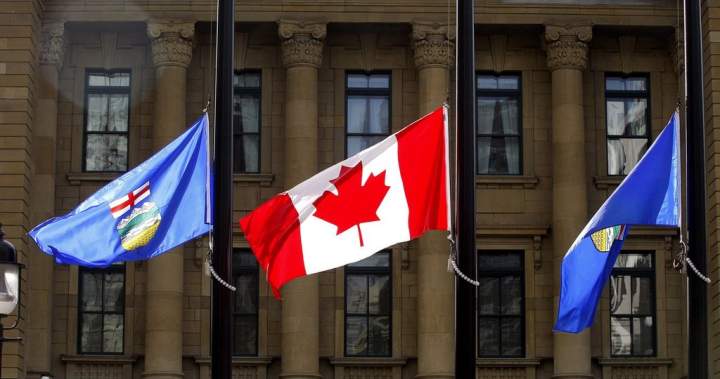
As Canada Day dawns, a profound moment of introspection grips Alberta. The province finds itself on the cusp of a critical decision, with a looming Alberta referendum set for October 19 that will determine its path forward within Confederation or toward separation. This isn’t merely a political squabble; it’s a deep-seated debate over identity, economics, and the very fabric of Canadian nationhood.
On one side stands Thomas Lukaszuk, the former deputy premier, fervently championing Canada. He’s back on the road, his “Unity Bus” — a motorhome emblazoned with the Maple Leaf — a beacon against what he perceives as divisive forces. Lukaszuk implores Albertans to cherish the freedoms Canada provides, envisioning the country as an undeniable global role model. His fervent petition, garnering over 400,000 signatures last year, sought to bypass this very referendum, aiming instead to cement a provincial policy unequivocally ruling out separation.
The Heart of the Alberta Referendum Debate
Conversely, Keith Wilson, a lawyer and staunch advocate for provincial independence, urges a stark reckoning. He points to the gnawing affordability crisis plaguing Albertans and the incessant political wrangling required to move the province’s vital oil resources, its economic lifeblood, through Ottawa’s labyrinthine approval processes. For Wilson, these issues underscore a fundamental misalignment, proving that the current federal system simply isn’t working for Alberta.
Premier Danielle Smith, while personally committed to keeping Alberta in Canada, acknowledges a decade-long litany of grievances held by many against Ottawa’s energy and environmental policies. She believes the upcoming vote offers a chance to resolve these enduring tensions, citing both Lukaszuk’s pro-Canada petition and a competing separatist petition (which a judge recently dismissed) as evidence of widespread desire to settle the matter at the polls. Lukaszuk, however, still clings to the hope that the referendum might be called off, viewing this period as a “moment of awakening” for Albertans.
“There comes a time, for every generation, where we have to stand up for what we stand for and be courageous and not allow negative forces to win simply because of apathy,” Lukaszuk proclaimed, setting the tone for his Canada Day campaign. He plans stops in Calgary and Edmonton, even unveiling a “Forever Canadian” beer in Red Deer. Meanwhile, Wilson will be in Mirror, a hamlet east of Red Deer, hosting an “Albertans’ Day Rally” — a celebration infused with an independence theme, complete with speeches, music, and children’s activities. He reflects on Canada’s 159th birthday with a mix of sadness and hope, lamenting how the country has changed economically and in terms of quality of life, contrasting it sharply with his vision of what Alberta could achieve independently.
The push for a resolution to the energy impasse highlights the intensity surrounding this Alberta referendum. Premier Smith’s upcoming announcement regarding a proposed bitumen pipeline to the West Coast and an associated energy deal with Prime Minister Mark Carney is designed to demonstrate that remaining in Canada yields tangible benefits. Yet, Wilson interprets the very necessity of such a deal as proof that Confederation is inherently flawed, asserting that “Ottawa controls Alberta” and stifles its prosperity. The province stands at a crossroads, pondering the very nature of its bond with the rest of the nation as citizens prepare for the ballot box. Understanding historical context of similar electoral processes can provide further perspective on this pivotal moment.