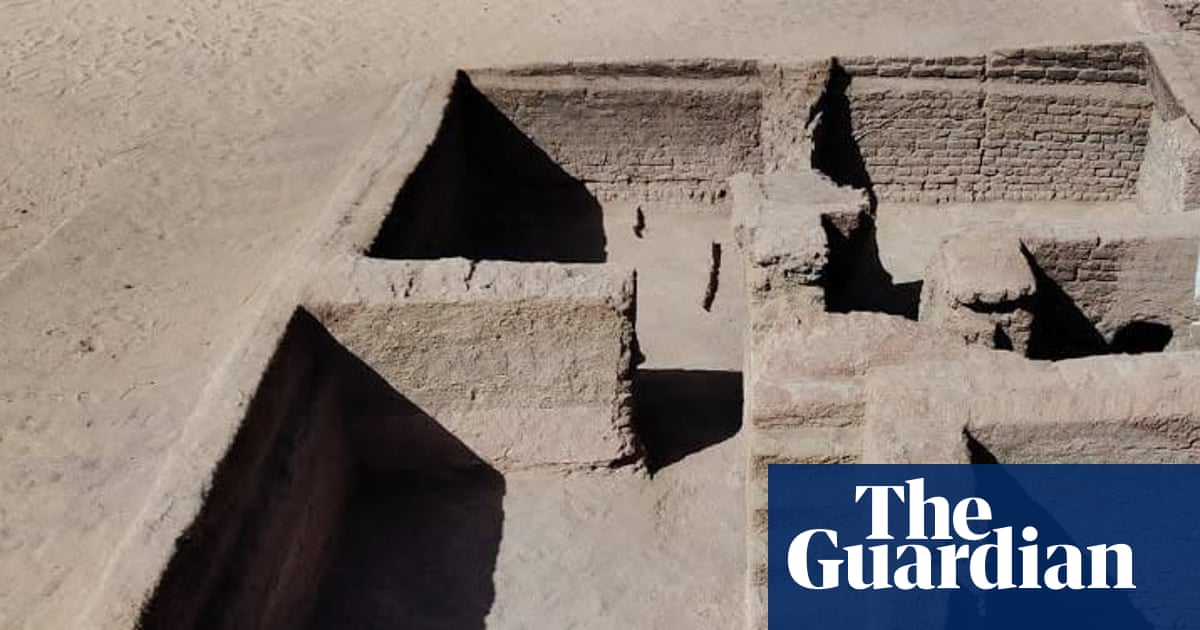
Egypt’s boundless sands have yielded another incredible secret: a remarkably well-preserved Byzantine city in the Dakhla oasis, offering an unprecedented window into a bygone era. This monumental discovery, announced by the Ministry of Tourism and Antiquities, sheds vivid light on daily life, intricate urban planning, and robust economic activities during Egypt’s integration into the vast Byzantine Empire.
Archaeologists delving into new finds unearthed this sprawling fourth-century settlement, which boasts residential quarters, sophisticated religious structures, and even a basilica-style church. Investigators uncovered a treasure trove of artifacts—from ancient coins and pottery fragments to everyday tools—painting a detailed picture of the community that thrived here. Hisham el-Leithy, secretary general of the supreme council of antiquities, detailed the city’s meticulously planned layout, featuring north-south thoroughfares intercut by east-west streets, culminating in open squares and public gathering places.
Unearthing the Ancient Byzantine City of Dakhla
Mahmoud Massoud, leader of the archaeological mission, highlighted a prominent basilica dominating the settlement’s core and the remnants of two watchtowers, silent sentinels guarding the city’s periphery. This Byzantine city site, nestled within Egypt’s New Valley province, is already on Unesco’s tentative list, edging closer to official World Heritage status. Explorers found heavily fortified structures, their thick defensive walls echoing tales of past vigilance, alongside numerous homes complete with grand reception halls and vaulted roofs.
Notably, the house of Tisous, a 14th-century church deacon, provides insight into early religious practices, believed to have functioned as a house church pre-dating the larger basilica. The ground beneath their feet revealed ancient bread ovens, bustling kitchens, stone grinding tools, and a fascinating array of bronze coins adorned with portraits of Byzantine emperors, Latin inscriptions, and Christian iconography. Gold coins, dating back to Emperor Constantius II’s reign (337-361 AD), further illuminate the period’s economic vibrancy. Diaa Zahran, head of the Islamic, Coptic, and Jewish antiquities department, spoke of approximately 200 pottery fragments, or ostraca, inscribed with commercial transactions and personal correspondence, offering intimate glimpses into daily existence within the ancient Byzantine city.
Concurrently, a separate expedition approximately 62 miles (100km) west of Alexandria, at the Marina el-Alamein archaeological site, brought forth 18 new ancient tombs. These ranged from deeply cut rock chambers to surface-built limestone tombs, pushing the total number discovered at the site to an impressive 48. Among the myriad finds were pottery vessels, amphorae, lamps, plates, altars, and limestone basins.
Eman Abdel-Khaliq, chief of this mission, announced the discovery of a 2.5-meter granite sarcophagus, complete with skeleton remains now under meticulous study. Intriguingly, nearby lay the vestiges of a plaster sphinx statue. A poignant discovery involved four gold pieces, or “golden tongues,” placed within the mouths of some deceased—a practice steeped in the funerary beliefs of the era. Scholars believe Marina el-Alamein was once Leukaspis, a thriving Greco-Roman port city from the second to fourth centuries.
About the Author