
US trade deficit surges amid artificial intelligence spending boom
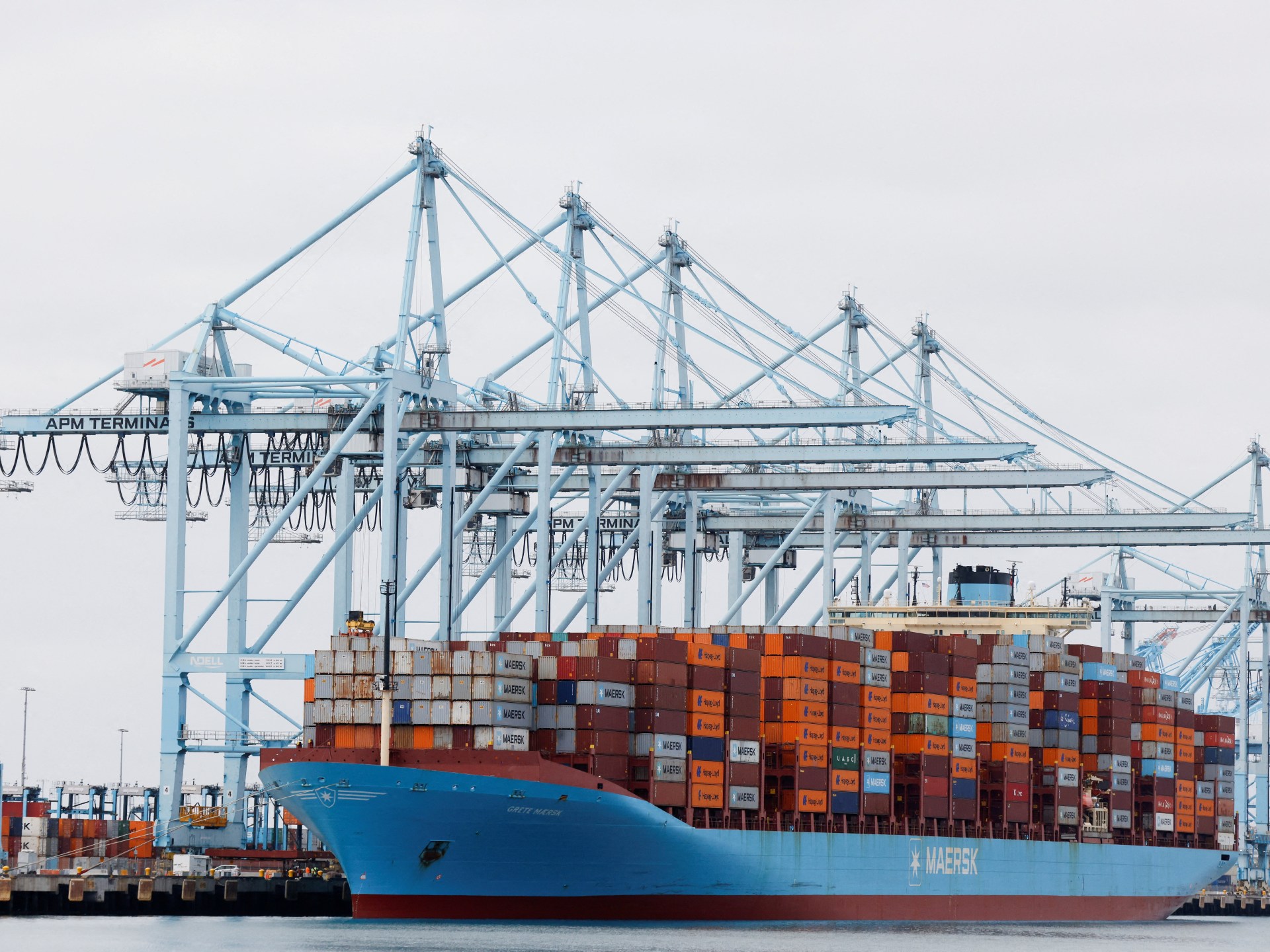
The economic landscape of the United States witnessed a startling development in May as the nation’s US Trade Deficit surged dramatically, reaching an alarming $77.6 billion. This substantial imbalance, a 42.2 percent leap from the previous month and the largest jump in a year, paints a vivid picture of robust import demand outstripping export capabilities, driven largely by a voracious appetite for high-tech goods and critical resources.
Understanding the Soaring US Trade Deficit
Imports, the lifeblood of consumer and industrial consumption, climbed 3.3 percent from April, hitting a staggering $395.3 billion. Conversely, exports experienced a dip, falling 3.2 percent to $317.7 billion. This widening chasm reflects an economy heavily reliant on external supply chains, particularly in sectors experiencing rapid expansion.
A significant portion of this surge in imports can be attributed to the burgeoning artificial intelligence sector. Semiconductors, the essential building blocks of AI technology, saw a notable $1.2 billion increase in imports. Pharmaceuticals and mobile phones also contributed significantly to the import growth, highlighting both consumer demand and strategic industry needs.
Beyond technology, the energy sector also played a crucial role. Petroleum imports climbed to an unprecedented level, with crude oil imports alone adding $1.5 billion to the total. Even as global events unfold, America’s energy requirements continue to influence trade figures profoundly.
Automotive Shifts and Global Flows
The automotive industry presented another layer to the complex trade narrative. Imports of automotive parts and engines jumped by $2.2 billion, with passenger car imports specifically increasing by $1 billion. This trend comes amidst a strategic push by carmakers to bolster production within the United States, a move spurred by heightened tariff pressures. Toyota, for instance, has committed a hefty $3.6 billion to expand its US auto production, planning to relocate Tacoma pick-up truck manufacturing to San Antonio, Texas, by 2030. Former President Donald Trump quickly seized on this development, proclaiming “tariffs at work” on his social media platform, Truth Social.
The US Trade Deficit isn’t uniform across all partners. In May, the nation recorded its largest deficits with Asian powerhouses and the European Union, specifically Vietnam ($20.6 billion), Mexico ($20.1 billion), Taiwan ($19.4 billion), China ($14.5 billion), and the European Union ($9.3 billion). Conversely, the U.S. maintained trade surpluses with countries like the Netherlands ($9.1 billion), Hong Kong ($5.6 billion), and Australia ($1.9 billion).
Meanwhile, to the north, Canada’s trade surplus expanded for the fourth consecutive month, reaching a four-year high. Goods shipped to the U.S. from Canada achieved their highest levels since February 2025, according to Statistics Canada, illustrating a dynamic bilateral trade relationship. Canada’s surplus stood at 4.24 billion Canadian dollars (US$2.98 billion), a 0.9 percent increase from the preceding month, offering a contrasting perspective on North American trade flows.
For more detailed insights into trade statistics, readers can refer to official government data from the Bureau of Economic Analysis.