Uganda is grappling with a profound humanitarian challenge, as the devastating Karamoja hunger crisis continues to escalate. Relentless drought and widespread crop failures have plunged the region into acute food shortages, affecting an estimated 1.5 million people who now face severe malnutrition. Following reports of at least 19 deaths, the Ugandan government has launched an urgent, large-scale emergency food relief operation.
For months, the Karamoja region, nestled in Uganda’s east, has endured a brutal dry spell, with the crucial April planting season yielding little to no rain. This ecological calamity has led to a desperate situation, with many families struggling to find even one meal a day. The Famine Early Warning Systems Network (Fews Net), a vital global system for tracking food security, had previously sounded the alarm, declaring the situation across Karamoja to be in crisis.
Addressing the Karamoja Hunger Crisis: A National Imperative
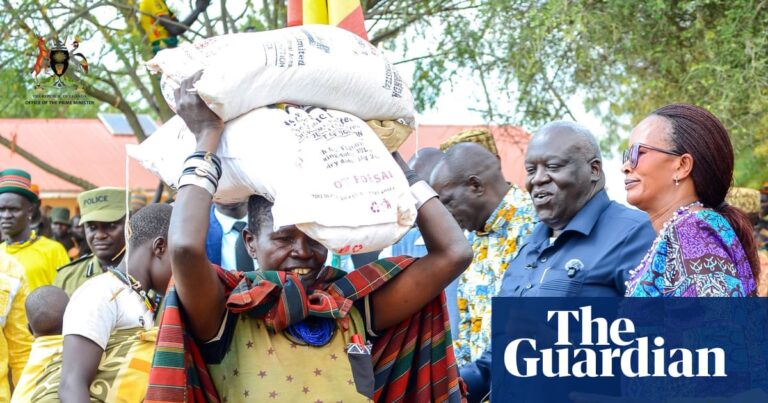
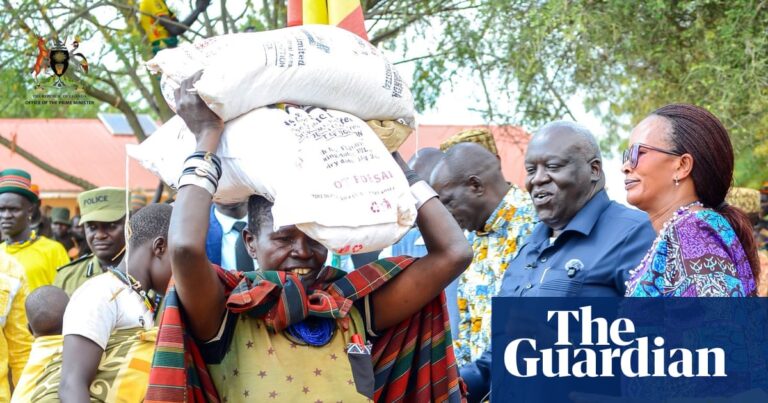
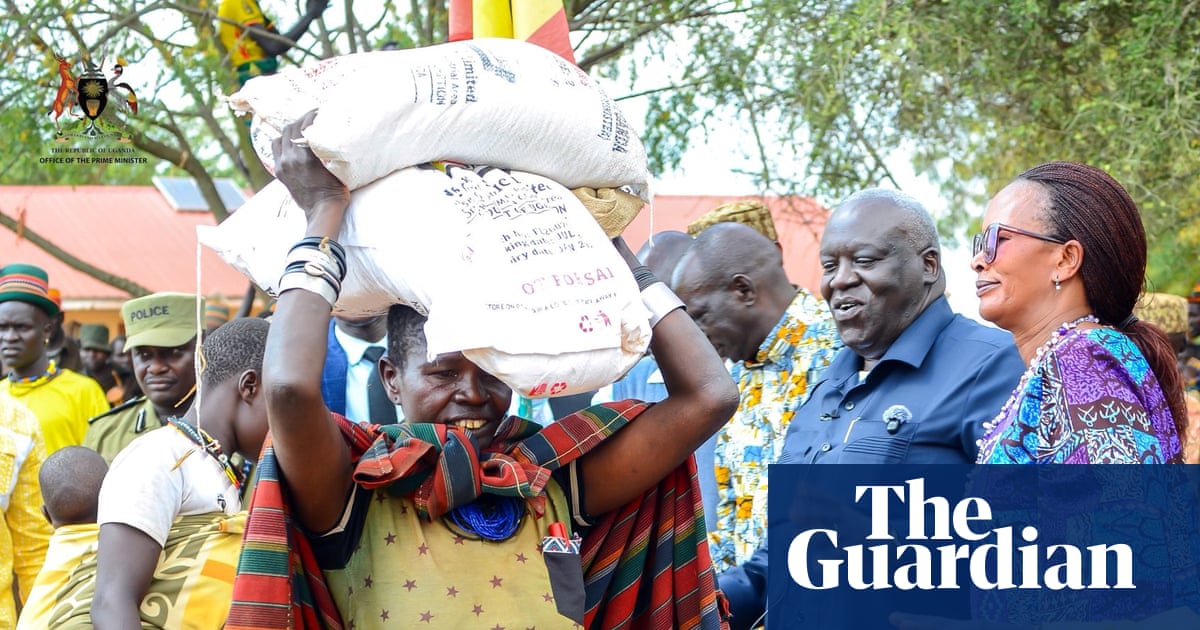
In a significant move to avert further tragedy, authorities have announced plans to distribute 9,400 tonnes of relief food over the coming two months. This ambitious initiative, funded by a 45 billion shilling (£9m) emergency parliamentary allocation, marks the government’s direct leadership in a landscape where traditional humanitarian aid has dramatically shifted. Sam Engola, the Minister for Disaster Preparedness and Refugees, personally oversaw the launch of aid distribution at a primary school in Lodiko sub-county, Kaabong district.
“The president does not want to hear of anyone in Karamoja dying of hunger,” Minister Engola declared emphatically. “I am here to supervise the distribution of this food to the end. I will ensure that everyone receives food. No one will be left behind.” His words offer a glimmer of hope to a population on the brink.
The human cost of this protracted crisis is harrowing. Angelina Nakiru, a 21-year-old mother of two from Rupa, shared her daily struggle to feed her children since all her crops failed. Each dawn, she joins other women at a dusty grinding mill, crushing rock for a meagre wage, all to buy a cup of maize and beans. “The work is dusty and exhausting, but it is the only way I can earn money to buy a cup of maize and beans to feed the children,” Nakiru revealed. “If I don’t, the children will sleep hungry.”
Across the region, health facilities are inundated with hundreds of children suffering from severe malnutrition. A June nutrition report starkly highlighted that nearly half the population in Karamoja’s Kaabong and Kotido districts are in a crisis situation. The recurring Karamoja hunger crisis is attributed by experts to a confluence of factors: climate change shocks, environmental degradation such as rampant deforestation and overgrazing, persistent poverty, and critically low agricultural productivity.
Beyond immediate relief, the government has affirmed its commitment to long-term solutions through the recently approved Karamoja regional development plan. This strategic blueprint aims to bolster communities’ resilience against drought. John Baptist Lokii, Minister for Karamoja Affairs, promised future provisions of “drought-resistant, disease-resistant and early-maturing seeds ahead of the next planting season.”
Agnes Kirabo, Executive Director of Uganda’s Food Rights Alliance (FRA), noted that while government leadership in distribution is a necessity, it also signals a strategic policy shift. Significant funding cuts from major donors like USAID have forced agencies such as the World Food Programme (WFP) to drastically scale back operations, impacting over a million refugees in Uganda alone. Kirabo, however, views this as an opportunity: “This transition should not be viewed solely as a reaction to aid cuts, but also as a positive shift towards nationally owned, sustainable development.”
Ultimately, while emergency food distribution provides vital short-term relief, it is not a permanent fix. “To break this cycle,” Kirabo stressed, “we must address the root causes of food insecurity through structural reforms.” The FRA advocates for access to food as a fundamental human right and urges the government to prioritize investment in water infrastructure and climate resilience. She concludes, “Ultimately, the Karamoja hunger crisis is a governance crisis. The government’s leadership in this emergency is welcome, but it must be matched by the political will to implement the systemic changes required to permanently protect the people of Karamoja and Uganda from predictable, preventable hunger.”
About the Author