
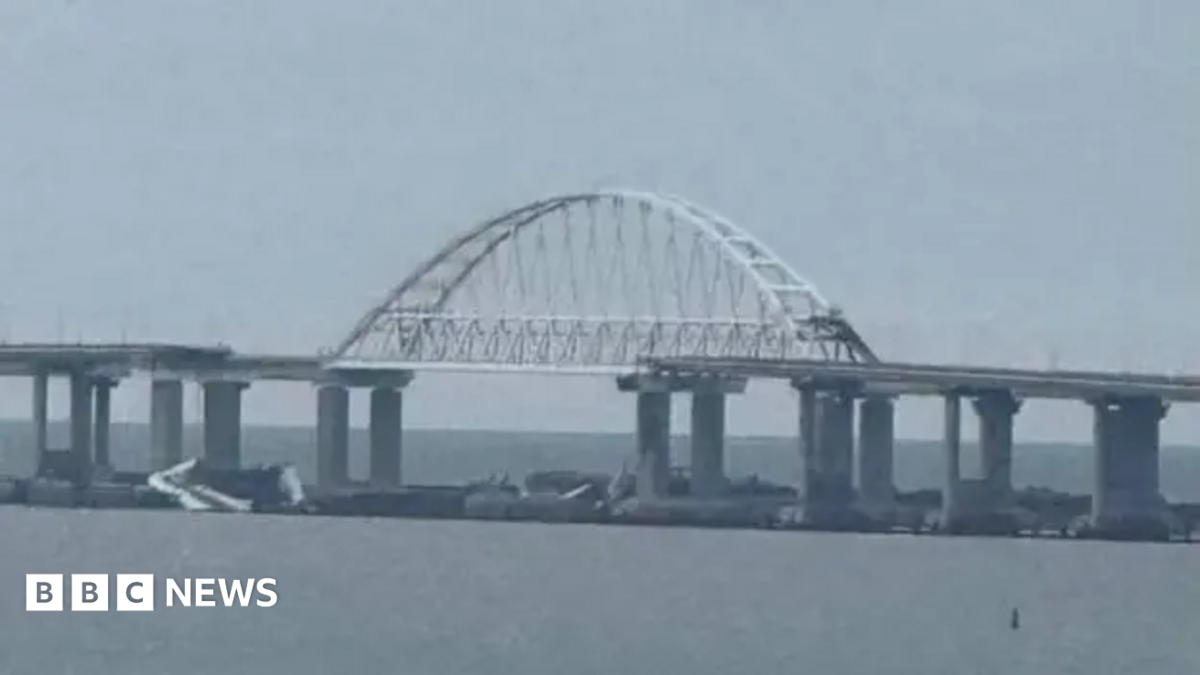
Putin’s Crimean Bridge partly collapses as Zelensky hails ‘unprecedented’ attack by Ukraine
Introduction & Key Takeaways
Ukraine has achieved a significant tactical victory with the partial destruction of the Crimean Bridge, an event President Volodymyr Zelensky has characterized as an unprecedented operation. By striking this vital infrastructure, Kyiv has delivered a profound logistical and psychological blow to the Kremlin. This explainer explores the complexities of the attack and its broader implications for the conflict.
- The Crimean Bridge, a key supply route for Russian forces, suffered severe damage following a coordinated drone and missile strike.
- The attack occurred shortly before a high-stakes diplomatic gathering involving Vladimir Putin, potentially undermining his international standing.
- While Moscow has promised to repair the damage, the strike highlights the increasing vulnerability of Russian-occupied territories.
- Kyiv remains steadfast in its defense, continuing to pressure the Crimean Bridge as part of its wider strategy to end the occupation.
Background & Context (What Just Happened?)
In the early hours of November 17, 2026, a series of precise explosions crippled the road section of the bridge spanning the Kerch Strait. Images verified by multiple sources reveal that a large arched section of the structure has collapsed into the water. This crossing is not merely a logistical asset; it is a personal monument to Vladimir Putin, who famously opened the route by driving a heavy truck across it in 2018. For Russia, the structure serves as the primary artery connecting the mainland to the illegally annexed peninsula. For Ukraine, its partial destruction is a potent signal that no piece of Russian-controlled infrastructure remains beyond the reach of their modern military assets.
Root Cause & Deep Dive Analysis (Why Did This Happen?)
The success of the operation is attributed to a sophisticated, multi-stage strategy. According to reports from Kyiv, the mission was months in development and involved the systematic neutralization of Russian air defense systems and radar arrays throughout the region. By creating a temporary blind spot in the Russian defensive perimeter, Ukrainian forces were able to deploy a combination of indigenous drones and Flamingo and Neptune cruise missiles. This tactical success underscores a shift in the modern battlefield, where long-range precision strikes have become essential for disrupting enemy supply chains. The decision to strike at this moment was also political. By damaging the structure just before a meeting between Vladimir Putin and leaders from China and the United States, Ukraine aimed to cast a shadow over the Kremlin’s projection of strength.
Strategic Implications & Future Impact (What Does This Mean Globally?)
The fallout from this attack reaches far beyond the immediate physical damage. Militarily, the Russian army now faces significant hurdles in moving fuel, ammunition, and reinforcements to the southern front. While a land corridor through Zaporizhzhia exists, it is frequently contested and suffers from similar pressure by Ukrainian forces. The logistical strain will likely force the Kremlin to rely on maritime routes or ferry crossings, both of which are highly vulnerable to drone-based interdiction. Furthermore, the symbolic nature of the strike cannot be ignored. The destruction of a project touted by the Russian state as a triumph of engineering serves to erode the perception of Russian invulnerability. This, coupled with the domestic pressure of rising costs, forces the Russian leadership to divert attention and resources toward defensive posturing rather than offensive momentum.
Conclusion & What to Watch Next
As the repair teams begin the difficult task of assessing the integrity of the remaining rail section, the world will be watching to see how the Kremlin chooses to retaliate. Historically, such symbolic defeats have prompted Russia to intensify its bombardment of civilian infrastructure in Kyiv and other major cities. The resilience of the Ukrainian people, who are no strangers to these threats, remains tested yet resolute. As global powers like China and the U.S. navigate these new developments, the path toward a resolution remains fraught with uncertainty. Maintaining pressure on the Crimean Bridge is a clear signal that the conflict is far from settled, and the strategic landscape of Eastern Europe continues to shift in ways that could redefine regional power dynamics for years to come.