
Serbia’s veteran ruler Vučić concedes election to student-led protest movement
Introduction & Key Takeaways
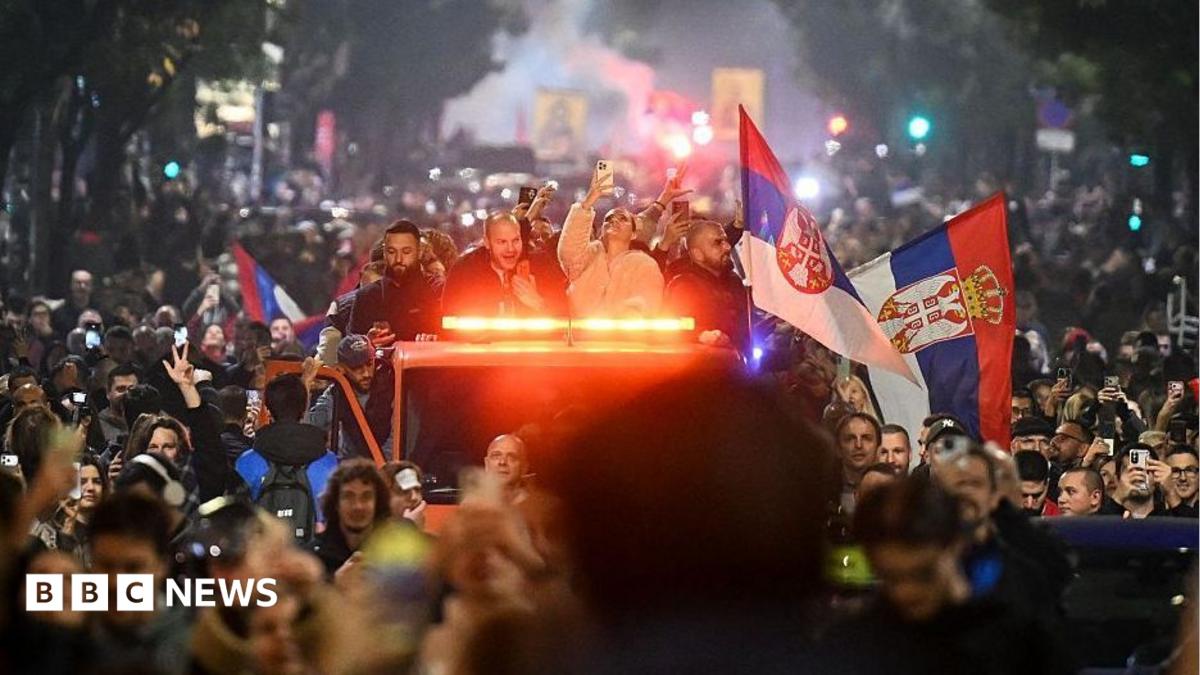
In a historic political shift, long-standing Serbian leader Aleksandar Vučić has officially conceded defeat following snap parliamentary elections, marking a turning point for the nation. The result represents a triumph for a burgeoning, student-led protest movement that has galvanized the public. This Serbia election outcome signals deep-seated fatigue with current governance, punctuated by years of unrest and a massive public outcry against perceived state negligence.
- Aleksandar Vučić conceded after preliminary results suggested a decisive victory for the opposition.
- The election was a referendum on corruption following the 2024 Novi Sad tragedy.
- The Student List, a diverse coalition of non-politicians, secured a historic parliamentary foothold.
- Voter turnout reached record levels, indicating high civic engagement across the country and the diaspora.
Background & Context (What Just Happened?)
The path to this political upheaval began in 2024, when a catastrophic collapse of a train station canopy in Novi Sad resulted in the tragic deaths of 16 individuals. This incident acted as the catalyst for two years of continuous, widespread protests. Citizens argued that the tragedy was not a mere accident but rather a symptom of institutional rot, systemic corruption, and a culture of impunity within the state infrastructure. As documented by Wikipedia, the political environment in Serbia has been dominated by the Serbian Progressive Party (SNS) for over a decade. Seeking to solidify his transition back to the role of prime minister, Vučić initiated these snap elections, expecting a traditional mandate. However, the electorate, fueled by the student-led movement, chose to dismantle the status quo instead.
Root Cause & Deep Dive Analysis (Why Did This Happen?)
The rise of the Serbia election protest movement cannot be attributed to a single factor. It is the culmination of long-term frustration regarding the erosion of democratic norms. The Student List, which emerged without a traditional hierarchical structure, successfully united doctors, academics, athletes, and local activists under a common banner: the restoration of institutional integrity. By focusing on tangible reforms, such as purging corrupt officials and depoliticizing the state broadcaster, the movement tapped into a universal desire for transparency. This mirrors broader regional trends where grassroots movements are increasingly challenging entrenched populist leaders who have struggled to address local grievances while maintaining complex geopolitical balancing acts, such as those discussed in global stability assessments.
Strategic Implications & Future Impact (What Does This Mean Globally?)
The defeat of a veteran leader like Vučić carries significant weight for the Western Balkans. Strategically, this change in leadership may necessitate a recalibration of Serbia’s relationship with the European Union. Vučić previously maintained a delicate position, supporting EU candidacy while resisting pressure to sanction Russia regarding the war in Ukraine. A new, mandate-driven administration will face immediate pressure to define its foreign policy alignment. Furthermore, the success of the Student List serves as a case study for political organizing in the digital age. It demonstrates that when traditional institutions fail to provide safety or justice, citizens are capable of mobilizing outside the standard party-list binary to exert meaningful change at the ballot box.
Conclusion & What to Watch Next
As the dust settles, the immediate future of Serbia election results will revolve around the formation of a governing coalition. The primary challenge for the incoming coalition will be to transition from a movement of protest to a body of governance. Critics remain wary of potential instability, but for now, the mood in Belgrade and Novi Sad is one of jubilation and relief. Observers should keep a close watch on how the new administration handles the internal bureaucracy and whether it can effectively address the legacy of the Novi Sad tragedy while navigating the complex geopolitical landscape that defined the previous decade of Serbian leadership.