In a dramatic realignment of global financial forces, Iran and China have intensified their collaborative efforts to dismantle the long-standing supremacy of the US dollar hegemony. Amidst escalating geopolitical tensions and a protracted conflict that has rippled through the world economy, Tehran and Beijing are leveraging their strategic partnership to elevate the Chinese yuan, particularly within the critical energy pathways of the Strait of Hormuz.
For decades, Washington has utilized the dollar’s unparalleled dominance in international trade to exert considerable influence and, at times, considerable pressure on adversaries and economic rivals alike. This financial leverage, often manifested through sanctions, has become a shared grievance for both Iran and China, fueling their desire to challenge US dollar hegemony.
A Bold Bid Against US Dollar Hegemony
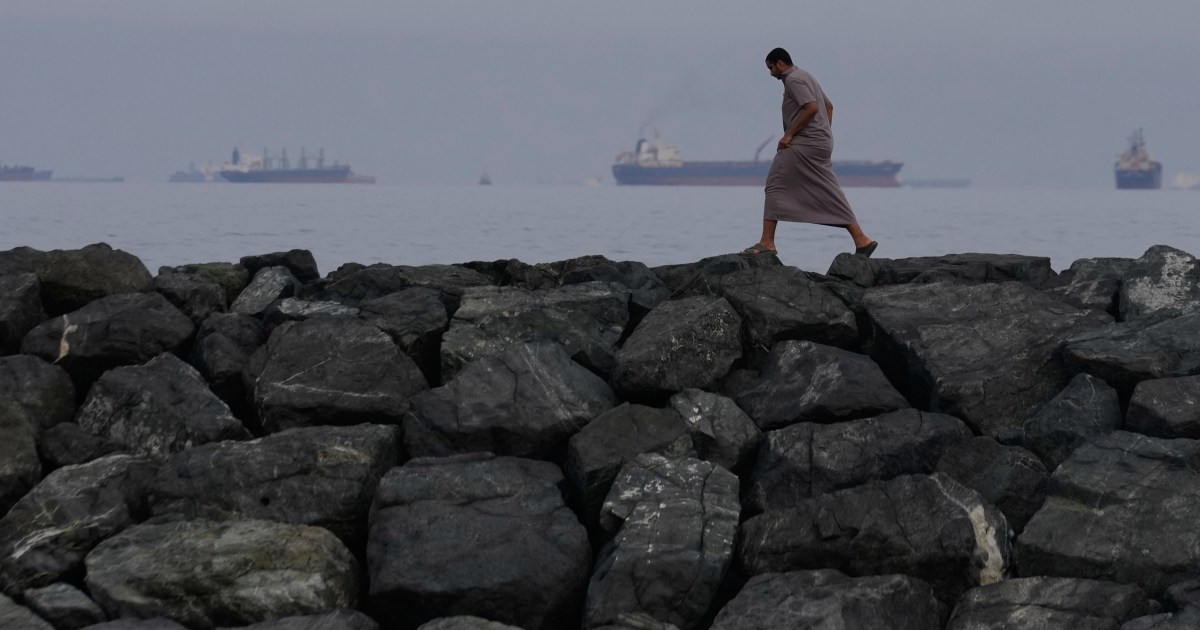
The Strait of Hormuz, a vital artery through which roughly one-fifth of the world’s oil and liquefied natural gas supplies flow, has become an unexpected battleground in this financial contest. Under a de facto toll booth system implemented by Iranian officials, commercial vessels traversing this strategic waterway are reportedly being charged transit fees in yuan. This innovative approach signals a deepening of Chinese-Iranian economic ties, explicitly facilitated by China’s currency.
While the precise number of yuan-denominated transactions remains somewhat opaque, reports from Lloyd’s List indicate at least two vessels made payments in the Chinese currency as of late March. This development even prompted an acknowledgement from China’s Ministry of Commerce, which appeared to confirm the yuan’s use in a social media post. Furthermore, Iran’s embassy in Zimbabwe recently championed the emergence of the “petroyuan” on the global oil market, a clear statement of intent.
Kenneth Rogoff, an economics professor at Harvard University and former chief economist at the International Monetary Fund, suggests a dual motive. “At one level, Iran is aiming to poke its thumb in the United States’s eye, adding insult to injury,” Rogoff remarked to Al Jazeera. “At another level, Iran is dead serious about preferring yuan to avoid US sanctions and to cultivate its ally, China, which has been moving steadily to redenominate its own trade, and that of the BRICS nations into yuan.”
This strategy offers a compelling win-win for both nations. Utilizing the yuan allows China and Iran to ingeniously circumvent US sanctions that are typically imposed through the dollar-centric financial system. Simultaneously, it streamlines and reduces the cost of trade between the two, an economic relationship that has flourished since their 25-year “strategic partnership” agreement in 2021. Professor Bulent Gokay of Keele University highlights Iran’s keen awareness of “the vital role of the dollar system and petrodollars.” For Beijing, Gokay notes, these actions perfectly align with its overarching ambition: to forge a “multipolar financial world where the US dollar’s central role is counterbalanced by the growing influence of emerging powers,” chipping away at US dollar hegemony.
Challenges to Yuan Dominance
Despite these significant inroads, the Chinese yuan faces an arduous uphill battle to genuinely challenge the greenback’s entrenched position. Unlike the freely convertible dollar, the yuan is subject to Beijing’s stringent capital controls. This means businesses and institutions cannot freely exchange it for other currencies or move it across borders without significant regulatory hurdles. Furthermore, the Chinese government’s tight grip on its financial institutions, including its central bank, raises concerns about market transparency and predictable regulatory frameworks, which are crucial for broader international adoption.
Statistics vividly illustrate this disparity. While the dollar’s share of central bank foreign exchange reserves has gradually declined over decades, it remains the overwhelmingly dominant global reserve currency. The IMF reported that the dollar constituted 57 percent of worldwide holdings last year, a stark contrast to the euro’s approximately 20 percent and the yuan’s mere 2 percent. Moreover, cross-border trade settled in yuan stood at only 3.7 percent in 2024, a modest increase from less than 1 percent in 2012, according to S&P Global.
Alicia Garcia-Herrero, chief economist for Asia Pacific at Natixis, cautions against overstating the immediate impact. “This is not really what is going to ‘de-dollarise’ the world,” she observed, suggesting the use of yuan in the Strait of Hormuz merely “adds incremental pressure and normalises alternatives in energy flows.” True “de-dollarisation,” she contends, would necessitate the involvement of Gulf states, who have historically pegged their oil prices to the dollar since the 1970s following security agreements with the US. For a deeper understanding of the global economic landscape, one might consult various global economic reports.
However, the long-term view presents a more nuanced picture. Hosuk Lee-Makiyama, director of the European Centre for International Political Economy, emphasizes China’s unique position. “China purchases nearly all of Iran’s oil, and their trade is actually in balance since Iran can get all the machinery and industrial goods that it cannot get elsewhere,” he noted. Historically, currencies from powers like Europe or Japan struggled to displace the dollar because they couldn’t fully meet the import needs of oil-producing nations. China, conversely, stands as “perhaps the closest the world has seen to a manufacturing one-stop shop.”
Dan Steinbock, the founder of the Difference Group consultancy, said that while the supremacy of the US dollar would not change in the short-term, the growing use of yuan could “chip away” at American dominance in specific sectors over time. “Overall, it is a question of gradual erosion rather than an abrupt substitution,” Steinbock told Al Jazeera. Rogoff, the Harvard economist, said much would depend on the endgame of the war and ensuing fallout in the coming years. “If Iran and China prevail, under most scenarios, it will encourage countries to diversify away from the dollar financial system so as to protect themselves from being held hostage to US financial sanctions,” said Rogoff, who has argued that the dominance of the dollar has already peaked. Conversely, a successful US effort to normalize the Iranian regime, however challenging, might bolster the United States and US dollar hegemony for a longer period.
About the Author