Introduction: A Rollercoaster Week for Virginia Politics
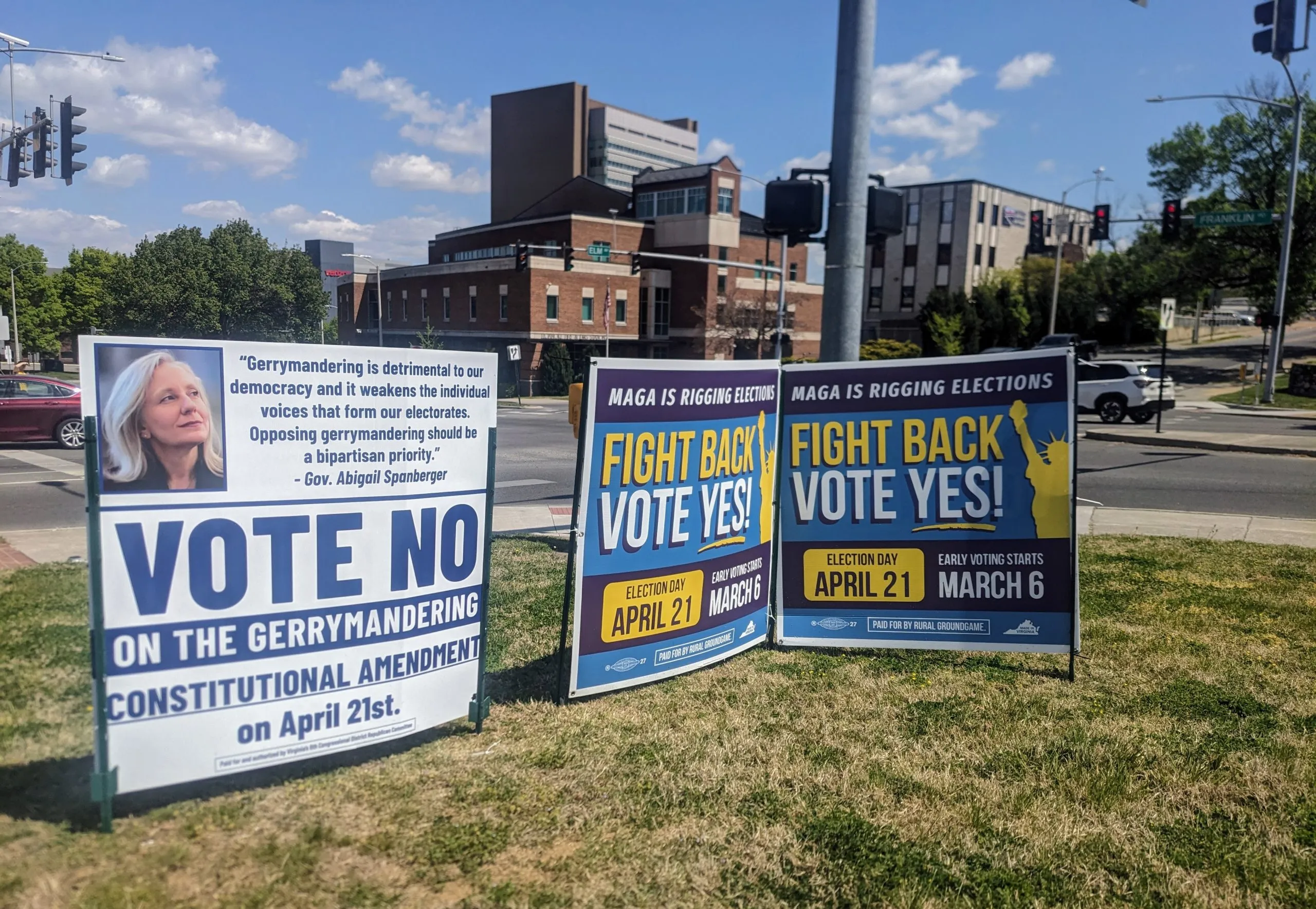
The political landscape of the United States has been completely shaken over the past 48 hours, and the epicenter of the earthquake is the Commonwealth of Virginia. On Tuesday, April 21, 2026, millions of citizens headed to the polls for a highly anticipated special election focused entirely on the controversial issue of virginia redistricting.
While voters narrowly approved a constitutional amendment that would dramatically alter the state’s congressional maps to heavily favor the Democratic party, the victory celebration was incredibly short-lived. Less than 24 hours later, a circuit court judge struck down the referendum, throwing the state’s electoral future into absolute chaos. In this comprehensive breakdown, we will explore what the voters decided, why the court intervened, and how this fierce legal battle could ultimately determine which party controls the U.S. House of Representatives in the upcoming midterm elections.
Read our latest coverage on the 2026 National Midterm Election Polls here!
The April 21 Special Election: Voters Say Yes to New Maps
To understand the magnitude of Wednesday’s shocking court ruling, we first have to look at what exactly happened at the ballot box on Tuesday.
High Stakes and Record-Breaking Turnout
Special elections historically suffer from low voter participation, but the battle over virginia redistricting proved to be an massive exception. Fueled by over $93 million in campaign spending with roughly $64 million poured in by proponents of the measure voter turnout surged. The Associated Press estimated that over 3 million Virginians cast their ballots, representing roughly 48% of all registered voters. The sheer volume of early and mail-in ballots demonstrated just how critical this issue was to the local electorate.
Bypassing the Bipartisan Commission
The referendum essentially asked voters to approve a constitutional amendment allowing the state to bypass its current 16-member bipartisan redistricting commission. Instead, the authority to redraw congressional maps would temporarily revert to the Virginia General Assembly which is currently controlled by Democrats until the year 2030. The measure narrowly passed with roughly 51% of the vote.
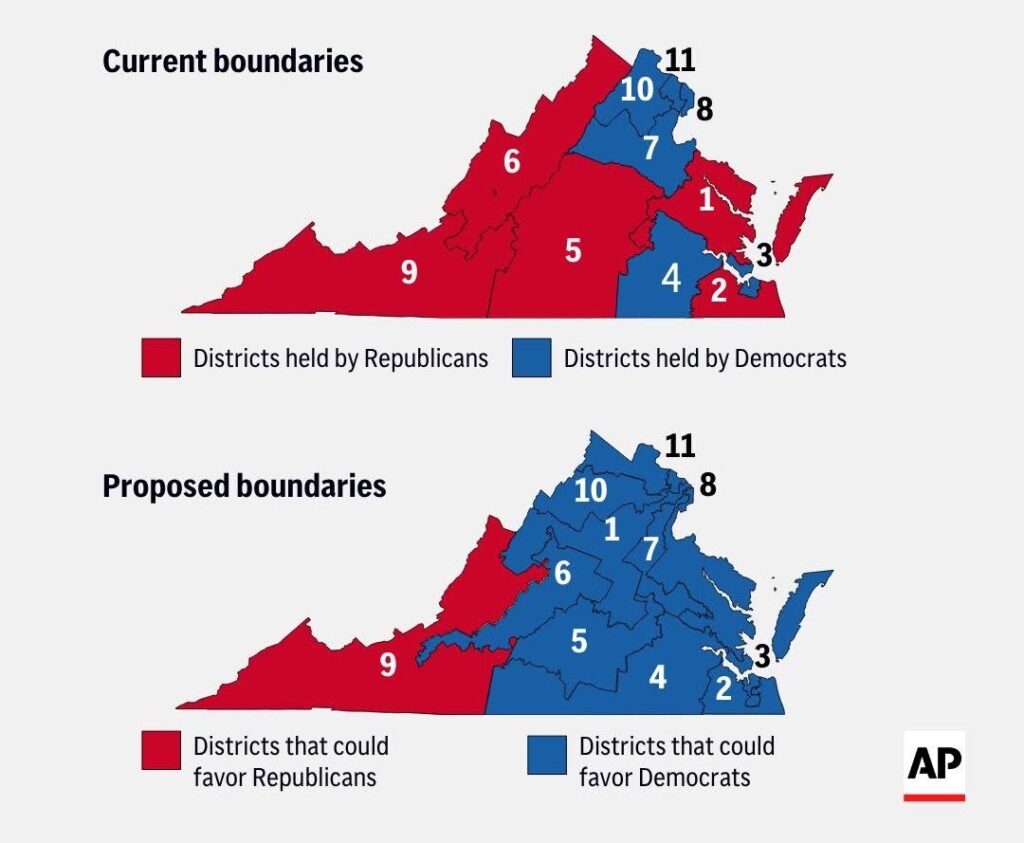
The stakes of this shift were enormous. Currently, Virginia’s 11 U.S. House seats are split between six Democrats and five Republicans. The new map proposed by the General Assembly was explicitly designed to shift four Republican-held districts to be more Democratic. If implemented, this would result in a projected 10-1 partisan split in favor of the Democrats. State House Speaker Don Scott celebrated the initial victory, declaring that “Virginia just changed the trajectory of the 2026 midterms.”
The Legal Shockwave: A Judge Strikes Down the Referendum
Just as national Democrats began celebrating their massive strategic victory, a major legal hurdle brought the entire process to a screeching halt.
Tazewell County Circuit Court’s Dramatic Ruling
On Wednesday evening, April 22, Tazewell County Circuit Court Judge Jack Hurley Jr. issued a permanent injunction blocking state officials from certifying the election results. Judge Hurley ruled that the House bill authorizing the referendum was “void ab initio” (invalid from the start) because the General Assembly failed to follow their own constitutional procedures for adding the amendment to a special session.
Furthermore, the judge declared that all votes cast for or against the proposed amendment during Tuesday’s special election are legally “ineffective.”
“Flagrantly Misleading” Ballot Language
One of the most blistering critiques in Judge Hurley’s ruling pertained to how the measure was presented to the public. He called the ballot language “flagrantly misleading,” stating that it did not accurately describe the true intent and consequences of the measure to the voters.
This sentiment was heavily echoed by prominent Republican figures. Former Virginia Governor Glenn Youngkin urged the courts to strike down what he called a process that would “disenfranchise millions of Virginians.” Meanwhile, President Donald Trump took to social media to criticize the amendment, claiming the language was purposefully deceptive and suggesting the voting process itself was flawed.
Read the full legal breakdown of Judge Hurley’s ruling on Democracy Docket.
The Nationwide Gerrymandering Arms Race
This intense fight over virginia redistricting does not exist in a vacuum. It is the latest, and perhaps most explosive, chapter in a nationwide political arms race.
Counteracting Moves in Texas and Florida
Democratic leaders have openly admitted that their aggressive push to redraw the Virginia map was a direct response to similar tactics utilized by Republicans in states like Texas and Florida. With the national battle for control of the U.S. House of Representatives separated by only a handful of seats, both parties are desperately trying to squeeze every possible advantage out of the mid-decade redistricting process. Democrats argued that creating a 10-1 map in Virginia was necessary to create a “fairer” election landscape nationally, offsetting heavily gerrymandered Republican maps elsewhere in the South.
The Immediate Appeal to the Supreme Court
The fight is far from over. Following Wednesday’s shocking circuit court injunction, Virginia Attorney General Jay Jones (D) immediately announced that his office would appeal the decision. Because of the rapidly approaching midterm elections, this appeal is expected to move with lightning speed. The ultimate fate of the virginia redistricting map will now rest in the hands of the Supreme Court of Virginia.
Conclusion: The Battle for the House Hangs in the Balance
The events of the past few days have proven that the fight over electoral maps is just as fiercely contested as the elections themselves. The voters of Virginia showed up in record numbers to approve a monumental shift in their state’s political structure, only for the judiciary to hit the pause button over procedural and constitutional violations.
As the state prepares for an epic showdown in the Virginia Supreme Court, the entire nation is watching closely. Will the high court uphold the judge’s ruling and keep the current maps in place, or will they validate the special election results and hand the Democrats a massive 10-1 advantage?
What are your thoughts on mid-decade redistricting and the judge’s decision to block the voter-approved referendum? Let us know your perspective in the comments below, and stay tuned to our blog for real-time updates as this legal battle unfolds!
About the Author