
Comey surrenders over charge of threatening Trump’s life in Instagram post
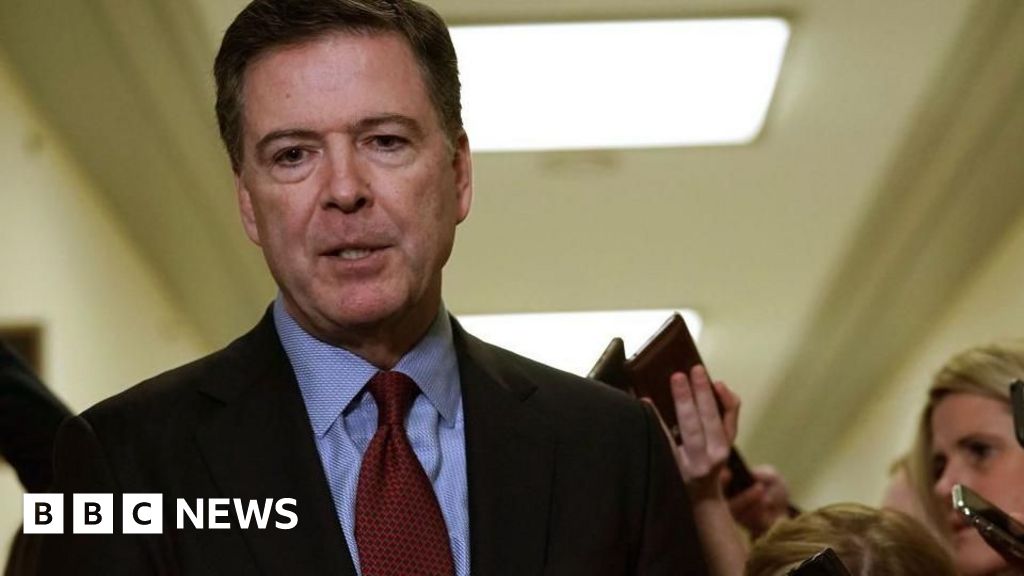
Former FBI Director James Comey has once again found himself embroiled in a dramatic legal entanglement, surrendering to authorities today. This development signals a new chapter in the contentious relationship between Comey and former President Donald Trump. The controversy stems from an Instagram post shared by Comey in 2025, which prosecutors allege constituted a direct threat. Indeed, these new Comey charges are proving to be a lightning rod for debate across the nation, stirring questions about intent, interpretation, and political motivation.
The core of the accusation revolves around an image of seashells on a beach, artfully arranged to spell “86 47.” Prosecutors contend “86” is a slang term for “get rid of,” implying an encouragement of violence against Donald Trump, the 47th president. Comey, however, vehemently denies any malfeasance, asserting he was entirely unaware of the numbers’ alleged significance. He labels the entire prosecution as politically motivated, a claim that resonates with many given his history as a vocal critic of the former president. This is, notably, the second time the Justice Department has pursued criminal charges against the former FBI chief.
Examining the New Comey Charges
Comey’s brief court appearance in Virginia saw him refrain from entering a plea or speaking publicly. His legal counsel, Patrick Fitzgerald, immediately signaled an intent to seek dismissal of the case, citing selective and vindictive prosecution. Fitzgerald posits that Comey is being targeted specifically for his outspoken criticisms of Trump. Judge William Fitzpatrick, presiding over the proceedings, denied the Justice Department’s request for release conditions, deeming them unnecessary. Prosecutors have leveled two serious charges against Comey: knowingly and willfully making a threat to take the life of (or inflict bodily harm upon) the president, and knowingly transmitting such a threat in interstate commerce. Each count carries a potential penalty of up to 10 years in federal prison.
In a pre-recorded video statement, Comey expressed his resolve to contest the allegations. “This won’t be the end of it – but I’m still innocent, I’m still not afraid, and I still believe in the independent federal judiciary,” he declared. The original Instagram post, shared in May 2025, included the caption, “Cool shell formation on my beach walk.” Following a public outcry and the controversial interpretation of the “86 47” numbers, Comey swiftly deleted the image. He later clarified in a follow-up post: “I posted earlier a picture of some shells I saw today on a beach walk, which I assume were a political message. I didn’t realize some folks associate those numbers with violence. It never occurred to me, but I oppose violence of any kind so I took the post down.”
President Trump, never one to shy from comment, weighed in on the new Comey charges, branding the former director a “crooked man.” He asserted that “86” is a “mob term for kill him,” and when asked if he considered Comey’s post a direct threat, responded with a decisive, “Probably.” Trump further suggested that figures like Comey “have created tremendous danger” for public officials. This contentious case highlights the deep partisan divisions characterizing contemporary American politics. For more details on the intricacies of the U.S. legal system, one can refer to the Encyclopedia Britannica’s overview.
The legal community, meanwhile, remains divided. Senator Thom Tillis, a Republican, voiced skepticism, hoping for “more to it than just the picture in the sand,” fearing a “low bar” for such serious accusations. Jimmy Gurulé, a former federal prosecutor, went further, labeling the indictment “an embarrassment to the American criminal justice system.” Acting US Attorney General Todd Blanche, however, defended the prosecution, stating the case had been under investigation for a year and emphasizing the seriousness of threatening a president’s life. He firmly rejected any suggestions of political motivation, despite President Trump’s past public urging for investigations into political adversaries, including Comey.
This saga unfolds against a backdrop of Trump having fired Comey during his first term after the former FBI director launched an investigation into Russian interference in the 2016 election. Trump has repeatedly called for Comey’s prosecution. These are not the first charges Comey has faced; he was previously indicted in late September on charges of lying to Congress and obstructing proceedings. Those charges were ultimately dismissed in November due to an “invalid” appointment of the prosecuting US attorney. The current new Comey charges represent a significant escalation in this long-running political and legal battle.