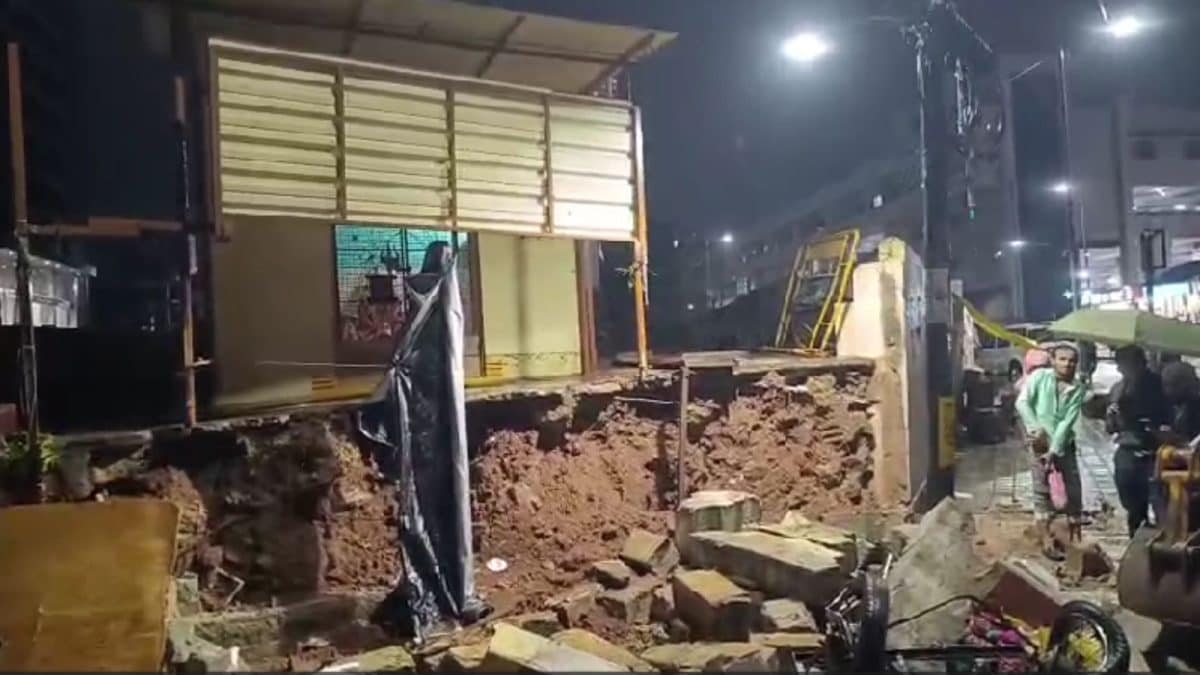
Bengaluru was savagely battered by its inaugural summer showers, culminating in a tragic Bengaluru storm that claimed the lives of at least seven individuals and left two injured. The catastrophic incident unfolded near Bowring Hospital when a compound wall gave way amidst the ferocious downpour and relentless winds. The sudden meteorological onslaught, characterized by hailstones and powerful gusts, unleashed widespread devastation across the metropolis, tearing trees from their roots, submerging critical thoroughfares, and bringing daily life to a grinding halt in numerous districts.
Tragedy Strikes During Bengaluru Storm
The calamity’s grim details emerged: nine individuals, primarily pedestrians and vulnerable roadside vendors, had sought refuge beneath flimsy tarpaulin shelters adjacent to the compound wall, desperately attempting to escape the deluge. Without warning, the ancient structure buckled, mercilessly crushing those huddled nearby. Authorities swiftly transported the victims’ bodies to the mortuary, while two injured survivors are currently receiving urgent medical attention. Chief Minister Siddaramaiah, upon learning of the catastrophe, immediately contacted hospital officials and later raced to the site, accompanied by the Police Commissioner and senior administrative personnel. Sources indicate the Chief Minister is poised to announce ex-gratia payments for the families of the deceased, having reportedly admonished officials over the negligence, emphasizing that the compromised wall was part of a government property.
Deputy Chief Minister DK Shivakumar, cancelling his scheduled engagements in Kanakapura, promptly diverted his route to the disaster zone. “I am cancelling my programme and rushing to the spot,” he declared. “The Police Commissioner has informed me. We will extend all possible help to the affected families.” The political sphere ignited instantly, with BJP state president BY Vijayendra pointing fingers squarely at the Congress government. He asserted that the tragedy was a direct consequence of inadequate maintenance of the aging wall, critically questioning the state’s readiness for the impending monsoon season. His demands included immediate accountability, comprehensive care for the injured, and compensation for the bereaved families, alongside an urgent call for repairs to all dilapidated structures throughout the city.
Beyond the human toll, the fierce showers, initially welcomed as a reprieve from scorching temperatures, wrought extensive damage across Bengaluru. In HSR Layout, ferocious winds tore roof sheets clean off, sending metallic fragments soaring dangerously through the air. Countless trees succumbed to the storm’s fury in various localities. Jayanagar witnessed a particularly dramatic scene where a massive tree toppled onto parked vehicles, flattening several two-wheelers and significantly damaging a city bus.
Substantial waterlogging crippled numerous low-lying zones. The Basavanagudi underpass, for instance, vanished entirely beneath the torrent. Even the revered Vidhana Soudha, the state’s legislative assembly, proved vulnerable; rainwater infiltrated multiple government offices, including the Leader of the Opposition’s chamber in the Legislative Council. Frantic officials were observed battling to clear water, as crucial files, electronic equipment, and office furniture suffered considerable damage.
Lavelle Road experienced a partial road collapse, creating a hazardous crater and sparking serious questions about ongoing pipeline infrastructure projects in the vicinity. Meanwhile, a prominent city bookstore reported staggering losses as floodwaters inundated its premises. Preliminary assessments suggest that a devastating 4,000 to 5,000 books may have been irreparably destroyed due to the pervasive waterlogging. This widespread destruction underscores the significant impact of the Bengaluru storm on both public infrastructure and private enterprise.
The sudden, destructive nature of this summer storm has, yet again, glaringly exposed Bengaluru’s alarming susceptibility to intense rainfall. It forcefully raises urgent questions about the robustness of urban infrastructure, the efficacy of drainage systems, and the imperative maintenance of aging public facilities as the city braces itself for the looming monsoon season. For more information on urban resilience to extreme weather, you might find weather updates helpful.
About the Author