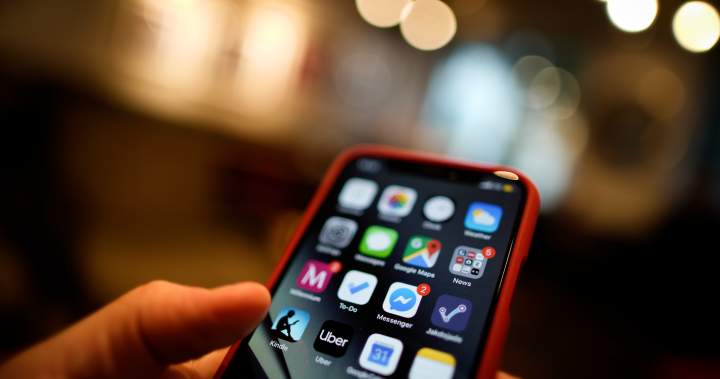
Global fertility rates have mystified demographers for decades, plummeting drastically in the last twenty years. While myriad factors have been posited, groundbreaking new research introduces a startling, perhaps counterintuitive, potential culprit: the ubiquitous smartphone. Specifically, new analysis suggests a profound, if indirect, connection to iPhone birth rates and their rapid decline across Western nations.
The smartphone, a device that has redefined modern existence since its 2007 debut, oddly coincides with a sharp inflection point in birth trends, particularly within the United States. This striking temporal overlap prompted U.S. economist Caitlin Myers of Middlebury College in Vermont to delve into whether a tangible link truly exists.
“It’s a fascinating question, why births are plummeting so dramatically,” Myers articulated in a recent interview. Indeed, in the United States alone, the number of births has plummeted by nearly a quarter since the iPhone’s initial release. Her meticulous investigation explores whether an escalation in screen time and a societal pivot toward digital interactions might inadvertently diminish opportunities for in-person contact, thereby reducing the likelihood of pregnancies.
Unpacking the Connection: iPhone Birth Rates and Digital Habits
To rigorously test this intriguing hypothesis, Myers undertook a granular analysis of birth rates across various U.S. counties during the formative years following the iPhone’s introduction. Crucially, in its infancy, the device was exclusively available through AT&T. This exclusivity created a natural, quasi-experimental environment where some regions had immediate access to the revolutionary gadget, while others did not. By meticulously comparing these distinct areas and carefully accounting for confounding variables such as income disparities, educational attainment levels, and existing contraceptive policies, her findings were compelling: birth rates experienced a significantly steeper decline in those locales where the iPhone was readily accessible.
“We observed that births fell much faster in the places where you could easily acquire an iPhone,” Myers unequivocally stated. The underlying theoretical framework is elegantly simple: an augmented allocation of personal time spent immersed in online digital realms could fundamentally translate into a reduced duration of face-to-face interaction. It is, after all, “difficult to conceive when you’re not physically present with someone,” she sagely remarked.
The ramifications are globally apparent. Fertility rates now languish well below the replacement threshold in a multitude of countries. The United States currently registers approximately 1.6 children per woman, while Canada records an even starker figure of around 1.25. This disturbing demographic trend, characterized by dwindling iPhone birth rates, is by no means confined to affluent nations; declining birth rates are being systematically observed worldwide.
However, prudence dictates caution. Experts are quick to underscore that smartphones, while potentially influential, are highly improbable to be the sole or even the predominant driver behind such an intricate global phenomenon. The early 21st century ushered in an array of momentous social and economic transformations widely acknowledged as significant contributors to the contemporary “baby bust.” These include, but are not limited to, the profound ripples of the global financial crisis, the unrelenting escalation of housing expenditures, the ascendancy of higher education levels, and a pervasive expansion of access to contraception.
Celia Chandler, a perceptive writer chronicling her personal experience as “childless by choice,” expresses reservations about drawing an overly direct causal link between advancing technology and individual decisions to forgo parenthood. “I do believe it might be a bit of a stretch to assert that technology is the singular preventative factor in people having children,” she commented. Chandler persuasively argues that one of the most transformative shifts of recent decades lies in the profound empowerment felt by an increasing number of individuals, particularly women, to actively choose whether or not to embrace parenthood. “I feel profoundly fortunate to have been born into an era where I possessed genuine agency in this choice,” she reflected.
Ultimately, researchers concede that the iPhone, in isolation, cannot fully elucidate such a multifaceted global trend. Nevertheless, they contend it serves as a potent emblem of a much broader, pervasive shift in how humans forge connections, cultivate relationships, and fundamentally structure their lives in the digital age. Understanding the complexities of global population dynamics requires considering a tapestry of interwoven factors, of which digital interaction appears to be a newly emerging thread.
About the Author