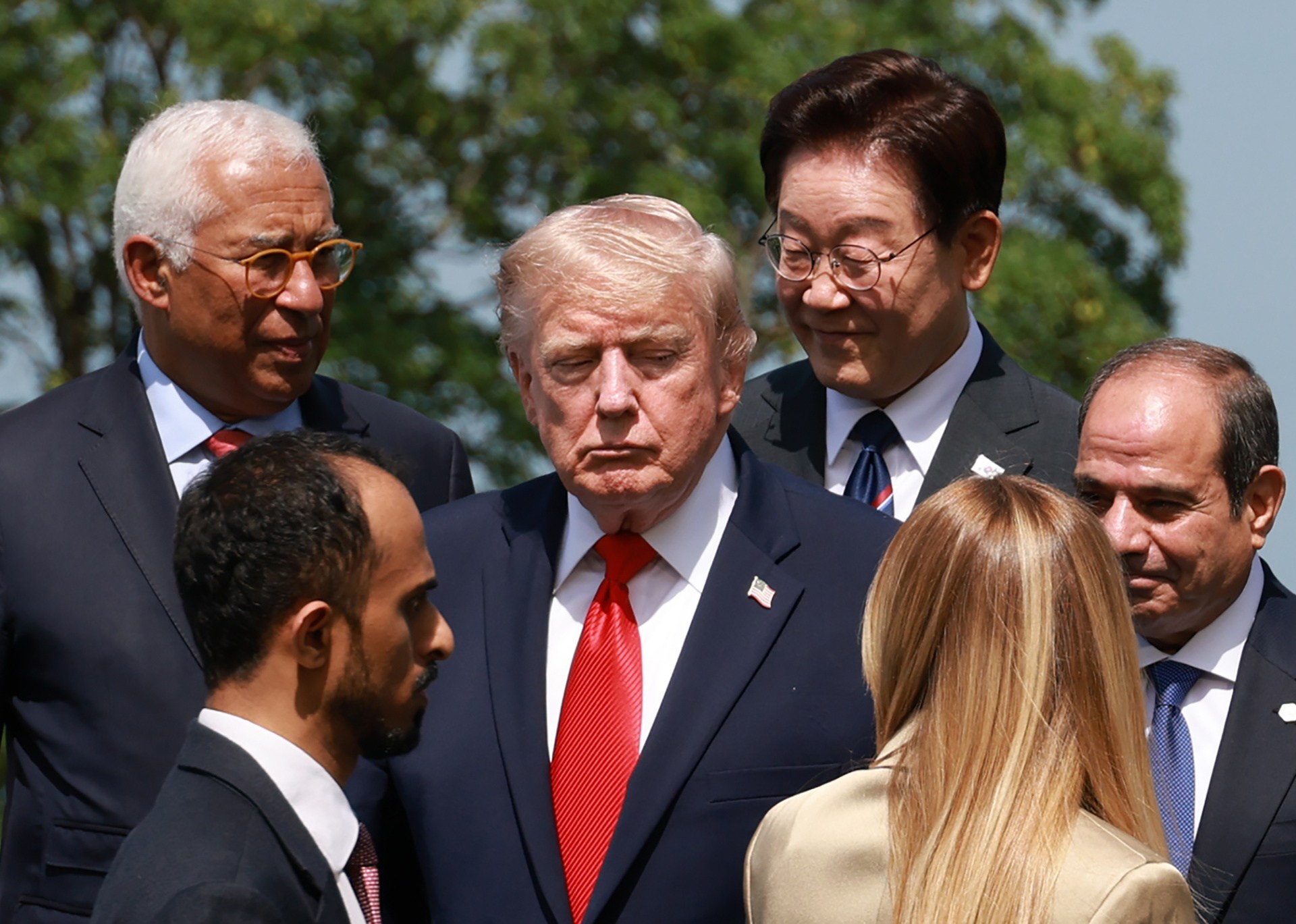
Evian-les-Bains, France – A significant pivot in U.S. foreign policy appears imminent as President Donald Trump signals a heightened focus on the North Korea nuclear program. Following a crucial agreement with Iran, the American leader reportedly informed South Korean President Lee Jae Myung during the recent G7 summit that ‘the time had come to pay attention to the North Korea issue,’ a revelation shared by Lee himself at a subsequent news conference.
President Lee Jae Myung recounted that President Trump’s declaration came during a G7 dinner on Friday, June 16, 2026. This comment could unmistakably signal a renewed American emphasis on curbing Pyongyang’s escalating nuclear capabilities. The timing is particularly notable, occurring immediately after Washington finalized a deal with Iran, a development that, according to the South Korean leader, frees up bandwidth for other pressing global security concerns.
Shifting Sands: The North Korea Nuclear Program Back in Focus
However, Lee also conveyed a stark assessment to his U.S. counterpart: sanctions against North Korea are proving ‘ineffective.’ He highlighted the deepening military cooperation between Pyongyang and Moscow, stating, ‘Even a small amount of assistance from Russia is of great help to North Korea.’ This entanglement complicates any easy solutions for the intricate international diplomacy surrounding the peninsula.
The two Koreas technically remain locked in a state of war, their 1950-53 conflict having concluded with an armistice rather than a peace treaty, leaving a heavily fortified Demilitarized Zone dividing them. North Korea, which conducted its inaugural nuclear test in 2006, is now believed to possess dozens of nuclear weapons, a formidable and ever-growing arsenal.
In recent times, Kim Jong Un has aggressively pursued closer ties with allies, notably dispatching troops and munitions to support Russia’s conflict in Ukraine. He also hosted Chinese President Xi Jinping in Pyongyang, a visit that followed Xi’s back-to-back summits in Beijing with both Trump and Russian leader Vladimir Putin. Intriguingly, neither Pyongyang’s nor Beijing’s official statements from these high-level meetings even mentioned the long-standing issue of North Korean denuclearization – an omission widely interpreted by experts as tacit acceptance from China of Pyongyang’s nuclear status.
Pyongyang has repeatedly declared itself an ‘irreversible’ nuclear state since a 2019 summit between Kim and Trump in Hanoi collapsed over disagreements regarding the scope of denuclearization and subsequent sanctions relief. Kim has further pledged an ‘exponential expansion’ of North Korea’s nuclear capabilities, recently unveiling new facilities dedicated to developing nuclear bomb fuels, underscoring the enduring challenge posed by the North Korea nuclear program.
Trump had met Kim three times during his initial term, famously declaring they were ‘in love’ at one point, all in a bid to forge a groundbreaking denuclearization agreement. Yet, despite these highly publicized encounters, no tangible progress materialized. Last year, Trump intensified his overtures, stating he was ‘100 percent’ open to another meeting; that offer, however, remains unanswered. The US president even departed from decades of established policy by openly acknowledging North Korea as ‘sort of a nuclear power,’ further complicating a path forward. On Sunday, Trump posted an uncaptioned photo of himself and Kim Jong Un from their 2018 Singapore meeting, a silent testament to a history of stalled negotiations and an uncertain future.
About the Author