
UK Labour leadership nominations begin: Who’s running and how it works
The political landscape of the United Kingdom is currently abuzz, ensnared in the fervent quest for a new leader following Prime Minister Keir Starmer’s unexpected announcement last month. His impending departure has triggered an intense Labour Leadership Race, thrusting the governing party into a pivotal moment. The successful candidate, poised to inherit a formidable parliamentary majority, will become the nation’s seventh prime minister within a mere decade. All eyes are now fixed on who will emerge from this pivotal contest, shaping Britain’s future.
Starmer’s tenure, which began with a landslide victory in July 2024, concluded abruptly on June 22. Mounting pressure from significant local election defeats, shifts in domestic policy, and the controversial appointment of Peter Mandelson as US ambassador—who was later dismissed over his association with Jeffrey Epstein—precipitated his resignation. This leaves the Labour Party with the urgent task of selecting a successor, one who will invariably step into the nation’s highest office. Nominations officially opened last Thursday, signaling the commencement of a frenetic political scramble.
Navigating the Labour Leadership Race Rules
Aspiring candidates, who must already be elected Labour Members of Parliament, face a rigorous nomination gauntlet. They require the explicit backing of at least 20 percent of their parliamentary colleagues, translating to 81 fellow MPs. Furthermore, candidates must secure nominations from a minimum of three affiliated organizations—including two trade unions—or demonstrate support from 5 percent of the party’s local branches. Labour MPs have until Wednesday to put forward their chosen candidates, while affiliated bodies have a slightly extended window, selecting names on Wednesday and July 16.
Should multiple contenders successfully clear these hurdles, Labour members and affiliated unions will cast their votes between August 6 and 27. The eagerly anticipated results are slated for August 29. Any individual who has maintained Labour Party membership for at least six months prior to the election date is eligible to participate. In a multi-candidate scenario, a preferential voting system is employed: if no single candidate garners over 50 percent of first-preference votes, lower-ranked candidates are systematically eliminated, and their votes are redistributed until a clear winner emerges.
Burnham: The Frontrunner in the Labour Leadership Race
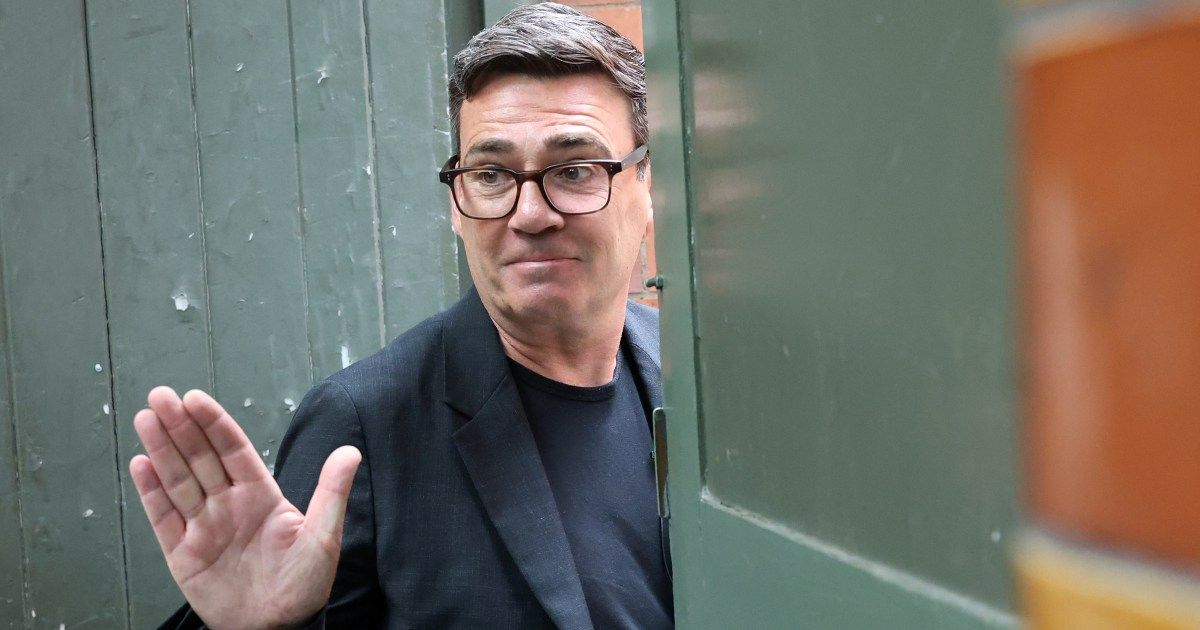
Presently, only Andy Burnham, the charismatic former Mayor of Greater Manchester—affectionately dubbed “King of the North”—has officially declared his candidacy. Widely recognized as one of Labour’s most popular figures, Burnham has unveiled ambitious plans, including the relocation of some prime ministerial operations from London to Manchester should he win. His eligibility to contest the leadership, previously a hurdle due to his non-MP status, was dramatically resolved with a crucial by-election victory in Makerfield on June 18. This win instantly catapulted him into contention for the Labour Leadership Race.
Since his by-election triumph, Burnham’s momentum has become undeniable. Influential Labour figures, including former Starmer government ministers Wes Streeting and Al Carns, have publicly endorsed him, abandoning their own potential bids. Consequently, Burnham is now widely perceived as the undeniable frontrunner, a prime minister-in-waiting. Paul Whiteley, a distinguished emeritus professor of government at the University of Essex, suggests it is “increasingly likely” that Burnham may secure the leadership unchallenged. While names like Home Secretary Shabana Mahmood and former Deputy Prime Minister Angela Rayner have been mentioned as potential challengers, neither has indicated an intention to run, with Rayner having already voiced her support for Burnham.
Burnham’s Policy Vision and Outlook
Positioning himself firmly on Labour’s “soft left,” Burnham articulates a vision distinctly to the left of Starmer’s. His core pledges include a robust process of “devolution” aimed at addressing profound regional disparities, alongside an expansive social housing program and enhanced social care provisions. In a powerful June address, he vowed to “bring about the biggest rebalancing of power our country has seen,” a commitment underscored by his proposal to divide the Prime Minister’s Office between London and Manchester. He stressed, “We need a new determination to raise living standards of every single person in this land.”
Regarding foreign policy, while it hasn’t been his primary focus, Burnham consistently supports NATO and was critical of the UK’s departure from the European Union. Foreign Secretary Yvette Cooper recently confirmed Burnham’s “100 percent unwavering support for Ukraine.” He has also called for a boost in Britain’s defense capabilities, citing recent geopolitical shifts, including conflicts involving the US, Israel, Iran, and Russia. On the contentious issue of Israel and Palestine, Burnham was among a select group of British politicians in 2015 who advocated for recognizing Palestinian statehood, deeming it “a right” while condemning Israeli settlement expansions. Despite this, he opposed boycotting Israel, believing it to be “the wrong response.” He clarified his perspective as Mayor of Greater Manchester: “I can’t judge things of that enormity… But I do have concerns about the disproportionate nature of what has happened in terms of the destruction, and there has to be a full process of investigation and accountability.” Notably, he declined to label Israel’s actions in Gaza as “genocide” prior to the Makerfield by-election and has indicated that James Purnell, former chair of Labour Friends of Israel, will be his chief of staff.
The Path to Power: Contested or Uncontested?
Should Andy Burnham remain the sole nominee, he would automatically assume the party leadership and, by extension, the premiership, potentially being sworn in by July 20. However, an uncontested ascent could invite scrutiny regarding his legitimacy, especially as Labour navigates the rising tide of the anti-immigration Reform UK party. A recent Lord Ashcroft Poll revealed that only 27 percent of Britons and 45 percent of Labour voters believe Burnham should become prime minister without a full leadership contest. Yet, Professor Whiteley posits that an uncontested victory would likely have minimal impact on public perception of his legitimacy, drawing parallels with previous prime ministers like Theresa May and Gordon Brown, who also entered Downing Street without a direct rival.
Will a General Election Loom?
An immediate general election is improbable. The incoming prime minister is not legally obliged to call a national election until August 2029, though public and political pressure for an earlier mandate could intensify. Should Burnham take office mid-term without a national vote, he would join Theresa May (2016), Boris Johnson (2019), Liz Truss (2022), and Rishi Sunak (2022) as the fifth premier in a decade to enter Downing Street without winning a general election as party leader. The Lord Ashcroft survey indicates a majority of Britons now favor early elections within the next year, with 40 percent preferring them “as soon as practically possible.” Nevertheless, Whiteley cautions, “given the disruption and costs associated with an immediate general election this is very unlikely to happen.” To better understand the electoral system’s operational framework, further information is readily available.