
What we know about UK politician Ann Widdecombe’s murder
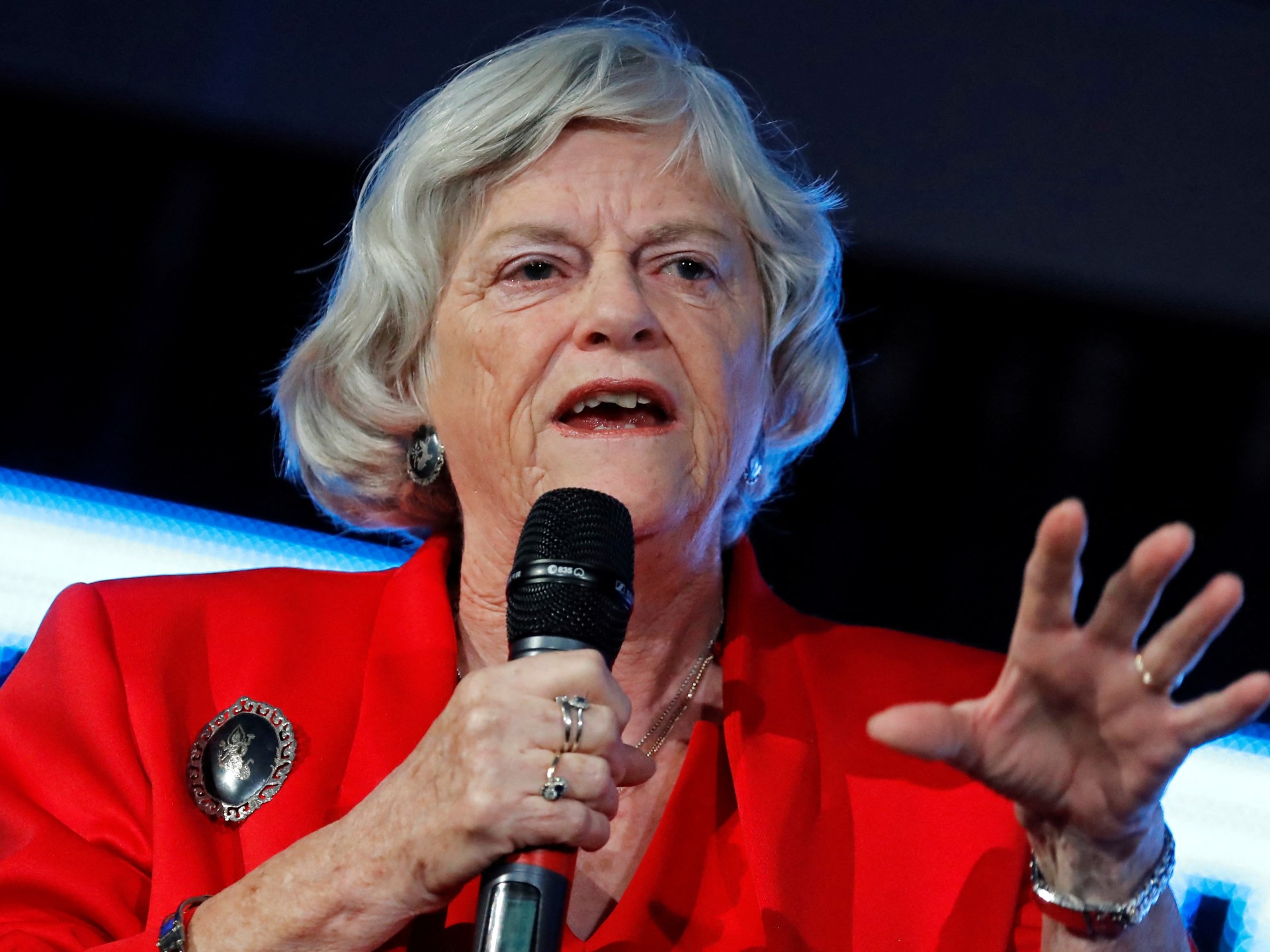
A shocking development has rocked British political circles: the tragic Ann Widdecombe murder investigation has now been officially handed over to counterterrorism police. The former Conservative MP and prominent public figure, Ann Widdecombe, was discovered deceased in her southwest England home last week, bearing what authorities described as “serious injuries.”
The sudden death of the 78-year-old, a figure known for her staunchly conservative views and later a vibrant media career, initially prompted a conventional murder inquiry. Devon and Cornwall police swiftly apprehended a 28-year-old man on suspicion of murder. However, in an unexpected turn, the same individual was subsequently rearrested by counterterrorism units, now facing suspicion of involvement in acts of terrorism, be it commission, preparation, or instigation.
Deepening Ann Widdecombe Murder Investigation
Laurence Taylor, head of national counterterrorism policing, confirmed that authorities are pursuing numerous lines of inquiry. Their primary objective remains to uncover the precise motivation behind this unsettling attack. “Our priority is progressing this investigation quickly,” Taylor stated, underscoring the urgency of the situation.
Widdecombe’s extensive career spanned decades in the public eye. From 1987 to 2010, she served as the Conservative MP for Maidstone, notably holding the shadow home secretary portfolio in 1999. Post-parliament, her distinctive personality found a new platform, captivating audiences on popular television programmes like Big Brother and the beloved BBC hit, Strictly Come Dancing.
Yet, her strong political convictions never truly faded. By 2019, she had aligned with the Brexit Party, advocating for the UK’s departure from the European Union, even serving as a Member of the European Parliament. In the final years before her untimely death, she was a vocal immigration and justice spokesperson for the far-right Reform UK party, consistently championing socially conservative positions, including firm stances against abortion and the equalisation of the age of consent for gay and heterosexual relationships.
Unravelling the Circumstances
Police found Widdecombe’s body at approximately 11:40 am (10:40 GMT) on July 9 at her home in Haytor. Intriguingly, investigators now believe the attack likely occurred nearly 24 hours prior. This timeline emerged after reviewing text messages between Widdecombe and a Channel 5 researcher, with her last known reply timestamped 12:19 am (11:19 GMT) on Wednesday.
Further evidence, including security camera footage published by The Sun newspaper, reportedly shows the suspect entering his car in Yorkshire with a long object visible. The individual has also been linked to a property over 320km (200 miles) from Widdecombe’s residence. Initially, despite launching a murder inquiry, police had asserted there was “no information that this is a politically motivated crime.” The shift to counterterrorism involvement signals a significant re-evaluation of the evidence.
Wider Political Ramifications and the Ann Widdecombe Murder Case
The escalation of the Ann Widdecombe murder inquiry has sent palpable ripples of concern throughout Westminster. The UK political landscape has, tragically, witnessed previous attacks on serving MPs. In 2016, Labour MP Jo Cox was brutally murdered by a Nazi-obsessed assailant during the tumultuous Brexit campaign. Five years later, Conservative lawmaker David Amess was fatally stabbed by an individual inspired by ISIL (ISIS).
Home Secretary Shabana Mahmood, addressing the House of Commons, acknowledged the “new information” leading to the counterterrorism referral but urged against speculation. She stressed the importance of allowing police the necessary space to conduct their work. “Politics is a calling for those of us here,” Mahmood declared, “but it should not be a dangerous one.” The Home Office and police are reportedly working closely with the Parliamentary Security Department to enhance MP security. For more on the broader issue of security for public figures, you can read about it on the government’s official website.
Calls for improved security measures and a robust crackdown on online hate speech targeting politicians have intensified. Brandon Cox, Jo Cox’s widower, articulated on X that while better physical security is essential, it cannot alone solve the problem. He advocated for a societal shift away from legitimising political violence, particularly highlighting the role of algorithmic social media in driving such harmful narratives. Former Conservative Party leader Iain Duncan Smith echoed these sentiments, urging the government to confront “visceral, violent language” online more decisively.