
How US commerce secretary’s Epstein links were uncovered by British whistleblower
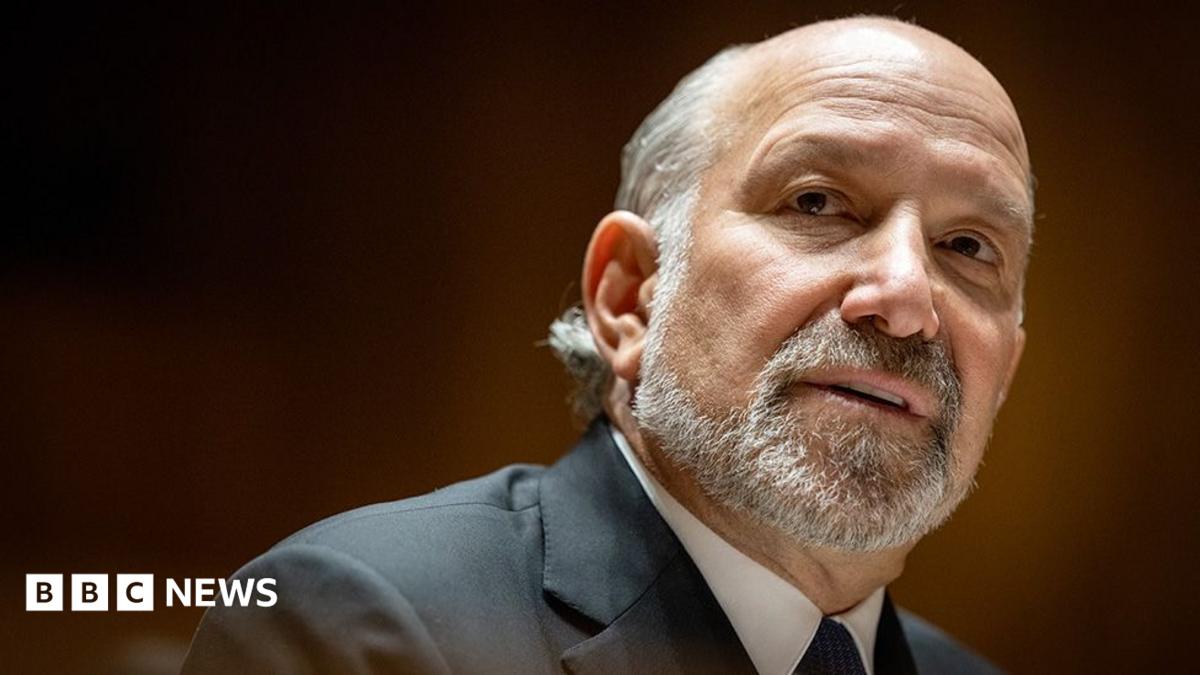
A shocking revelation has rocked Washington, as a British whistleblower unveils compelling evidence suggesting US Commerce Secretary Howard Lutnick failed to disclose crucial Epstein links. The extraordinary findings, stemming from millions of previously sealed documents, detail a hidden business relationship between the top US official and the disgraced paedophile financier, Jeffrey Epstein. This saga began with one man’s meticulous investigation into a vast digital archive, leading to political tremors across the Atlantic.
Unearthing the Epstein Links: A Whistleblower’s Quest
Simon Andriesz, a former managing director at a prominent Wall Street firm, stumbled upon his own name within the voluminous Epstein files. This discovery ignited a meticulous search through 3.5 million pages of emails, photos, and records. What he unearthed was nothing short of explosive: an email chain from 2018 directly discussing a start-up business, Adfin, in which both Lutnick and Epstein were investors. Lutnick, appointed US commerce secretary in 2025, had publicly claimed he met Epstein only once, decades ago, finding his behavior “gross.” Yet, photographs and detailed correspondence contradict this narrative, painting a picture of deeper, undisclosed ties.
Andriesz meticulously pieced together the puzzle, noting how Cantor Fitzgerald executives often used initials. His search for “HWL” (Howard William Lutnick) proved fruitful, yielding direct email exchanges where Epstein inquired about Adfin’s prospects. Lutnick’s responses clearly indicated an active involvement. This compelling evidence of their Epstein links was subsequently shared with US politicians on the influential House Oversight Committee, triggering demands for accountability. For instance, one email shows Epstein directly asking the HWL account: “what do you think the prospects for adfin are?” Lutnick replied, “Producing revenue finally. This is their year. Next 12 months they need to become economically self-sufficient.” This correspondence highlights a direct business discussion between the two men. Further details regarding this exchange can be reviewed in the official public records.
Beyond the direct business dealings, Andriesz’s investigation also uncovered plans from 2013 by one of Lutnick’s firms to engage in a £1 million loan deal with Prince Andrew, another figure entangled in the Epstein scandal. This arrangement, described by Andriesz as an attempt “to buy a prince,” aimed to leverage Andrew’s high-level contacts for commercial gain. While these discussions ultimately faltered, they underscore the complex web of connections surrounding Lutnick and individuals associated with Jeffrey Epstein. The US Commerce Department, however, maintains there is “no evidence of wrongdoing,” dismissing the allegations as a “desperate partisan distraction.” The Democrats on the House Oversight Committee, however, have signed a letter demanding Lutnick’s resignation over the alleged inconsistencies concerning his **Epstein links**.
For Simon Andriesz, now residing in a serene Cornish village, far from the frenetic pace of Wall Street, the decade-long battle has taken a severe toll. Despite a $420,000 award for his whistleblowing against his former employer, BGC Partners, he expresses deep disappointment that authorities have, in his view, failed to fully hold powerful entities accountable. The exposure of these connections by a lone British individual has not only challenged official narratives but also highlighted the immense power imbalances faced by those who dare to speak truth to power.