
What will define Elon Musk’s legacy? Doge cuts to USAID Ebola programs
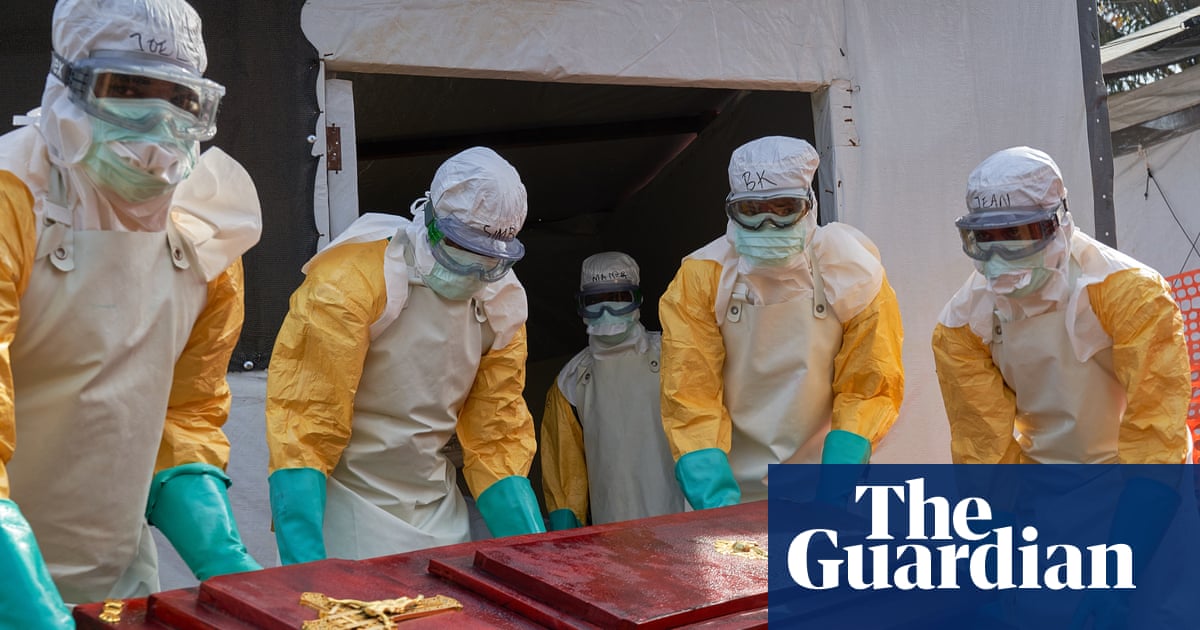
A disturbing narrative unfolds as experts grapple with the profound ramifications of Elon Musk’s dismantling of crucial global health initiatives. The tech titan’s controversial decisions, particularly the swift and severe USAID Ebola cuts, are now being directly linked to a surge in preventable deaths and a crippled response to the persistent Ebola outbreaks plaguing regions like the Democratic Republic of the Congo (DRC).
Last year, amid a flurry of posts on X and a self-described quest for “government efficiency,” Musk oversaw the effective dissolution of significant portions of the US Agency for International Development (USAID). This audacious move, which he famously characterized as feeding the agency into a “woodchipper,” has ignited a furious debate, drawing sharp criticism from former officials and global health specialists alike. Jeremy Konyndyk, a former top USAID official and president of Refugees International, minced no words: “Elon’s USAID crash-out over the past week has been a thing to behold. In a way, it’s helpful that Elon is doing this, because it’s putting attention back on the issue of what he did last year.”
The Dire Consequences of USAID Ebola Cuts
The impact, as numerous experts attest, has been catastrophic. Musk’s flippant dismissal of accountability, claiming critics “cannot cite a single name of someone who died,” dissolved quickly when faced with actual victims, including children. His response? An unhinged attack on a journalist. Crucially, the short-lived “department of government efficiency” (Doge) led to the “accidental” cessation of vital Ebola detection and response programs. Davide Rasella, a research professor at the Barcelona Institute for Global Health, highlighted the chilling consequence: “This is one of the reasons why there was not enough surveillance and preparedness for the outbreak of Ebola.”
Had these global health programs in the DRC and other vulnerable nations remained intact, Konyndyk firmly believes, the Ebola outbreaks would have been identified far earlier. This isn’t merely conjecture; a comprehensive Lancet study projected a staggering 14 million deaths, including 4.5 million child deaths, should USAID be abolished entirely. When Democratic Congressman Ro Khanna cited this research, Musk’s response was a threat of legal action and a defiant reassertion that Doge had committed no wrong. Rasella, an author of the study, unwavering in his estimations, contrasted Musk’s scientific precision in rocketry with his apparent disregard for equally rigorous public health data. The sheer scale of potential loss, possibly millions of deaths over the coming years, is “unquestionable,” he grimly stated.
These losses are not abstract future probabilities; they are unfolding now. “People are absolutely dying. They’re dying in significant numbers in some places,” Konyndyk revealed, painting a stark picture of the human cost of the USAID Ebola cuts. Musk’s business philosophy – “cut until people scream, and then when people scream, you’ve cut too far, and then you restore” – simply does not translate to public funding, where the currency is “literal human lives.”
The former USAID official contends that without Musk’s personal intervention, the agency, though perhaps weakened, would have persisted. His “personal investment in that project gave it the reach all the way up to the White House.” Congress, Konyndyk argues, possessed the power to prevent this dismantling and still holds the authority to reinstate critical functions, as USAID’s existence is mandated by law. In an era still reeling from a pandemic that claimed 20 million lives, the decision to cripple programs designed to prevent future outbreaks is, as Rasella put it, “absurd.” Disrupting “a single piece of that [aid], you can really create more and larger damage to the entire system. This is just the beginning.”
Yet, a glimmer of hope remains. Konyndyk believes a critical “window” exists to reverse some of the most devastating effects of ending foreign aid. For more comprehensive information on the Ebola disease, readers can visit the World Health Organization’s dedicated page.