
Two crew killed as British pilot survives after firefighting helicopters collide in Greece
ATHENS – A harrowing mid-air catastrophe has claimed the lives of two dedicated crew members battling raging wildfires in Greece, while a British pilot miraculously survived the deadly Greece helicopter collision. Local authorities confirmed the tragic incident involved two Bell helicopters, underscoring the extreme dangers faced by those on the front lines of the escalating fire crisis plaguing the region.
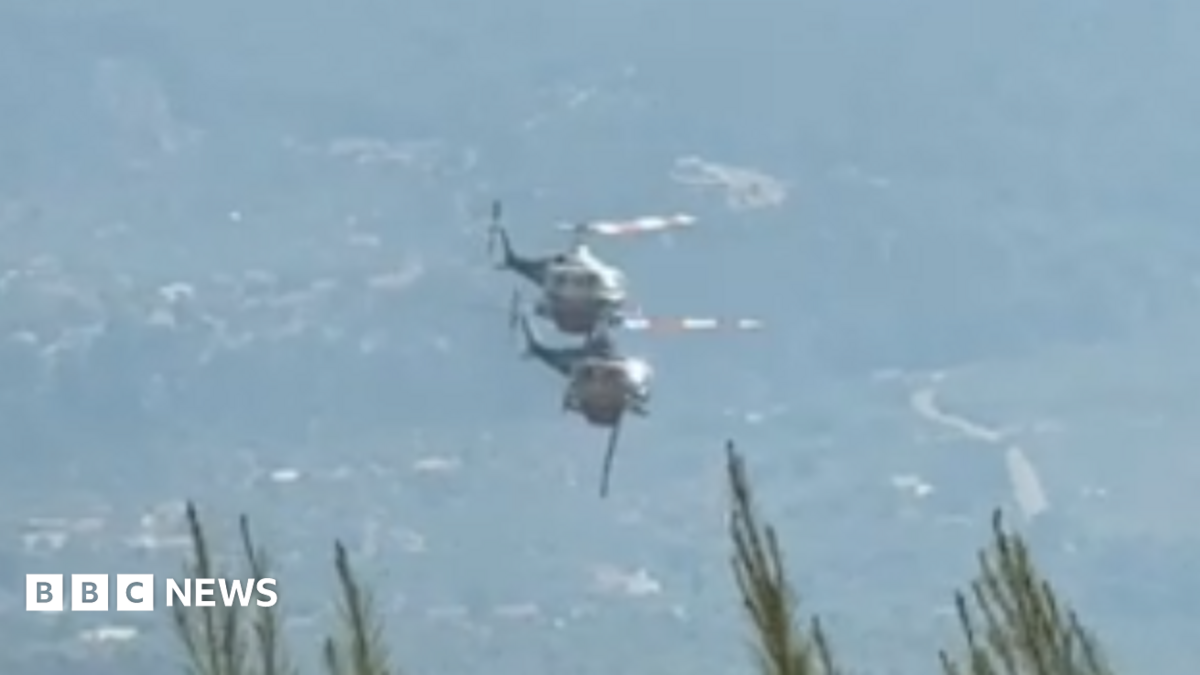
The victims were identified as a Danish pilot and a Greek fire service liaison officer. Their lives were cut short when their aircraft collided dramatically some 65 kilometers (42 miles) west of the capital, Athens, on Sunday. Astonishing video footage of the incident captured one helicopter’s propellers being struck by the other, resulting in a fiery explosion and a plummet into a ravine. In stark contrast, the second aircraft, carrying a British pilot and another Greek coordinator, managed to execute an emergency landing, with both occupants escaping with minor injuries and remaining conscious.
Investigation into the Greece Helicopter Collision
In the immediate aftermath, Greek Prime Minister Kyriakos Mitsotakis conveyed his profound sorrow, stating the loss “fills us all with grief” and extended condolences to the bereaved families. Following standard protocol, a source from the civil protection ministry revealed that all Bell helicopters across Greece have been grounded indefinitely, pending a thorough investigation into the Greece helicopter collision and its causes. The British survivor, a private pilot contracted for the wildfire season, was confirmed not to be part of any official UK-Greece exchange, highlighting the international effort often required to combat such devastating blazes.
Firefighters and forensic experts have descended upon the crash site, meticulously sifting through the wreckage. Meanwhile, the two survivors, demonstrating remarkable presence of mind, immediately reported the collision, playing a crucial role in guiding rescuers to the remote scene. The names of the four crew members involved have not yet been publicly released, respecting their privacy during this sensitive time.
The tragedy unfolds amidst a relentless wave of wildfires engulfing Greece and much of southern Europe. Mass evacuations have become a grim reality as heatwaves create tinderbox conditions. While the immediate focus remains on the casualties of this devastating Greece helicopter collision, other aerial assets, including Erickson Air-Crane, Chinook helicopters, and Canadair water-bombing aircraft, continue their heroic, round-the-clock struggle against the inferno. Across the continent, countries like France and Spain have also contended with significant outbreaks, though many of those fires are now contained, allowing hundreds of thousands of evacuated residents to cautiously return home.
Experts reiterate that while most wildfires are sparked by human activity, whether intentional or accidental, climate change significantly exacerbates their frequency and intensity. A mild, wet winter fostered abundant vegetation growth, which, under successive scorching heat spells, has transformed into highly combustible fuel, setting the stage for these widespread natural disasters. For a broader perspective on the ongoing crisis across the continent, you can explore understanding European blazes.