
Trump suggests new talks with Iran to begin on Monday
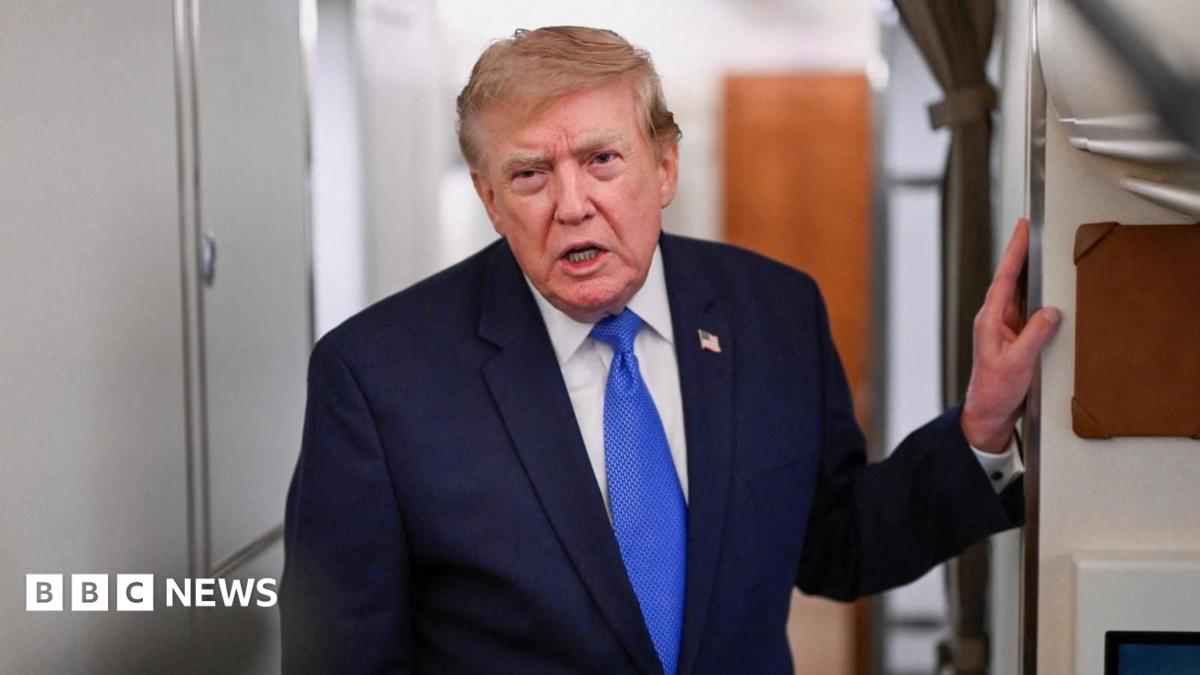
US President Donald Trump delivered a bombshell announcement Sunday, declaring that fresh Iran talks are set to commence on Monday. This stunning development follows his abrupt decision to call off what he described as “massive” retaliatory strikes against the nation. From aboard Air Force One, the President stated, “They knew the extent of the attack because they saw it forming. We’re talking to them in the form of a negotiation. It begins tomorrow afternoon.”
The dramatic pivot came after Trump claimed he was urged by both Iran and key Middle Eastern allies — notably Saudi Arabia’s Crown Prince Mohammed Bin Salman, the United Arab Emirates, and Qatar — to halt military action. According to the President’s account, shared initially on Truth Social, the “perimeters” of a potential deal had been established, leading to the shelving of the impending attack. “We were all set to go,” he asserted, adding a tantalizing hint: “There’s a deal on Hormuz, and there will be a deal on the nuclear.”
The Murky Waters of Iran Talks and Global Reactions
However, Tehran swiftly countered this narrative. Iran’s semi-official Mehr news agency vehemently denied any request to defer military action, dismissing Trump’s assertions as “nothing but a new lie.” Moreover, the Iranian foreign ministry declared unequivocally that there are no plans to welcome a US delegation, nor to dispatch Iranian officials to Washington. Such diplomatic discussions have historically relied on third-party mediators, a testament to the deep-seated mistrust pervading the relationship. This ongoing friction often casts a long shadow over any prospect of successful Iran talks.
Despite the palpable tensions, the financial markets reacted positively to Trump’s announcement. Global oil prices experienced a notable dip in Monday’s early Asia trading. Brent Crude fell by 4.5% to $83.98, while US-traded oil saw a 4.6% decline to $80.74. This immediate response underscores the profound impact geopolitical instability in the region, particularly around the critical Strait of Hormuz, has on energy markets. Roughly 20% of the world’s crude oil and liquefied natural gas navigates this narrow maritime choke point annually.
The President’s rhetoric has, throughout this protracted conflict, swung wildly between fiery threats and overtures for diplomacy. He once warned of “military terror, strength, and power not seen since World War II” against Iran, only to then champion the cancellation of attacks for the “future benefit of the world.” Previous attempts at de-escalation, including a high-stakes meeting in Pakistan led by Vice-President JD Vance, ultimately crumbled without a breakthrough. The persistent instability creates significant challenges for regional stability, as explored in depth by experts at the Council on Foreign Relations.
As for the upcoming Iran talks, crucial details remain shrouded in mystery. Trump offered no specifics regarding the venue or who might be present at the negotiating table. He merely reiterated a willingness to engage, stating, “We’re ready to go anytime we want… I’m not looking to kill people.” Meanwhile, Iran’s acting Defence Minister, Majid Ibn al-Reza, maintained Tehran’s vigilance, affirming, “We will neither be caught off guard nor remain passive” against perceived threats, even those considered psychological warfare. The world waits, once again, to see if genuine dialogue can finally emerge from the brink.