
Former Iranian conscripts seeking asylum in Canada fear deportation
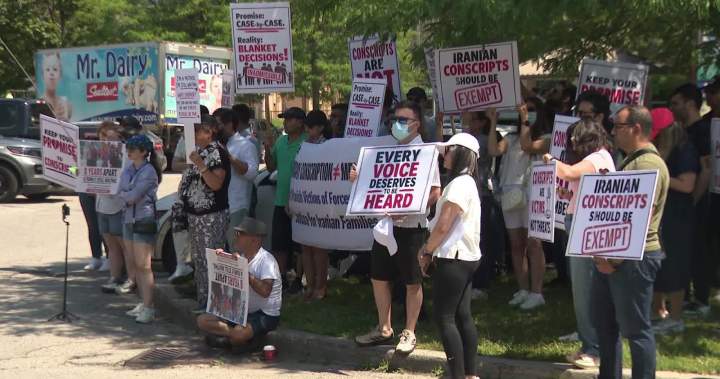
A growing number of individuals, desperate for refuge, who fled the Iranian regime now confront a harrowing reality in Canada: the specter of deportation. Legal experts are sounding alarms over what they describe as an alarming trend, with many being denied refugee or resident status primarily due to their past, often compulsory, military involvement. This complex issue, deeply rooted in mandatory service within Iran, is leaving numerous Iranian asylum seekers caught in a bureaucratic quagmire.
Lorne Waldman, a seasoned immigration lawyer, highlighted the profound despair of these men. Many were arbitrarily assigned to the Islamic Revolutionary Guard Corps (IRGC) through conscription, a mandate impossible to evade in their home country. “They came to Canada seeking protection,” Waldman explained to Global News. “And to be told, ‘No, we don’t want you because you were forced to join the organization,’ it’s devastating.”
At a recent Montreal protest, a woman, whose identity remains protected to safeguard her family’s application, articulated the inescapable nature of military service in Iran. To secure employment, obtain a passport, or even access basic rights, men are compelled to serve. Refusal carries severe penalties, including imprisonment and the grave risk of torture. “I cry every day,” she shared, her voice thick with emotion. “I have anger. I’m very devastated.” Waldman unequivocally labels this ongoing plight a “travesty.”
The Dilemma of Iranian Asylum Seekers and IRGC Ties
The situation, however, is not without its intricate nuances; not all legal scholars concur on the optimal path forward. Canada officially designated the IRGC as a terrorist entity in 2024. This designation complicates assessments, making it challenging to differentiate between genuine supporters of the regime and those involuntarily involved. James Devine, an associate professor at Mount Allison University in New Brunswick, suggests a thorough examination. “You have to be able to go back through the person’s background and look for a pattern of activity in terms of what groups they were associated with,” he advised.
Immigration, Refugees and Citizenship Canada (IRCC) maintains that IRGC membership typically warrants inadmissibility. However, their official stance, conveyed in a written statement to Global News, acknowledges that “individuals who served as a result of compulsory military service are assessed on a case-by-case basis.” They affirmed, “Conscription alone does not necessarily result in inadmissibility. All applicants are given the opportunity to present their case by providing documentary evidence.”
Yet, Waldman remains skeptical of the practical application of this policy. He asserts that while the government theoretically possesses the means to assess an applicant’s background, this crucial distinction often goes unrecognized. The lawyer contends that a failure to robustly evaluate individual circumstances leaves many vulnerable to denied applications. “I have not seen a single case where IRCC or CBSA has found that someone who is conscripted into the Iranian revolutionary guard is not inadmissible,” he revealed. This stark reality means many Iranian asylum seekers continue to face an uphill battle.
The fight continues on the ground. Iranian communities in Montreal are steadfast, actively campaigning and imploring the Canadian government to halt current deportation orders. The stakes are incredibly high for those seeking a new life away from oppression. As of July 6, the Canadian Border Services Agency reported 48 individuals deemed inadmissible due to IRGC affiliation. This pressing issue underscores the critical need for a transparent and equitable process for these vulnerable people. For more details on Canada’s approach to immigration and refugees, visit Immigration, Refugees and Citizenship Canada’s official website.