
Trump signs new executive orders seeking to limit US birthright citizenship
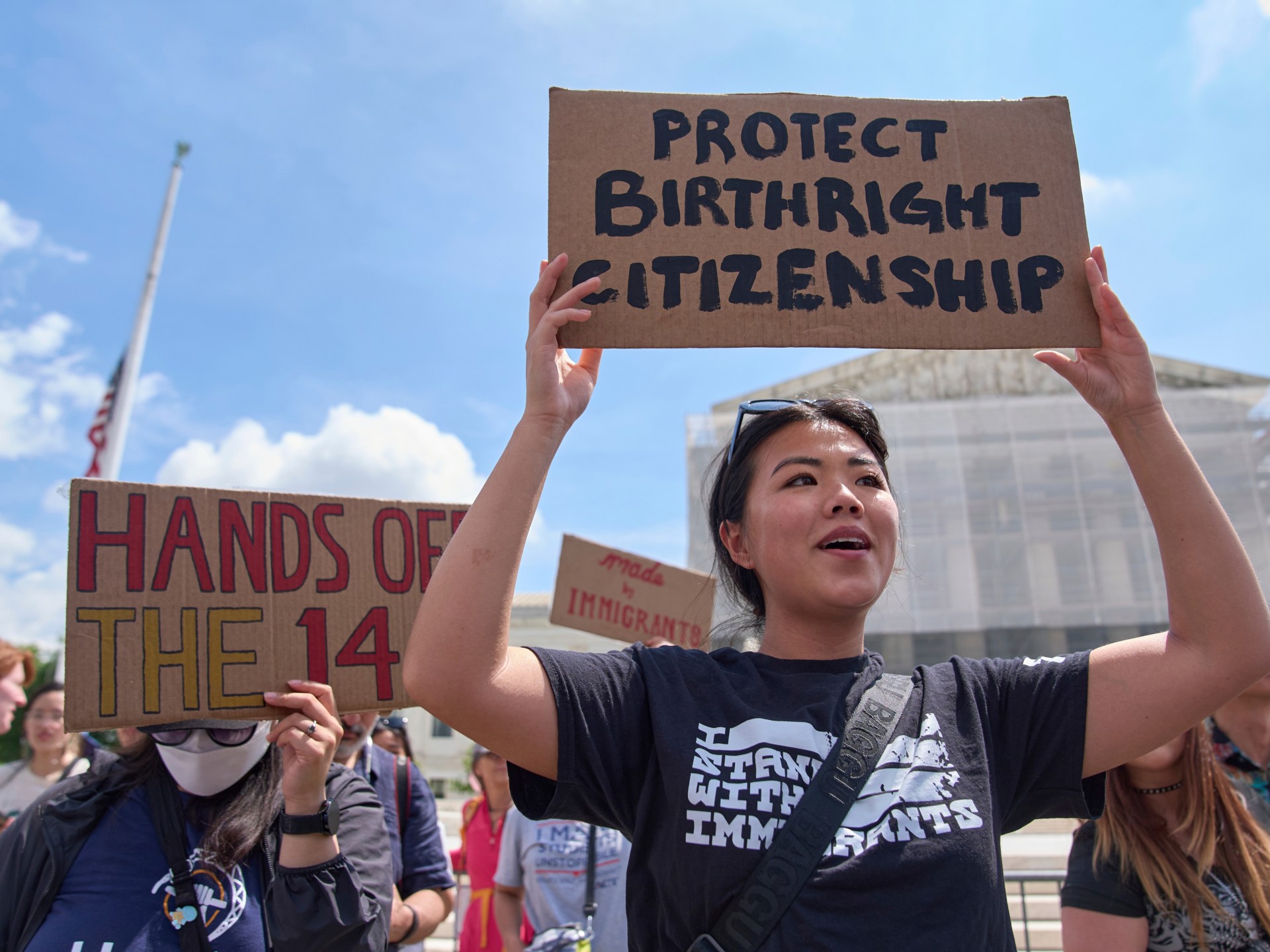
United States President Donald Trump has reignited his contentious battle against birthright citizenship, issuing two fresh executive orders just weeks after the Supreme Court decisively upheld the constitutional right. This move signals a persistent, albeit narrower, attempt to reshape a long-standing tenet of American law, even in the face of prior judicial setbacks.
Trump’s Latest Birthright Citizenship Strategy Unveiled
The orders, inked on Thursday, represent a refined approach compared to Trump’s sweeping initial efforts. One directive aims to broaden a specific, existing exception, traditionally barring US citizenship for children of foreign diplomats or hostile invading forces. Simultaneously, the second order targets the controversial practice of “birth tourism,” instructing both the Secretary of State and the Secretary of Homeland Security to take action against mothers traveling to the US solely to give birth on American soil. These actions underscore the administration’s continued focus on perceived vulnerabilities in immigration policy.
Predictably, these executive orders are already facing the looming shadow of significant legal challenges, echoing the fate of prior attempts. From the hallowed halls of the Oval Office, President Trump didn’t mince words, lambasting the Supreme Court’s earlier decision as “very unfortunate.” He asserted that the justices had “made a joke” out of birthright citizenship, vowing that his administration was actively “making adjustments” to its strategy following the judicial setback.
Recall that on January 20, 2025, the dawn of his second term, Trump had initially signed an executive order seeking to dramatically reinterpret the Fourteenth Amendment. His administration argued that children born to undocumented immigrants or those on temporary visas were not “subject to the jurisdiction” of the US, therefore not automatically qualifying for birthright citizenship. However, come June, the Supreme Court unequivocally ruled against this narrowing interpretation, citing the Constitution’s Citizenship Clause. The majority opinion explicitly stated, “If Congress intended to limit American citizenship to the children of those domiciled in the United States, nothing in the succinct language of the Citizenship Clause conveyed that design.” For a deeper understanding of this pivotal amendment, one might consult its full legal text.
Despite commanding a conservative supermajority, a surprising six of the nine justices voted to uphold the prevailing interpretation, delivering one of the most significant legal rebukes of Trump’s second term. The administration’s argument, that the 14th Amendment was solely intended for children of newly freed slaves and had been widely misinterpreted since its 1868 ratification, found little traction. Chief Justice John Roberts, himself a conservative, penned a stinging rebuttal: “There was scant evidence for this dramatically revisionist view.” He affirmed the original promise: “The Framers of the Fourteenth Amendment extended that promise to ‘every free-born person in this land.’ We keep that promise today.”