
After election victory, Chow to face budget pressure and new deal with Ontario
Introduction & Key Takeaways
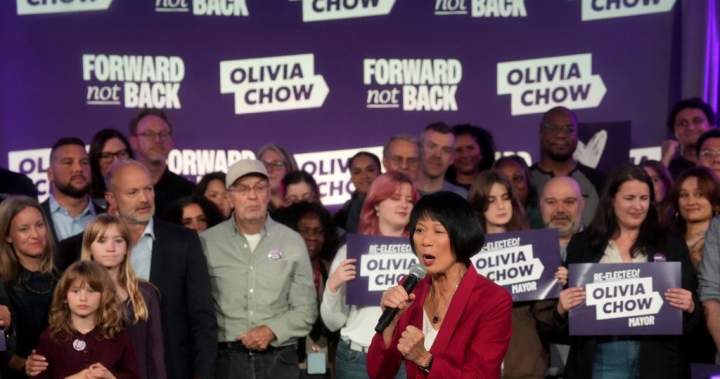
Following a decisive electoral victory, Olivia Chow has secured a second term as mayor, cementing her position as the leader of Canada’s largest city. Her successful campaign focused on a progressive agenda, yet the immediate horizon is dominated by severe fiscal challenges. The Olivia Chow administration must now navigate complex intergovernmental negotiations to address a staggering multi-billion dollar budget shortfall. Key takeaways from her re-election include:
- A commitment to maintaining property taxes near the rate of inflation.
- The continuation of flagship social policies, such as free school lunch programs and transit fare caps.
- An urgent need to finalize a new funding agreement with the provincial government to replace the expiring 2023 financial deal.
- A diplomatic pivot toward collaboration with Premier Doug Ford to address broader economic threats, including potential U.S. trade tariffs.
Background & Context (What Just Happened?)
The recent municipal election saw voters reaffirm their confidence in the progressive platform championed by the incumbent mayor. By defeating challenger Brad Bradford, Olivia Chow signaled that Toronto residents prioritize social stability and infrastructure affordability. However, the victory lap was brief. As the city transitions into the next four-year mandate, the reality of municipal finance takes center stage. In 2023, the mayor successfully negotiated a landmark agreement securing $1.2 billion in operating support from the province. As that lifeline approaches its expiration date, the city faces a projected budget deficit of approximately $1.1 billion for the 2027 fiscal year. This financial gap threatens to undermine the very programs that defined her campaign.
Root Cause & Deep Dive Analysis (Why Did This Happen?)
The structural deficit in Toronto is not a sudden occurrence, but rather the result of long-term funding models that rely heavily on property taxes to fund essential urban services. As Toronto continues to grow as a major economic hub, the cost of transit maintenance, infrastructure expansion, and social safety nets continues to outpace revenue growth. Much like the political dynamics seen in other regional centers, such as those discussed in earlier analyses of electoral shifts, the mandate received by the administration is clear but constrained by economic reality. Without a sustainable, long-term fiscal framework, the city remains vulnerable to annual fluctuations in provincial and federal support.
Strategic Implications & Future Impact (What Does This Mean Globally?)
The strategic stakes extend far beyond city hall. With the return of Olivia Chow to the mayor’s office, there is a renewed emphasis on urban resilience in the face of national and international headwinds. Premier Doug Ford has indicated a willingness to work across political lines, citing the necessity of economic unity to protect local companies and communities from potential U.S. tariffs. This cooperation is vital, as Toronto accounts for a significant portion of the national GDP. The city is currently caught between local fiscal constraints and the broader imperative to maintain a competitive business climate in a volatile global trade environment. Success in these negotiations will serve as a bellwether for the future of municipal governance in Canada.
Conclusion & What to Watch Next
As the administration settles into this new term, all eyes will be on the upcoming budget meetings. The mayor has promised to work hard for every resident, but her ability to fulfill these promises rests entirely on her negotiating leverage with Queen’s Park. Observers should look for early signals of compromise regarding transit funding and revenue-sharing agreements. If the city cannot bridge its $1.1 billion deficit, it may be forced to choose between scaling back social initiatives or implementing significant tax adjustments. In the high-stakes world of Canadian politics, the path forward for the mayor will require a delicate balance of political vision and fiscal pragmatism.