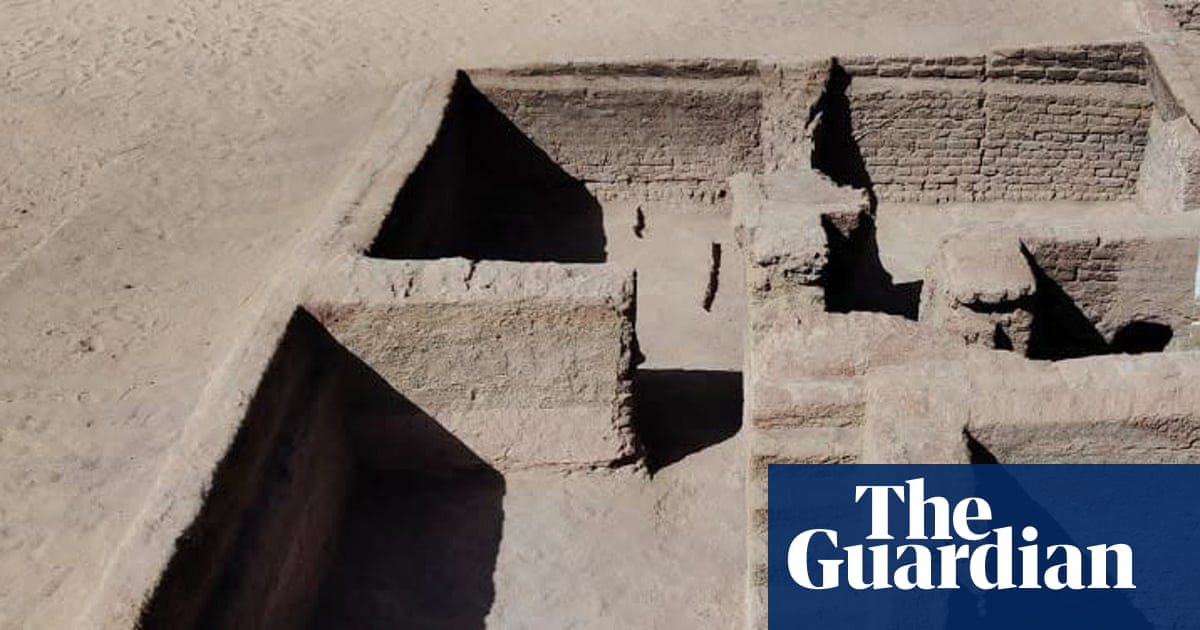
A recent archaeological breakthrough in Egypt’s sprawling western desert has captivated scholars and enthusiasts alike: the discovery of a remarkably well-preserved Ancient Byzantine City. This monumental find, nestled within the Dakhla oasis, offers an unparalleled glimpse into daily life, sophisticated urban planning, and economic vitality during a pivotal era when Egypt thrived under Byzantine rule.
Life in the Ancient Byzantine City
Dating back to the fourth century, the unearthed quarters of this bustling settlement paint a vivid picture of bygone existence. Researchers have meticulously uncovered residential blocks, intricate street networks – north-south thoroughfares crisscrossed by east-west streets creating inviting public squares – and crucial religious structures, including an impressive basilica-style church. The diligent efforts of the archaeological mission, led by Mahmoud Massoud, revealed remains of two watchtowers, silent sentinels safeguarding the settlement’s periphery.
Among the most poignant discoveries within this Ancient Byzantine City is the house of Tisous, believed to be a church deacon’s residence from the latter half of the fourth century. Intriguingly, archaeologists postulate it functioned as a house church before the grand basilica’s construction. Everyday artifacts abound: bread ovens, kitchens complete with grinding tools, and a trove of bronze coins depicting Byzantine emperors, adorned with Latin inscriptions and Christian symbols. A truly extraordinary cache of gold coins, dating to the reign of Roman emperor Constantius II (337-361 AD), further enriches our understanding of the period’s economic landscape.
The Dakhla oasis, a site of immense historical significance in Egypt’s New Valley governate, is currently under consideration for UNESCO’s World Heritage List, a testament to its global importance. Hisham el-Leithy, secretary general of the supreme council of antiquities, highlighted the clarity with which these findings detail urban development and economic activities of the era. Furthermore, Diaa Zahran, head of the Islamic, Coptic, and Jewish antiquities department, reported the discovery of some 200 pottery fragments, known as ostraca, inscribed with invaluable records of commercial transactions, correspondence, and the mundane rhythms of daily life, offering another window into the life of the Ancient Byzantine City inhabitants.
Tombs and Treasures at Marina el-Alamein
Concurrently, another significant revelation emerged approximately 100 kilometers west of Alexandria, at the Marina el-Alamein archaeological site. Here, eighteen ancient tombs, augmenting the site’s total to 48, were brought to light. These burial grounds comprise eleven rock-cut tombs, some plunging eight meters deep, alongside seven surface limestone-built structures. Inside, pottery vessels, amphorae, lamps, plates, altars, and limestone basins offered a window into funerary customs.
Eman Abdel-Khaliq, the mission chief at Marina el-Alamein, detailed the unearthing of a 2.5-meter-long granite sarcophagus, complete with skeletal remains undergoing meticulous study. Nearby, fragments of a plaster sphinx statue were found. Perhaps most captivating were the “golden tongues” – four gold pieces deliberately placed inside the mouths of some deceased individuals, a funerary practice steeped in the beliefs of the time. First unearthed in 1986, Marina el-Alamein is widely believed to be the ancient Greco-Roman port city of Leukaspis, a vibrant Mediterranean hub from the second to fourth centuries.
About the Author