
Are Europe’s extreme summers the new normal? What the science says
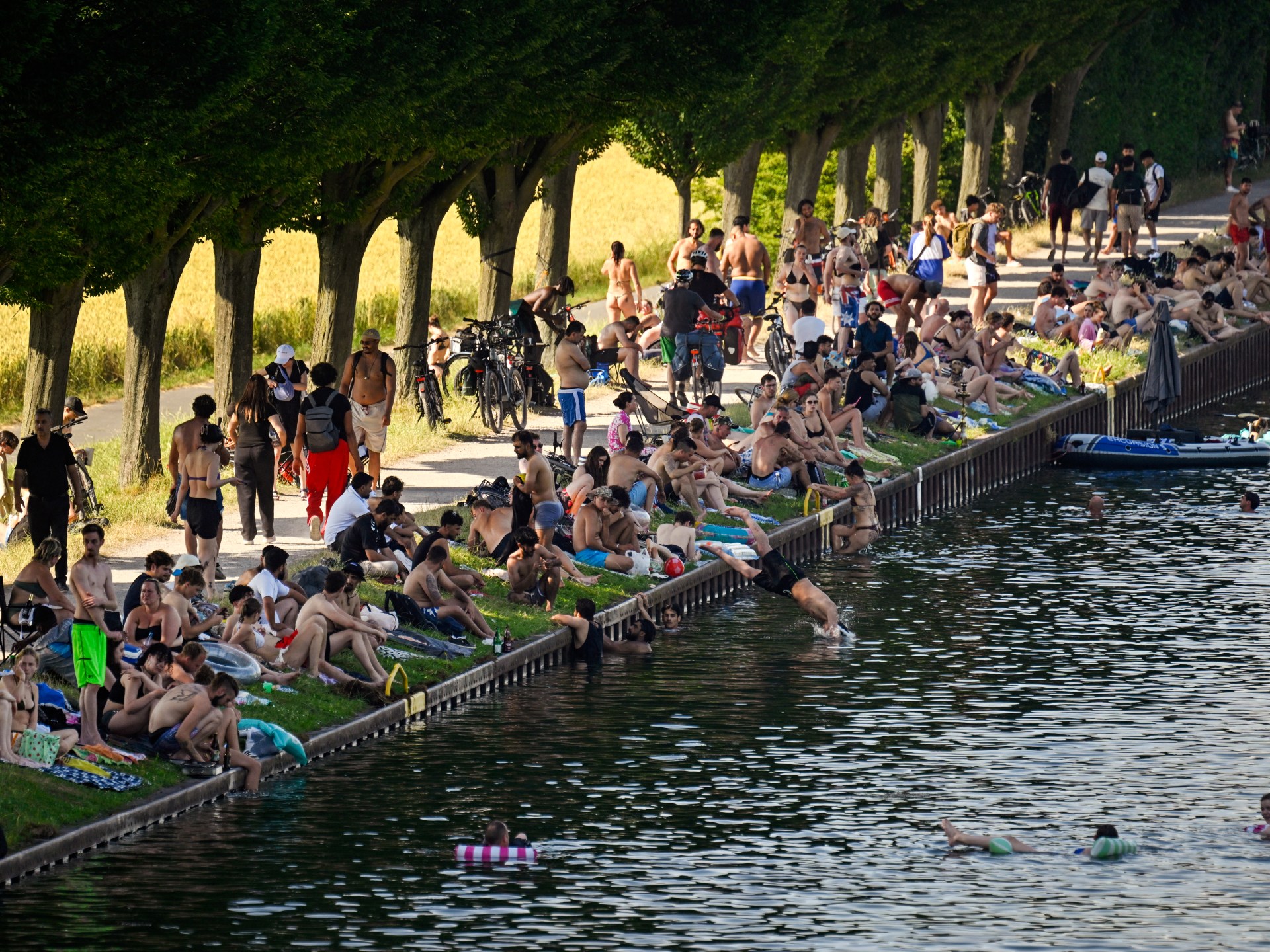
Europe sweltered through another brutal summer, its infrastructure buckling, its citizens suffering. Scorching temperatures, once anomalies, now feel like annual rites of passage, prompting a chilling question: is this the continent’s new climate reality? Experts are sounding the alarm, warning that Europe must confront and plan for this era of extreme summer heat not as an emergency, but as a predictable, recurring challenge.
Record-breaking heatwaves have swept across the continent, bringing with them a grim tally of illness, widespread disruption, and tragic loss of life. Transport networks ground to a halt as mercury soared past 40°C in Germany, the Czech Republic, and Poland. France endured days averaging 29.8°C, with some towns hitting a staggering 44°C, culminating in an estimated 1,000 excess deaths. These scenes, once unthinkable, may well be the new normal.
The Unsettling Rise of Extreme Summer Heat
A sobering study by World Weather Attribution (WWA) reveals that intense heat of this magnitude is now hundreds of times more probable than it was in 2003, a phenomenon virtually unheard of just five decades ago. Dr. Hans Kluge, the regional director for Europe at the World Health Organization (a prominent global health body), starkly warned that “heat-related mortality is likely to remain a feature of Europe’s warming climate.” Indeed, deaths have already climbed by an average of 52 per million people annually since the 1990s, a trajectory showing little sign of independent reversal.
So, why is this happening with such alarming regularity? Climate experts attribute it directly to global warming. Europe, in fact, has warmed at roughly twice the global average since the 1980s, according to Copernicus, the European Commission’s climate change service. Dr. Akshay Deoras of the University of Reading vividly describes this as “loading the dice” toward once-rare extremes. WWA’s modeling further projects that at current emissions rates, an event akin to this summer’s heatwave could occur every couple of decades – a chilling preview of what an ‘ordinary’ summer might entail by mid-century.
The immediate catalyst for these intense periods is often a stalled high-pressure system, colloquially known as a “heat dome,” which traps heat over a concentrated area for extended periods. While heat domes aren’t novel, Europe’s elevated baseline temperatures mean the same weather pattern now produces vastly hotter outcomes. Professor Hannah Cloke of the University of Reading points out that the warming driving these extreme patterns stems from emissions released decades ago, with the climate system only now fully responding. The continent, warming faster than the rest of the planet, is effectively experiencing the future first.
Is this daunting trajectory irreversible? Partially. Some damage, like the irreversible shrinking of Alpine glaciers, is already “locked in,” permanently reducing their contribution to summer river flow. However, not all hope is lost. “Every tonne of emissions avoided changes the odds of what comes next,” emphasizes Cloke. What actions we take today will determine the difference between summers that are merely challenging and those that become genuinely unsurvivable. Crucially, mitigating the severity of future extreme summer heat still remains within humanity’s grasp.
The human cost is already severe. The Lancet Countdown Europe calculated a staggering 62,000 heat-related deaths across the region in 2024 alone. Dr. Kluge highlights a critical architectural flaw: much of Europe’s housing stock was designed to retain heat, not shed it. Without significant retrofitting, deaths could continue to climb, even with improved warning systems. His prescription is clear: governments must treat heat as a predictable public health challenge, akin to winter flu, demanding permanent infrastructure and proactive identification of at-risk individuals, rather than reactive emergency improvisation.
Beyond structural changes, early warning systems that reliably reach vulnerable populations are vital. An overhaul of Europe’s water infrastructure, built for rainfall patterns that no longer exist, is also desperately needed. While cutting emissions won’t eliminate heatwaves entirely – they are a natural part of the climate system – it will undoubtedly make them “less intense, less frequent, and shorter-lived,” according to Dr. Deoras. The experts agree: the situation is not hopeless, but the window of opportunity to act decisively and shape a more manageable future for European summers is rapidly closing.