
Clash Of Narratives: BJP And Opposition Tussle Over Women’s Reservation In UP Assembly One-Day Special Session
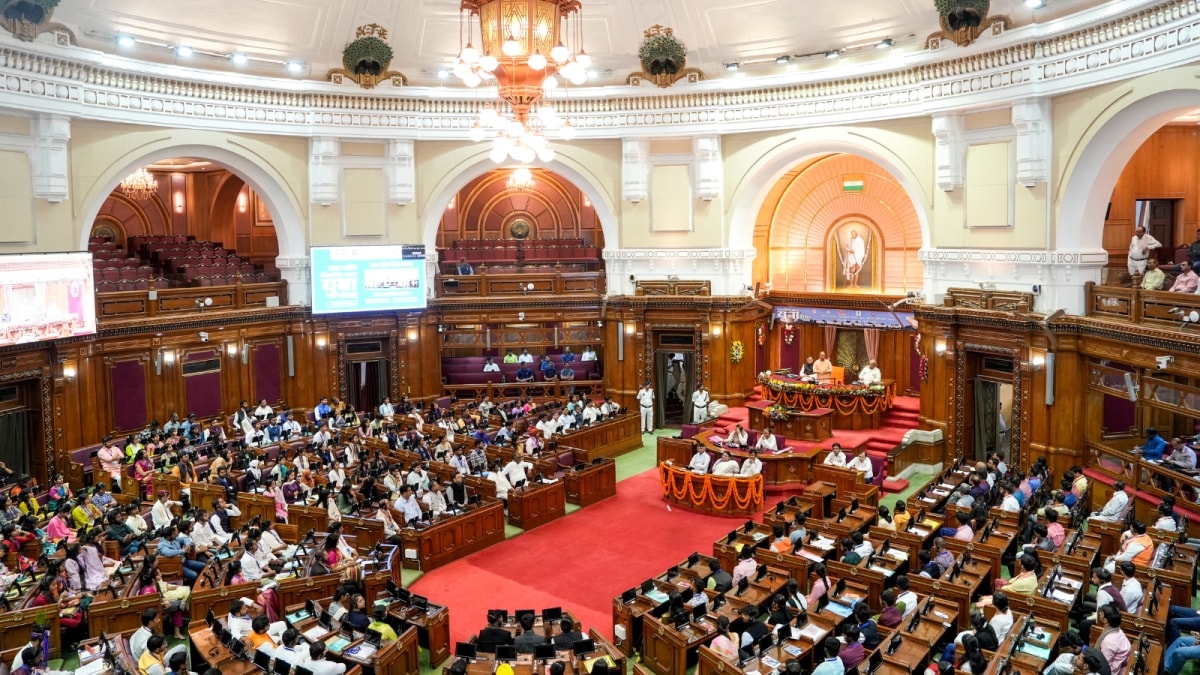
A political tempest brewed in the Uttar Pradesh assembly during its recent one-day special session, ostensibly convened to discuss women’s empowerment. Instead, the proceedings quickly devolved into a heated clash over Women’s Reservation, exposing deep fissures between the ruling Bharatiya Janata Party (BJP) and the opposition. The contentious debate unfolded against the backdrop of the Constitution (One Hundred and Thirty-First Amendment) Bill’s recent failure to pass in Parliament, a bill that had promised greater representation for women in electoral politics.
The BJP wasted no time in pointing fingers, castigating the Samajwadi Party (SP) and Congress for their alleged obstruction of the women’s reservation initiative at the national level. However, opposition parties swiftly parried, questioning the very appropriateness of debating a parliamentary bill within the state assembly. The day was punctuated by fiery rhetoric and strategic political maneuvering, leaving observers to ponder the true intentions behind the session.
The Tug-of-War Over Women’s Reservation
Chief Minister Yogi Adityanath spearheaded the BJP’s offensive. He launched a scathing attack on the Samajwadi Party, accusing them of attempting to derail the critical discourse on women’s empowerment and Women’s Reservation by introducing unrelated issues like religious conversion. Adityanath vehemently asserted the BJP’s unwavering support for reservations for Scheduled Castes, Scheduled Tribes, and Backward Classes, while drawing a firm line against any form of religion-based reservation.
“We support ensuring the rights of OBCs, SCs, and STs,” CM Yogi declared, his voice resonating through the chamber. “But women must also be given more representation in politics. This bill was aimed squarely at this. The opposition, by trying to mislead the public and link it with reservations for Muslims, is attempting to divide the country, and we will absolutely not permit it.”
Echoing the Chief Minister’s sentiments, Deputy Chief Ministers Keshav Maurya and Brijesh Pathak further amplified the attacks on both the SP and Congress, both inside and outside the legislative hall. Their unified front painted the opposition as obstructionist and divisive.
Yet, the opposition was far from silenced. Samajwadi Party legislator and Leader of the Opposition, Mata Prasad Pandey, expressed profound bewilderment at the session’s agenda. “It is truly intriguing why an issue meant for Parliament is being discussed here, in the assembly,” Pandey articulated, emphasizing the perceived lack of logical justification. He underscored that the Women’s Reservation Bill had already seen passage in Parliament back in 2023, yet the BJP, in his view, appeared to be dragging its feet on its implementation, opting instead for what he termed a ‘misleading’ discussion.
Congress Legislature Party leader Aradhana Mishra Mona chimed in, highlighting the sheer inadequacy of dedicating merely a few hours to such a momentous issue. She implored for extended deliberation, arguing that more time was essential for the opposition to present all pertinent facts and perspectives on the critical need for fairer representation in legislative bodies. Despite the intense exchanges, Vidhan Sabha Speaker Satish Mahana clarified that the assembly retains the prerogative to discuss any matter with the Chair’s permission, effectively legitimizing the day’s contentious proceedings.
The six-hour special session, marked by fervent arguments and strong political posturing, ultimately concluded with the House being adjourned sine die. While numerous legislators, particularly women, contributed to the discussion, the underlying political chasm over true women’s empowerment and Women’s Reservation in India’s legislative landscape remains glaringly apparent, unresolved and simmering.