
Cost of doing business in Kelowna grows amid social disorder
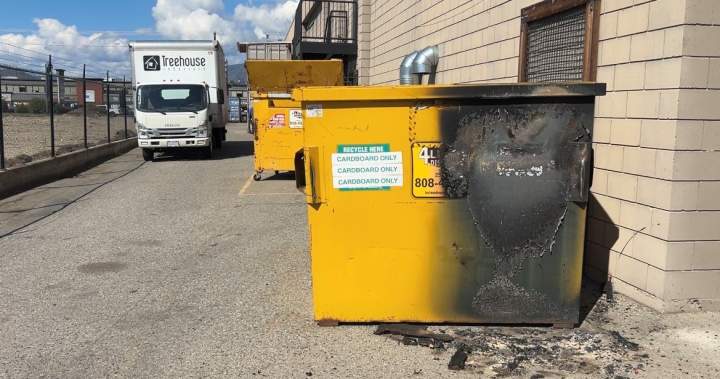
K-E-L-O-W-N-A. A picturesque city, yes, but for many local entrepreneurs, the idyllic veneer is cracking under the relentless pressure of rising Kelowna business costs. Gaeten Benoit, owner of Treehouse Interiors, recently found himself confronting yet another dumpster fire behind his furniture store, a harrowing incident that, while contained, underscores a deepening crisis impacting the financial viability and peace of mind for business owners across the region.
“I extinguished two fires just last year,” Benoit recounted, his voice tinged with weary frustration. The latest blaze, which erupted overnight, scorched a cardboard recycling dumpster positioned perilously close to his building on Windsor Road. A mere spark away from a potential inferno. Next door, David Turner of Savoy Equipment expressed profound concern. Servicing lawn and garden equipment, his premises house fuel – a dangerous combination should fire ever reach the wrong place, potentially leading to catastrophic consequences for his livelihood and the surrounding area. It’s a terrifying echo of a past tragedy, where an auto repair shop nearby was completely obliterated by an external fire just two years ago.
The daily reality for Benoit is a rigorous, unwelcome routine: constant property checks for vandalism, meticulous cleaning, and a perpetual battle against the encroachment of transient encampments and opportunistic fence-cutters. He’s already poured thousands of dollars into protective measures, a substantial burden amid an already challenging economic climate. These mounting expenditures represent a direct hit to the bottom line, fundamentally altering the landscape for local enterprises.
Addressing Kelowna Business Costs: A Community Plea
The notion of hiring private security has indeed crossed Benoit’s mind, yet he finds the very idea fundamentally objectionable. “Businesses pay property tax, and property taxes provide those services,” he firmly stated, articulating a widely shared sentiment. To him, engaging private security feels akin to absolving the city of its inherent responsibilities, a costly duplication he’d rather see absorbed into a slightly higher property tax for enhanced public services than bear privately. While the city’s new grant program, offering a modest $3,000 for security upgrades, is a welcome gesture, it often falls woefully short for larger operations. “When you have 22,000 square feet, you need quite a larger amount,” Benoit noted, highlighting the disparity.
Though city officials were unavailable for comment, a spokesperson confirmed via email that the community safety department is actively engaged in the affected area. Benoit, acknowledging the city’s efforts within its existing limitations, points instead to a more profound systemic issue: the justice system. “We are teaching our kids actions have consequences, but then you see people out there committing crimes all the time and there is no real consequences,” he lamented, suggesting that a lack of accountability fuels the recurring problems contributing to increased Kelowna business costs.
Echoing this call for broader intervention, David Turner emphasized the critical need for enhanced support services. “I think it starts with the mental health issues and addiction issues and we have nowhere to send these people,” he observed, underscoring the complex social factors intertwined with the rising disorder impacting businesses. Finding viable solutions will require a multifaceted approach, extending far beyond security cameras and reinforced fences, touching upon societal challenges that affect the very fabric of community and commerce. For more insights into how broader economic factors can impact local enterprises, consider visiting the Innovation, Science and Economic Development Canada website.