
‘Creeping death’: Israel weaponises ‘Yellow Line’ to annex Gaza
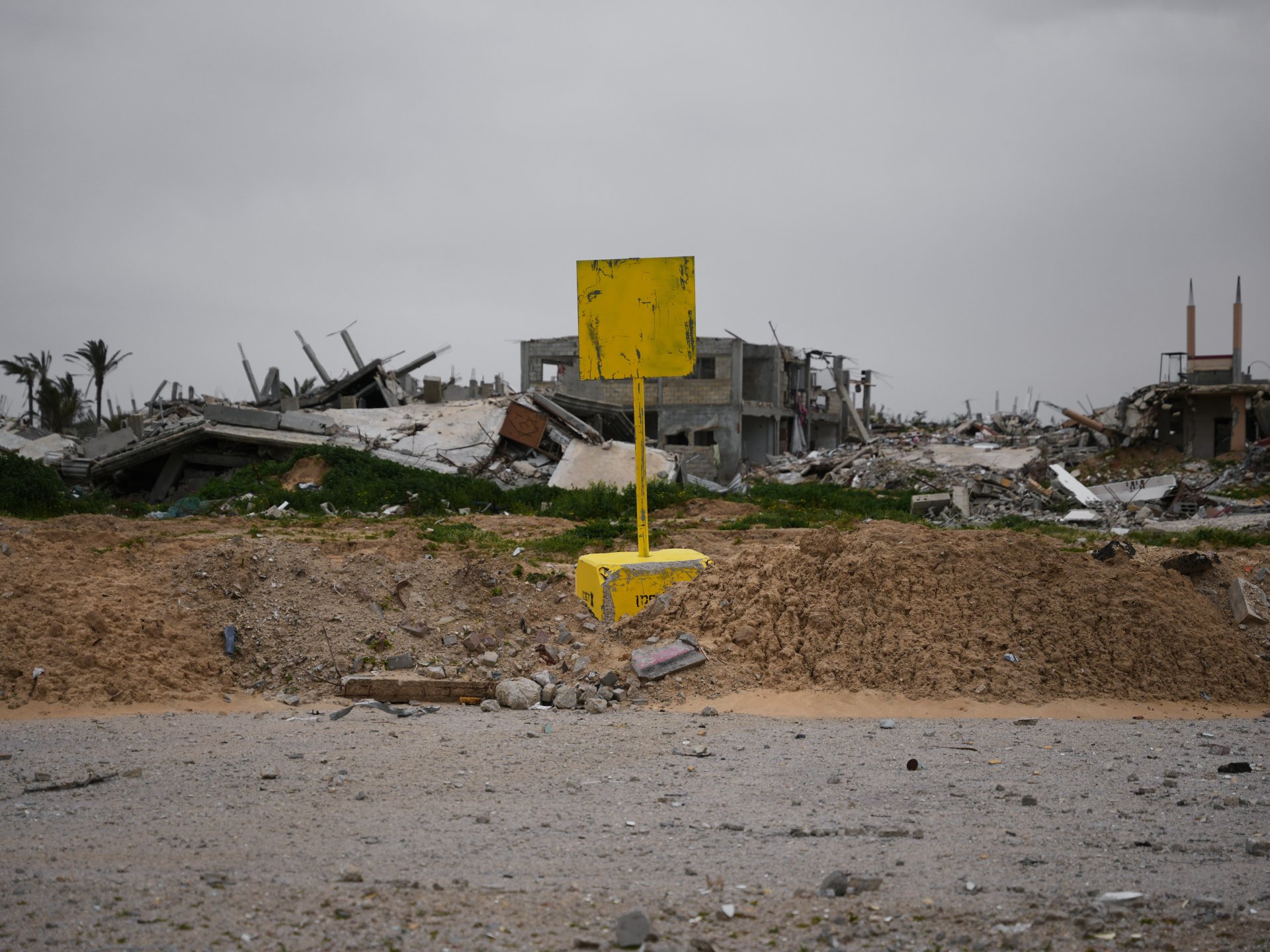
GAZA CITY — A silent, relentless redraw of Gaza’s fragile landscape is unfolding, marked by the simple, yet profoundly ominous, movement of yellow concrete blocks. These markers, initially presented as temporary field demarcations post-ceasefire, have morphed into a steadily advancing front line, creating what locals and analysts ominously dub a ‘creeping death.’ At the heart of this geographical shift lies the expanding **Gaza Yellow Line**, a restricted access zone that is systematically consuming Palestinian territory and fueling fears of de facto annexation.
According to the Office for the Coordination of Humanitarian Affairs (OCHA), this Israeli-designated zone has metastasized, swelling to encompass an staggering 64.9 percent of the Gaza Strip by June 2026, a significant leap from 53 percent earlier in the year. For the beleaguered Palestinian populace, these shifting boundaries are not mere lines on a map; they represent a daily, terrifying reality of forced displacement, lost livelihoods, and an ever-tightening noose around civilian life. Tragic statistics underscore the human cost: the Government Media Office in Gaza has meticulously documented 3,795 alleged Israeli ceasefire violations, claiming the lives of 1,168 Palestinians since the October ‘ceasefire’ agreement. Alarmingly, roughly a third of these fatalities have occurred perilously close to this advancing demarcation.
The Relentless Advance of the Gaza Yellow Line
The human stories behind these statistics are harrowing. In eastern Deir el-Balah, Hazem Saeed recounted a chilling Friday night on July 17. Following drone-broadcasted evacuation orders, Israeli military vehicles inexorably pushed the yellow blocks between 300 and 350 meters westward under the cloak of darkness. Residents were met with threats of live fire should they resist. The barriers now stand mere meters from homes on Sultan Othman Street, confiscating vast tracts of agricultural and residential land. Families like Bin Saeed, al-Louh, and Abu Ghraba, once self-sufficient farmers, now find their sole means of sustenance severed, their fields swallowed by the expanding zone.
A similar nightmare unfolds in Zeitoun, east of Gaza City. There, 71 displaced families have erected the makeshift Ahl al-Sumud (People of Steadfastness) camp, positioned a perilous 70 meters from the **Gaza Yellow Line**. Camp supervisor Ramadan Abu Ammo articulated their despair, “We are carrying our souls on our palms, but where do we go? We have no other place.” Shrapnel falls almost daily, and rescue teams remain barred from accessing areas where his own parents lie buried beneath rubble. Palestinian journalist Saed Hassaballah describes the advance as a “creeping death,” noting that intense gunfire and shelling invariably precede each new push, a brutal tactic to drive people from their homes.
Further north, the expansion assumes an even more destructive character. Resident Suhail Ouda testifies to an advance of up to 1.5km, witnessing Israeli bulldozers systematically flatten homes daily, while quadcopters detonate remaining structures behind the newly drawn line. Massive earthen barriers and surveillance watchtowers now transform once-residential areas into open military zones. The expansion of this restricted zone parallels historical patterns of territorial control, mirroring tactics observed after the 1967 war in the West Bank.
This relentless march of the **Gaza Yellow Line** has crippled essential civil services. Mohammed al-Sarsawi, head of media for the Gaza municipality, lamented that municipal teams can no longer access nearly half of Gaza City. Vital water wells, sewage facilities, and main control rooms are now isolated. With over half of the city’s population crammed into a fraction of its original space, a dire environmental and health catastrophe looms, a chilling testament to the paralysis inflicted upon Palestinian infrastructure. For more detailed information on global humanitarian challenges, consult reports from leading humanitarian organizations.
Political analyst Ahmed al-Tanani views these developments as a calculated strategy, a transition from potential withdrawal to an undeniable expansion of territorial grip, from 195sq km to 235sq km. This entrenchment is not anecdotal; an investigation by Al Jazeera’s Open Source Unit revealed 40 permanent Israeli military outposts across Gaza, many constructed from scratch after last year’s ‘ceasefire.’ Israeli National Security Minister Itamar Ben-Gvir’s recent rally declaration, “Gaza is ours,” chillingly confirms the annexationist intent, consolidating military control under the guise of security zones. Meanwhile, the flow of humanitarian aid and civilian movement out of the territory remains suffocatingly restricted, with compliance rates for both hovering around a mere 35 percent, leaving the enclave ever more isolated.