
Dalit-Muslim Unity Pitch In UP? Owaisi, Chandrashekhar Azad Likely To Announce Alliance For 2027 Polls
Introduction & Key Takeaways
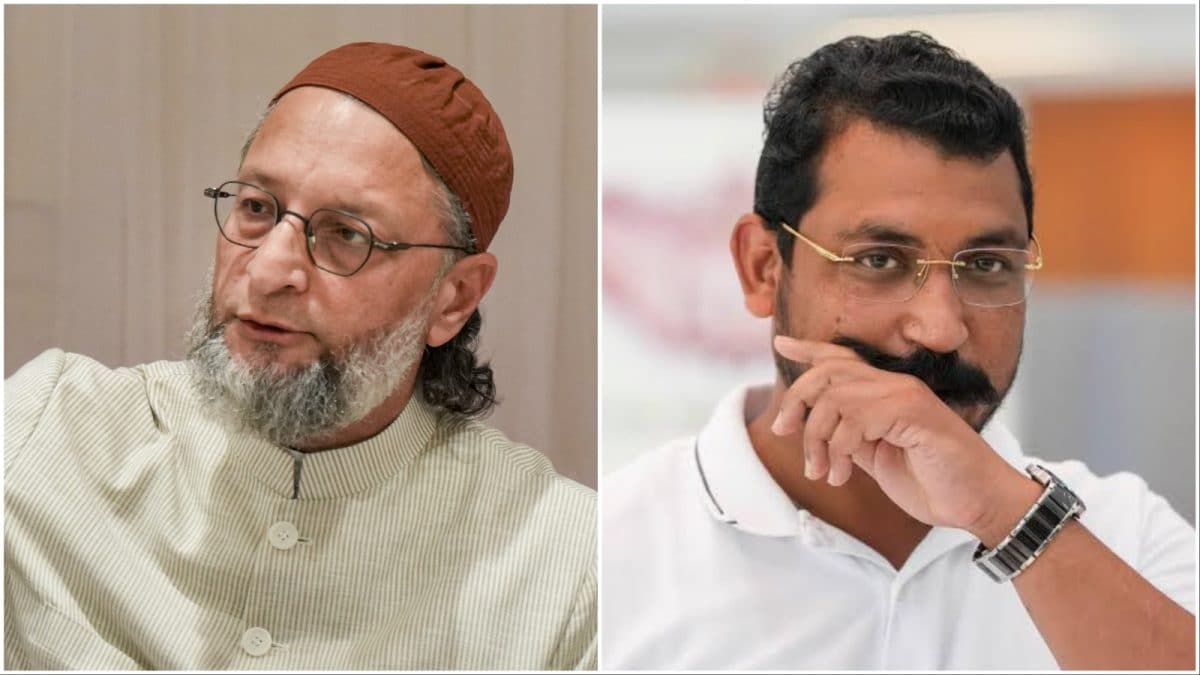
As the political landscape in Uttar Pradesh shifts ahead of the 2027 state elections, a new and potentially disruptive force is emerging. All India Majlis-e-Ittehadul Muslimeen (AIMIM) chief Asaduddin Owaisi and Azad Samaj Party (Kanshiram) president Chandrashekhar Azad are finalizing a strategic partnership. This UP Election 2027 development aims to capture the hearts and votes of the state’s largest marginalized demographics. By positioning themselves as a third front outside the current binary of the BJP-led NDA and the Congress-Samajwadi Party alliance, these leaders are betting on a potent combination of Muslim and Dalit support.
- The alliance seeks to consolidate approximately 40 percent of the electorate, combining Muslim and Dalit voter bases.
- This move creates a new third front that could challenge established political equations in Uttar Pradesh.
- The partnership follows failed negotiations between AIMIM and the broader opposition INDIA bloc.
- Central campaign themes include unemployment, governance failures, and the protection of rights for marginalized groups.
Background & Context (What Just Happened?)
For years, Uttar Pradesh politics has been defined by a deep-rooted competition between major national and state players. As reported by Wikipedia, the state holds a massive number of assembly seats, making it the ultimate battleground for Indian political hegemony. The decision by Asaduddin Owaisi and Chandrashekhar Azad to join forces is not merely spontaneous. It represents a long-brewing realization among smaller outfits that operating in isolation often leads to vote dilution. Following the failure of Owaisi to secure a seat-sharing arrangement with the Congress and Samajwadi Party, he has pivoted toward a partner whose base is geographically and socio-politically compatible.
Root Cause & Deep Dive Analysis (Why Did This Happen?)
The core motivation for this UP Election 2027 alliance lies in the demographic math of the region. Muslims constitute roughly 19 percent of the state, while Scheduled Castes (Dalits) represent approximately 21 percent. Combined, they constitute a massive bloc that, if unified, could decisively sway results in dozens of constituencies. While the Samajwadi Party has attempted to reach these segments through its ‘PDA’ (Pichda, Dalit, Alpsankhyak) outreach, the inclusion of AIMIM and the Azad Samaj Party adds a militant, activist edge to this coalition. This is a critical development, as explained in our recent report on economic frustrations and wage stagnation, which resonate globally with communities seeking stronger political representation.
Chandrashekhar Azad’s meteoric rise following his victory in the Nagina Lok Sabha constituency has provided him with the necessary political capital to negotiate from a position of strength. Simultaneously, Owaisi’s presence in Uttar Pradesh serves to galvanize a section of minority voters who often feel alienated by mainstream secular parties. The UP Election 2027 landscape is, therefore, becoming more crowded and volatile.
Strategic Implications & Future Impact (What Does This Mean Globally?)
The formation of this alliance signals a fragmentation of the opposition vote. By creating a distinct third front, the new coalition may split the anti-incumbency vote that would have otherwise gone to the Samajwadi Party or Congress. Strategically, this benefits the ruling party, which can maintain its dominance by ensuring that the opposition remains fractured. Furthermore, this alliance reflects a global trend where smaller, identity-driven parties leverage social media and grassroots agitation to bypass traditional media narratives. The discourse around unemployment and government job shortages remains a potent weapon in their arsenal, one that resonates across both urban and rural demographics struggling with high cost-of-living indices.
Conclusion & What to Watch Next
As the countdown to the 2027 assembly polls begins, observers must watch the specific seat-sharing ratios. Will this alliance simply act as a ‘spoiler’ to larger opposition parties, or can it genuinely capture legislative seats in its own right? The success of this coalition depends on whether they can translate their rhetorical focus on youth and farmers into a cohesive, statewide organizational structure. If they succeed, it will force all mainstream players to recalibrate their candidate selection and coalition strategies. We will continue to monitor the developments of this alliance as they prepare to unveil their full campaign roadmap in the coming weeks.