
Diwali, Disruption & Rs 10,000-Crore Loss: Delhi Traders Again Urge Rahul Gandhi To Defer Nov 1 Ramlila Rally
Introduction & Key Takeaways
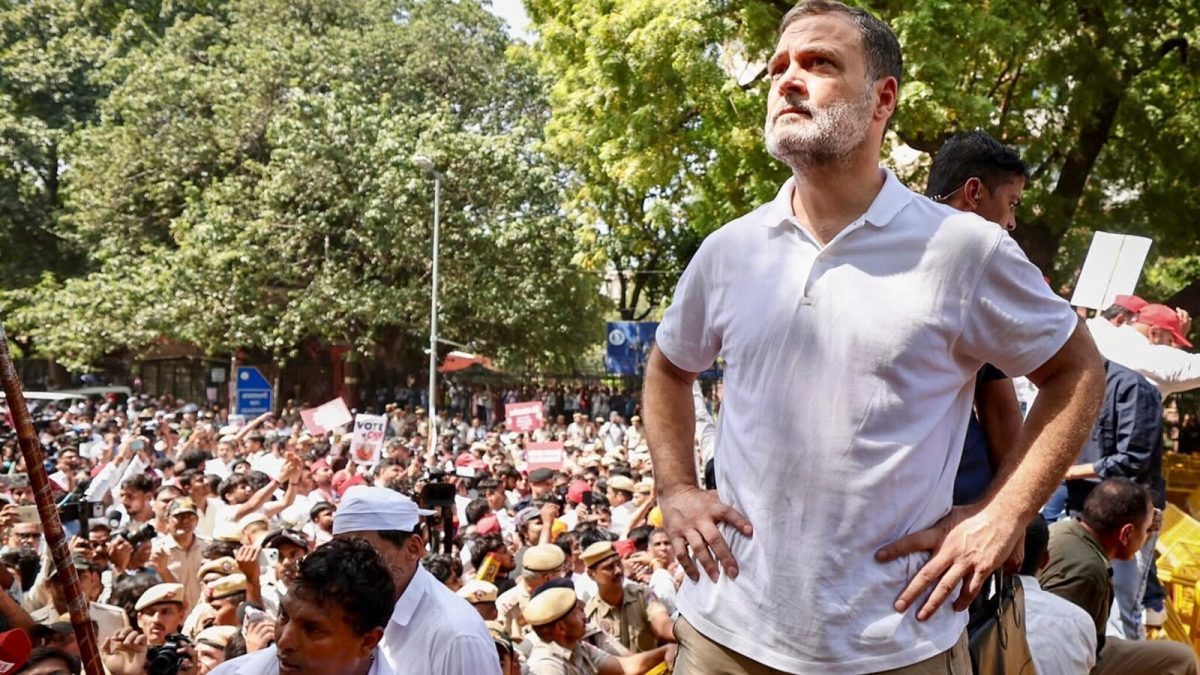
As the festive spirit of Diwali approaches, a major conflict has erupted in the capital between the political ambitions of the opposition and the economic survival of local merchants. Delhi traders are in a tense standoff with the INDIA bloc, led by Rahul Gandhi, regarding a proposed mega-rally scheduled for November 1 at the historic Ramlila Maidan. With an expected turnout of over 1 million participants and thousands of transport vehicles, the event threatens to bring the city to a standstill during the busiest shopping days of the year.
- Traders estimate potential business losses reaching ₹10,000 crore due to road closures and restricted metro access.
- The Chamber of Trade and Industry (CTI) has issued repeated appeals to defer the rally until after the festive period.
- Opposition leadership maintains that their protest is a necessary defense of democracy, framing the issue as a choice between immediate trade and the national political future.
Background & Context: The Ramlila Maidan Standoff
The core of the issue lies in the collision between political agitation and commercial activity. The INDIA bloc has organized this demonstration to register its protest against the Chief Election Commissioner and the ongoing Special Intensive Revision (SIR) exercise of electoral rolls. While political discourse is a staple of the capital, the timing has triggered immense backlash from the business community. As reported by international news outlets, the right to protest often conflicts with public infrastructure needs in dense urban environments.
The CTI has emphasized that the 5km radius around the venue is home to 20 critical wholesale markets, such as Chandni Chowk and Sadar Bazar, which act as the economic engine for the region. These hubs depend on seamless logistics, which the projected 15,000 to 20,000 buses would effectively stifle.
Root Cause & Deep Dive Analysis
The underlying frustration stems from a systemic misalignment between political strategy and economic reality. The opposition argues that without an equitable electoral process, commerce itself is meaningless. However, for the 20 lakh traders involved, the immediate reality is a cumulative loss already calculated at ₹3,000 crore over the previous month, with a risk of an additional ₹10,000 crore if the November 1 rally proceeds as planned. This brings into sharp focus the precarious nature of the global economic environment where regional disruptions can ripple outward.
Strategic Implications & Future Impact
The refusal by the INDIA bloc to move the date suggests a deeper commitment to maintaining the momentum of their political narrative at any cost. This rigidity has alienated a key constituency that traditionally values stability over disruption. Furthermore, the politicization of the rally has invited sharp criticism from the ruling party and various ideological groups, such as the VHP, who accuse the opposition of specifically targeting the Hindu festival of Diwali to cause economic harm.
The legal and logistical complexity of managing such a crowd in a dense city means the government will likely implement heavy-handed security measures. This creates a cycle of blame: the opposition blames the administration for locking down the city, while the administration blames the rally organizers for forcing their hand in the name of public order.
Conclusion & What to Watch Next
As the date nears, the impasse remains unresolved. While Congress president Mallikarjun Kharge has acknowledged the concerns of the traders, no definitive rescheduling has been announced. The outcome will serve as a bellwether for how the opposition balances its national political campaigns with the grassroots economic interests of the people. Observers should monitor the next 48 hours for any last-minute negotiations or court interventions that might force a compromise.