
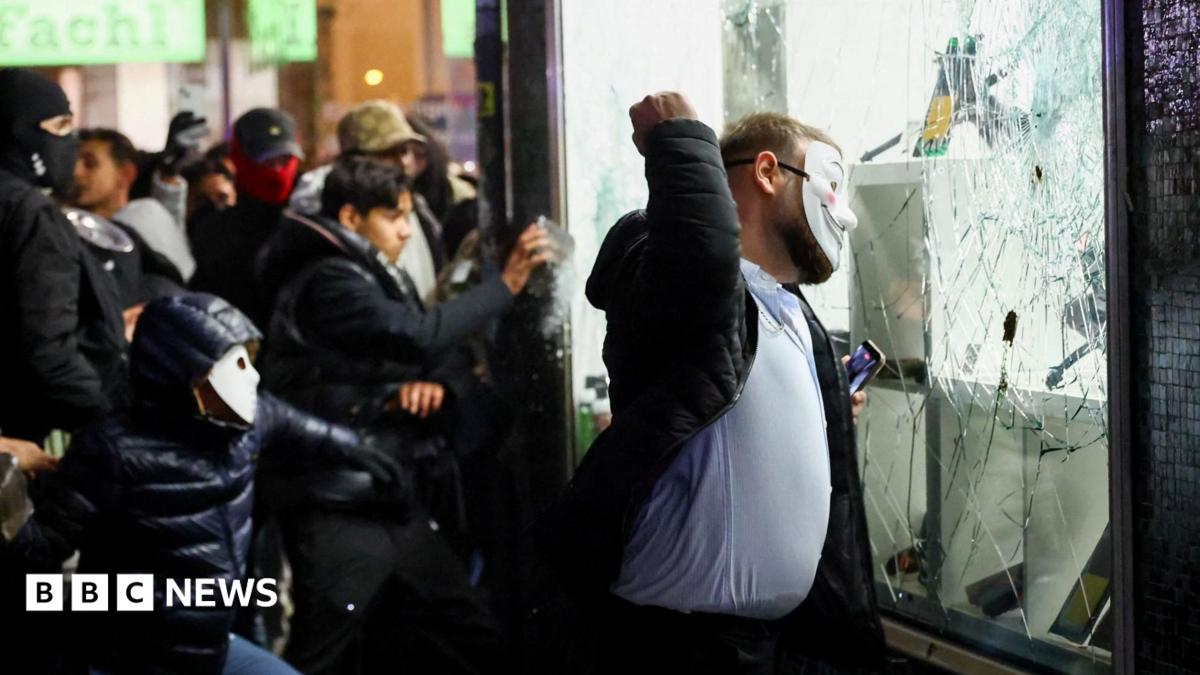
Shops looted as German cost of living protests turn violent
Introduction & Key Takeaways
The streets of Frankfurt and other major German cities have recently become the epicenters of civil unrest as German cost of living protests, initially framed as peaceful demonstrations, descended into chaos. Organized by the movement known as Gen Z regelt, the protesters demand urgent relief from inflationary pressures, underfunding in essential public sectors, and a rejection of perceived government overreach regarding military conscription. This article explores the roots of this mobilization and its broader implications for European stability.
- The protests highlights deep-seated grievances among youth populations regarding economic security and public service funding.
- Violence, including looting and attacks on emergency personnel, has overshadowed the core message of the movement.
- Government officials attribute the escalation to extremist infiltration rather than the mainstream protest body.
- This development mirrors similar youth-led movements observed recently in neighboring France.
Background & Context (What Just Happened?)
The mobilization, spearheaded by the campaign group Gen Z regelt, gathered thousands of participants across Frankfurt, Berlin, Cologne, and Hamburg. The organizers expressed a clear manifesto: prioritizing peace, improved healthcare, and educational funding over military expansion. However, as darkness fell over the cities, the atmosphere shifted dramatically. Police were forced to utilize water cannons and riot control tactics as elements of the crowd resorted to property destruction and the use of pyrotechnics against authorities. The situation reflects a growing trend of political polarization where, as seen in Germany’s evolving political climate, traditional policy discussions are frequently met with street-level activism.
Root Cause & Deep Dive Analysis (Why Did This Happen?)
The German cost of living crisis serves as the primary catalyst for these demonstrations. Years of suppressed wage growth, rising energy costs, and concerns over the future of the European welfare state have created a combustible social environment. Younger generations feel disproportionately burdened by the economic trade-offs required by modern geopolitical shifts. The World Bank has previously documented the correlation between rising global inflation and increased frequency of civil protests. When systemic channels for expressing dissatisfaction fail to produce tangible policy shifts, social unrest often acts as a secondary outlet. The specific mention of military conscription signals a generational divide regarding the role of Germany in the current security architecture of the continent.
Strategic Implications & Future Impact (What Does This Mean Globally?)
The normalization of street violence during protests in both France and Germany presents a significant challenge to the European Union. These incidents test the resilience of national security forces and the patience of the public. If governments continue to see German cost of living protesters as a security threat rather than a source of policy feedback, the cycle of agitation will likely continue. Furthermore, the infiltration of such protests by radical fringes makes it difficult for mainstream organizers to maintain their message. Leaders across Europe must now decide whether to integrate these voices into the parliamentary process or risk further fragmentation of civil society.
Conclusion & What to Watch Next
As the government investigates the degree to which extremists steered the unrest, the core socio-economic demands remain unaddressed. Observers should monitor whether the administration in Berlin opts for a fiscal stimulus package to soothe public anger or adopts a harder stance on law enforcement during demonstrations. The coming months will be critical in determining if this wave of protest marks a temporary peak of discontent or the beginning of a sustained period of political volatility in Western Europe.