
Germany’s far-right AfD says ‘democracy demands’ parties work with them after state election win
In a political earthquake that sent shockwaves across the European continent, the Germany Far-Right AfD (Alternative for Germany) has declared itself poised to seize power following an unprecedented electoral triumph in the eastern state of Saxony-Anhalt. This historic victory, announced on Monday after preliminary results from Sunday’s polls, sees the AfD falling just three seats shy of an outright majority in the state parliament, securing a staggering 43.8% of the vote.
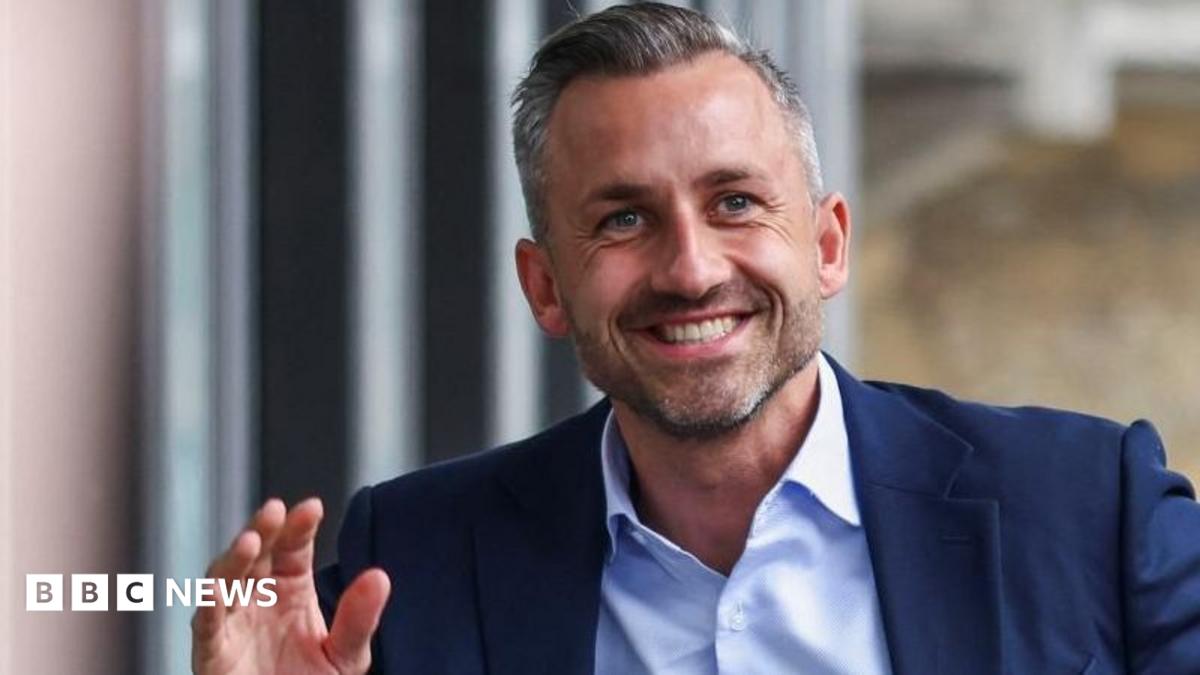
Ulrich Siegmund, the AfD’s charismatic leader in Saxony-Anhalt, appeared before the press, radiating confidence as he asserted that the party had received a "clear mandate to govern." His sentiments were echoed by deputy parliamentary leader Beatrix von Storch, who, in an interview with the BBC, declared the party "very, very close" to taking the reins. Their collective message to Germany’s established political parties is unequivocal: "Democracy demands" that they now engage with the AfD, arguing that refusing to acknowledge the will of the people expressed at the ballot box is simply untenable.
The reverberations of this electoral outcome were keenly felt within the traditional political establishment. Germany’s Chancellor Friedrich Merz, leader of the conservative Christian Democratic Union (CDU), expressed profound shock, describing the result as "seismic" for both the nation and his own party. The CDU, which had previously led the state’s outgoing coalition, saw its share of the vote nearly halved to a paltry 17.2%. Merz acknowledged the urgent need for "profound reforms" and a more emotional connection with voters, signaling a recognition that "business as usual" is no longer an option for the mainstream.
The Unprecedented Rise of the Germany Far-Right AfD
Never before since the end of World War Two has a far-right party controlled a German state. The implications of governing at the state level are substantial, granting influence over critical areas such as policing, local education, and administrative policy. This prospect, however, is deeply unsettling for many given the AfD’s controversial platform. The party’s regional chapter in the eastern German state of Saxony-Anhalt, a state with a relatively small population of 2.1 million, is notably classified as "right-wing extremist" by domestic intelligence — a label vehemently rejected by Siegmund and his colleagues.
The AfD’s policy agenda for Saxony-Anhalt includes highly contentious proposals. Among them are plans to segregate child refugees into separate classes and establish a dedicated task force to facilitate the detention and deportation of migrants deemed to no longer have a legal right to remain in the state. These proposals are merely localized expressions of a broader, national strategy known as "remigration," which, despite the party’s claims of targeting only criminals and illegal immigrants, is widely understood by critics as a euphemism for mass deportations of foreign-born residents.
Navigating the Political Labyrinth: What Happens Next?
With 39 out of 83 seats in the state parliament, the Germany Far-Right AfD requires external support to form a government. Beatrix von Storch revealed that the party is already engaged in discussions with individuals within the CDU parliamentary group, many of whom are reportedly "very, very unhappy with their own party." This potential fracturing of the conservative bloc could provide the AfD with a lifeline.
Several scenarios are now being debated in political circles. One possibility involves an informal arrangement where the left-wing populist BSW party, projected to win five seats, could offer tacit support, enabling the AfD to establish a minority government. The BSW shares some common ground with the AfD, particularly on issues of immigration and a more Russia-friendly energy policy, including backing the import of Russian gas. Siegmund confirmed that consultations with various parties and individual MPs commenced on Sunday night, acknowledging that these complex negotiations could stretch over days or even weeks.
Alternatively, the CDU could theoretically attempt to lead a messy, minority coalition government, though this appears highly improbable given their significant losses and the AfD’s strong showing. The most drastic outcome, an idea floated by Siegmund himself, is the prospect of another election if the AfD is unwilling to compromise on its core policy goals. This mirrors trends seen across the European political spectrum, where established parties struggle against rising populist movements.
The victory in Saxony-Anhalt carries immense symbolic weight beyond the state’s borders. The AfD consistently leads national opinion polls, often ahead of Chancellor Merz’s conservatives and the Social Democrats, particularly thriving in the eastern states which remain its ideological heartland. This follows their success in the 2024 state election in neighboring Thuringia, where they won the most votes but ultimately failed to secure power. Chancellor Merz’s candid admission that the Saxony-Anhalt defeat was the worst for the CDU "in years, if not decades" underscores the increasing significance of upcoming regional elections in Mecklenburg–Western Pomerania and Berlin.
International reactions to the AfD’s ascendance have been sharply divided. US President Donald Trump endorsed the result on his Truth Social platform, a post then celebrated by Russian presidential envoy Kirill Dmitriev as a "historic win for the pragmatic AfD." Dmitriev had previously lauded the Russia-friendly party as "the party of hope and reason." Conversely, Polish centre-right Prime Minister Donald Tusk issued a scathing rebuke, declaring that "in Poland only idiots and traitors can rejoice at the triumph of the AfD."
When pressed on the fears surrounding a far-right party gaining power, Beatrix von Storch articulated that the party’s supporters are primarily concerned with "losing our economy, they are afraid of losing our inner security." She argued that conservative voters are turning to the AfD because their concerns are not being addressed by traditional parties. Von Storch concluded with a stark warning: "Wake up and realise what happened in several other European states… The conservative parties will disappear from the landscape as it happened in Italy, as it’s about to happen in the UK, as it might also happen in France." The dramatic shift in Saxony-Anhalt certainly suggests that Germany’s political landscape is undergoing a profound and potentially irreversible transformation.