
Great Indian Bustard Still On The Brink: Latest Survey Estimates Only 130 Birds Left As Threats Rise
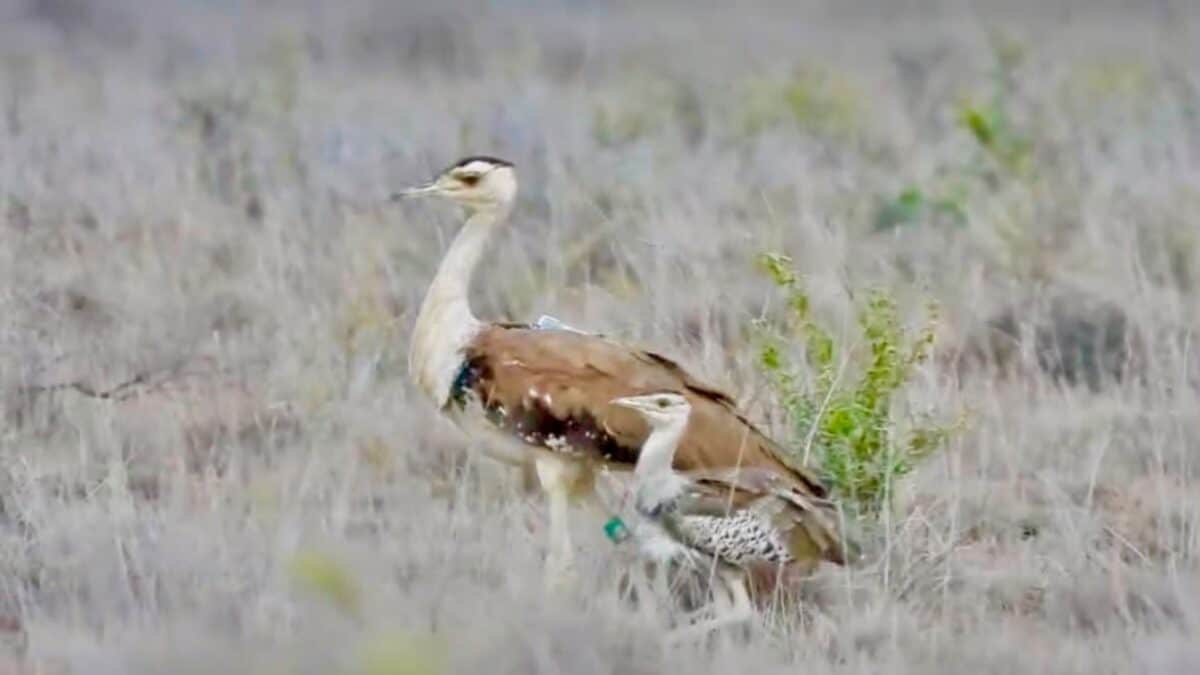
A recent, unsettling survey paints a stark picture: the majestic Great Indian Bustard, one of the heaviest flying birds on Earth, teeters precariously on the precipice of extinction. New estimates suggest a mere 130 individuals cling to survival in the wild, a figure that sends shivers down the spine of every conservationist. This critically endangered species, often referred to locally as the ‘Godawan’, faces relentless threats from a rapidly expanding human footprint across its fragile habitat.
Conducted between October 2024 and April 2025, the extensive survey covered approximately 14,000 square kilometers, encompassing the Desert National Park and the Pokhran Field Firing Range in Rajasthan. The findings indicate a population of 130 +/- 21 birds, remarkably stable since the 2017-18 assessment that recorded 128 +/- 19. While the numbers have not plummeted further, the report, presented at the National Board for Wildlife’s Standing Committee meeting, ominously notes that the species now occupies a paltry 16% of its surveyed landscape. Most birds are confined to small, undisturbed grassland pockets, primarily around Jaisalmer’s Thar Desert, which remains their last stronghold.
Immediate Threats to the Great Indian Bustard
The stability in numbers masks an escalating crisis. Despite largely unchanged grassland cover, the mortality risk for the Great Indian Bustard is soaring. Habitat fragmentation, a silent but deadly adversary, is driven by the relentless march of development. Power lines crisscrossing the landscape, new roads, extensive fencing, burgeoning water sources, and sprawling solar power installations slice through crucial territories, making survival increasingly perilous for these disturbance-sensitive giants. The period from 2017 to 2025 saw a relentless increase in human infrastructure, exacerbating the challenges faced by the GIB.
In response to this dire situation, concerted conservation breeding programs offer a glimmer of hope. Union Environment Minister Bhupender Yadav recently highlighted the success, announcing that 98 chicks have been born in captivity in Rajasthan at Sam and Ramdevra. The program anticipates entering its “rewilding phase” soon. Furthermore, a remarkable “jump start” effort in Naliya, Gujarat, led to the birth of a chick on May 21, 2026, which has successfully navigated the critical 40-day survival period. These efforts are crucial, but they must be complemented by robust habitat protection and effective threat mitigation strategies in the wild. Protecting these magnificent birds requires not just isolated breeding successes but a holistic approach to their entire ecosystem. This ongoing struggle underscores the critical importance of broader global wildlife preservation efforts.
The long-term survival of the Great Indian Bustard hinges on our collective ability to safeguard their remaining natural havens. Without stronger legislative backing, dedicated habitat restoration, and a swift halt to detrimental infrastructure expansion, the fate of these iconic birds hangs by the thinnest of threads.