
Israel rejects Trump’s 15-point plan for Gaza, Netanyahu says
Jerusalem is abuzz with political tremors as Israeli Prime Minister Benjamin Netanyahu has definitively rejected former US President Donald Trump’s comprehensive 15-point Gaza Peace Plan, emphatically stating that no military withdrawal will occur until Hamas is “genuinely” disarmed. This move delivers a significant blow to the ambitious diplomatic initiative, unveiled just last September, which aimed to chart a new course for the embattled Palestinian territory.
The announcement came during a cabinet meeting on Sunday, where Netanyahu’s stance was unwavering: “Israel rejects the 15-point document.” He further elaborated, asserting that the Israeli military “will not carry out any withdrawal until Hamas is genuinely disarmed and will continue to thwart threats against our forces and our citizens.” This pronouncement, though anticipated by some, underscores the deep chasm that continues to plague peace efforts in the region.
The Stalemate: Unpacking the Gaza Peace Plan’s Core Conflict
Last month, Trump’s self-styled “Board of Peace” heralded an agreement for the “complete disarmament” of Hamas and other armed groups within Gaza. However, Hamas quickly countered, clarifying that their relinquishment of heavy weaponry was strictly contingent upon Israel ceasing “all forms of aggression” and withdrawing its forces from the Strip. This fundamental disagreement exposes the intricate layers of mistrust and preconditions that have long characterized the long-standing tensions in the region.
The situation is further complicated by the ongoing reality on the ground. Despite an initial ceasefire agreed last October, Israeli forces have continued to conduct strikes on Gaza. Meanwhile, a Hamas official, speaking to the BBC, reiterated the group’s “commitment” to the agreement, expressing readiness “to engage seriously and responsibly in implementing” the 15-point plan, while urging mediators to ensure compliance from all parties.
Netanyahu’s delay in making this public rejection, despite his evident discomfort with the framework, speaks volumes. It highlights the precarious balance he must strike between upholding his country’s security imperatives and maintaining strong ties with its closest international ally. The blueprint for the Gaza Peace Plan hinged on a critical two-part agreement: the complete disarmament of Hamas and other armed factions, alongside the withdrawal of Israeli forces and the eventual reconstruction of Gaza under a new oversight body.
Only a week prior, Trump himself had lauded the initial agreement as a “monumental step toward lasting peace and security.” Yet, Netanyahu’s firm declaration on Sunday made it unequivocally clear: a “fictitious disarmament” would not suffice. Any withdrawal of Israeli forces, he insisted, must follow a truly genuine disarming of Hamas, a process that would inevitably be phased and complex.
Currently, discussions are reportedly underway with US officials to navigate this diplomatic impasse. “They have ideas; some of them are acceptable to us and some are not,” Netanyahu revealed, adding, “and we know how to stand our ground on these matters.” With Israeli elections looming and intense pressure from his right-wing coalition, including National Security Minister Itamar Ben Gvir, who outright dismissed the draft as “not acceptable,” concessions from the Prime Minister seem increasingly improbable.
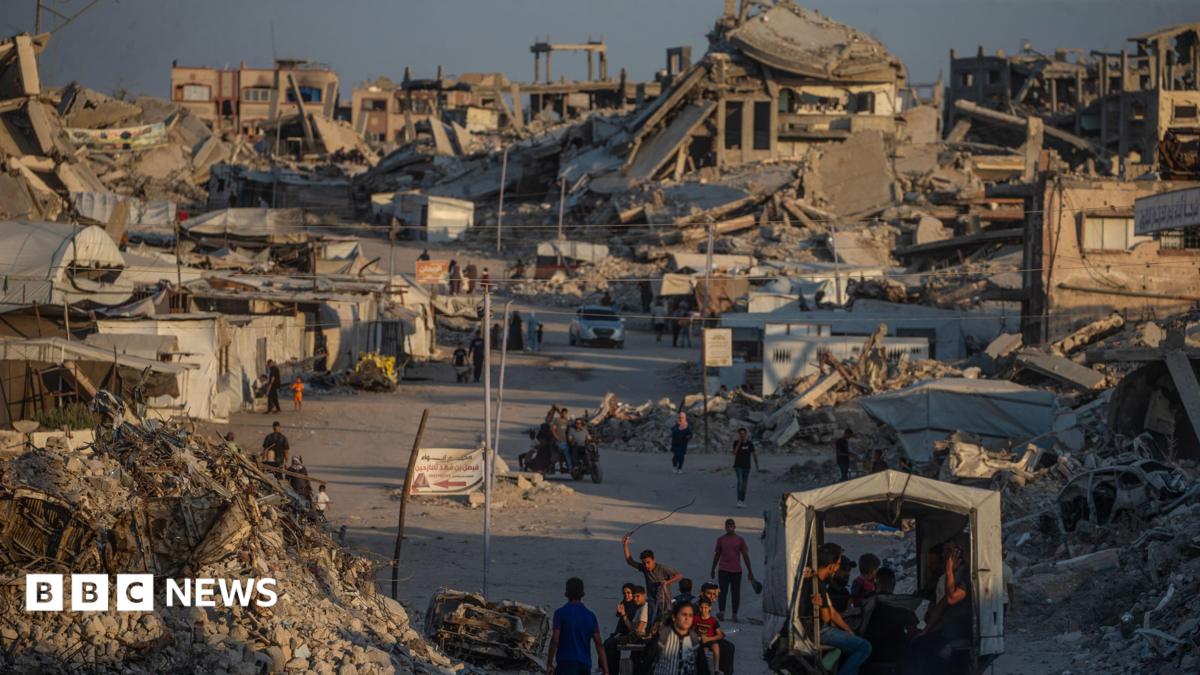
The humanitarian crisis in Gaza continues unabated. The United Nations reports approximately 1.9 million people, representing 90% of Gaza’s population, have been displaced since the war began following the Hamas-led attacks of October 7, 2023. These attacks claimed about 1,200 lives and resulted in 251 hostages. Israel’s subsequent military campaign has tragically led to over 73,000 deaths, according to figures from Gaza’s health ministry, deemed reliable by the UN. As discussions with US officials reportedly continue, the future of the Gaza Peace Plan remains shrouded in uncertainty amidst this grim backdrop.