
Jhansi Man Jumps Into Dam For Social Media Reel, Fractures Both Legs | Video
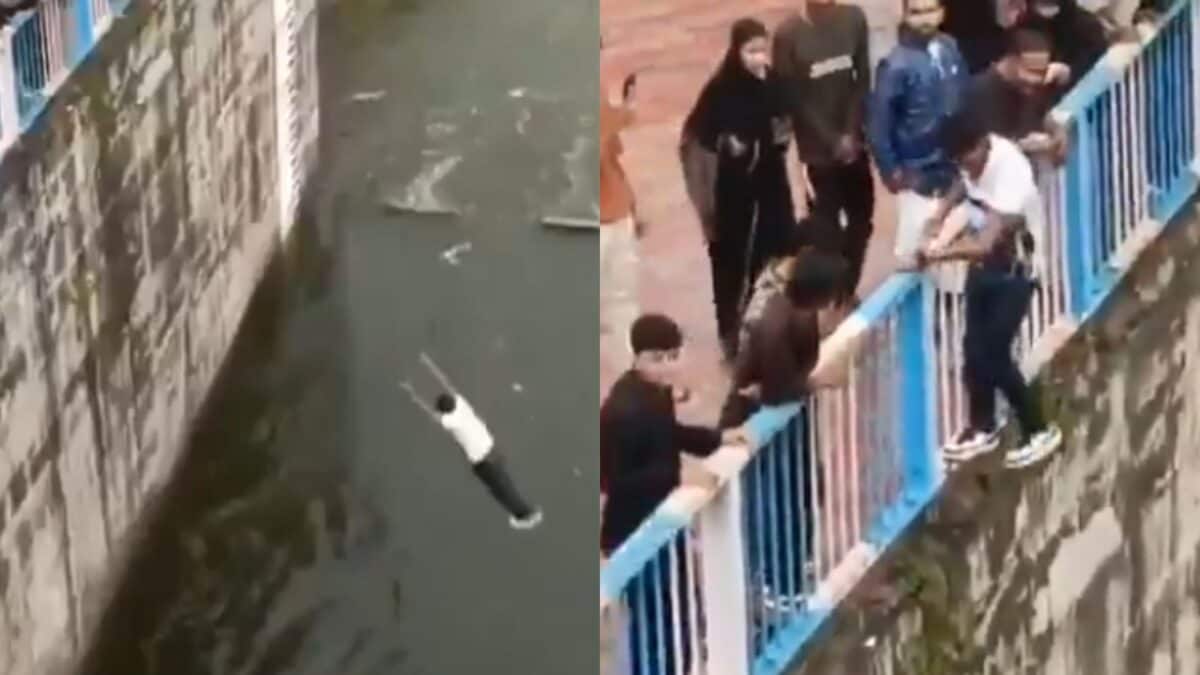
JHANSI, Uttar Pradesh – In a stark reminder of the escalating dangers associated with the pursuit of fleeting online fame, a 32-year-old man in Jhansi, Uttar Pradesh, recently suffered severe fractures to both legs after attempting a perilous jump into the Pahuj Dam for a social media reel. This harrowing incident underscores the alarming trend of individuals risking life and limb to create viral content, a phenomenon increasingly characterized by dangerous social media stunts that frequently culminate in tragedy or serious injury.
The man, identified as Pushpendra Kumar Manouria, resident of Parwai village under Raksa police station, had ventured to the picturesque Pahuj Dam on a Sunday evening with a group of friends. Their objective was clear: capture a sensational video that would garner significant attention on popular platforms. The plan involved Pushpendra scaling a safety railing at a vantage point overlooking the dam and plunging from a height of approximately 30 feet into the water below. As his friends meticulously recorded the audacious act, a chilling premonition was captured on film, with one friend ominously uttering, “God bless your soul,” moments before Pushpendra’s fateful leap.
The Reckless Plunge for a Reel
The initial moments of the jump seemed to unfold as intended, a dramatic freefall against the backdrop of the tranquil dam. However, the veneer of exhilaration quickly shattered upon impact. Pushpendra, unbeknownst to him, had chosen a spot where the water was deceptively shallow, concealing a treacherous rocky surface beneath. The force of hitting these submerged rocks instantly incapacitated him, leaving both his legs fractured and rendering him unable to move them.
A viral video, circulated widely across various platforms, graphically depicts Pushpendra crossing the safety barrier and launching himself into the void. The subsequent struggle is harrowing: despite his agonizing injuries, he managed to move his upper body through the water, eventually reaching a sturdy rod. With a surge of adrenaline and sheer will, he used the rod to painstakingly pull himself closer to the edge, where concerned bystanders and his shocked friends rushed to his aid, helping him out of the water and onto solid ground.
The Steep Cost of Viral Fame
Upon receiving news of the accident, local police swiftly arrived at the scene. Pushpendra was immediately transported to a private hospital, where his family soon joined him, reeling from the news. Medical examinations revealed the gravity of his condition; doctors confirmed severe fractures in both legs, necessitating immediate surgical intervention. One leg has already undergone a complex procedure, with two stabilizing rods inserted to mend the extensive damage. Surgeons anticipate that his other leg will also require similar, intricate surgery, foreshadowing a prolonged and arduous recovery period.
In a candid admission from his hospital bed, Pushpendra revealed a history of attempting similar daredevil acts at various locations, always believing he possessed the skill to execute them safely. He conceded that his fatal miscalculation stemmed from an ignorance of the water’s true depth at that specific spot. This incident, sadly, mirrors broader issues of public safety where oversight or disregard for established protocols can lead to devastating outcomes, much like a tragic building collapse in Delhi that highlighted shocking safety violations.
A Dangerous Digital Trend
Pushpendra’s painful ordeal serves as a potent microcosm of a rapidly intensifying global crisis: the relentless pursuit of online virality often overshadows basic safety and common sense. The siren song of likes, shares, and fleeting digital recognition compels individuals, particularly younger demographics, to engage in increasingly outlandish and dangerous social media stunts. This culture, fueled by algorithms that reward sensationalism, creates immense pressure to constantly outdo previous feats, blurring the lines between harmless entertainment and reckless endangerment.
Journalistic insights and extensive research continually highlight the concerning rise of risky online challenges, many of which originate on platforms like TikTok, Instagram, and YouTube. From ill-advised physical feats to dangerous chemical experiments, these challenges have been linked to a distressing number of injuries, hospitalizations, and even fatalities worldwide. Authorities and public safety advocates are grappling with how to effectively curb this dangerous phenomenon without stifling legitimate creative expression, often resorting to public awareness campaigns and direct appeals to platforms for stricter moderation.
The long-term physical and psychological toll on individuals like Pushpendra, and on their worried families, extends far beyond the brief moment of a viral video. The broken bones, the painful surgeries, the rehabilitation, and the potential for permanent disability represent a devastating cost that no amount of online attention can ever justify.
“I will never perform such a stunt again,” Pushpendra declared, his voice laden with regret, a powerful testament to the harsh lesson learned. His experience at Pahuj Dam is a stark, unignorable warning: in the digital age, the pursuit of clicks can exact a very real, very painful price. It is a critical reminder for content creators and consumers alike to prioritize safety and responsibility above the ephemeral allure of online fame, ensuring that no more lives are jeopardized for a viral moment.