
Last remaining tenant of Granville Street SRO has been moved out
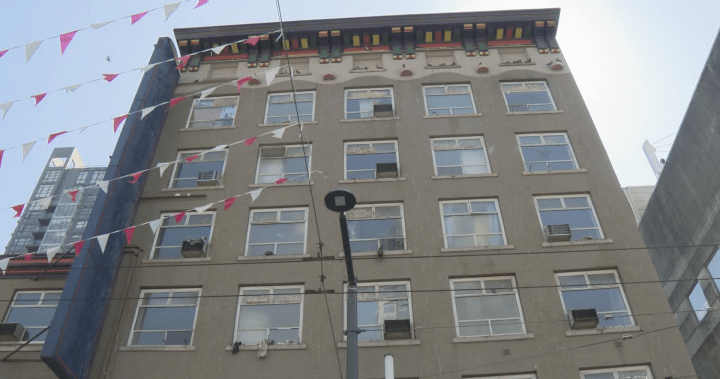
VANCOUVER, B.C. — After months of delays and a mounting bill for taxpayers, the final tenant has officially departed the controversial Luugat SRO on Granville Street. This significant development marks the end of a protracted saga that saw the provincial government struggle to meet its own deadlines, raising serious questions about public spending, property management, and accountability in social housing initiatives. The long-awaited Luugat SRO closure brings to a close a contentious chapter for a property that has become a symbol of both profound need and administrative disarray.
The Protracted Eviction and Ballooning Costs
The Ministry of Housing and Municipal Affairs confirmed the last remaining resident was relocated last week, nearly two months after the B.C. government’s initial promise to vacate the building by the end of June. This extended stay, for just one individual, came at an exorbitant price to the public purse. Taxpayers were saddled with a staggering $101,000 for July alone to maintain the partially emptied building. This figure, revealed by Global News, ignited fresh fury among critics who questioned the efficiency and fiscal prudence of the province’s housing strategy. Vancouver Mayor Ken Sim, never one to mince words when it comes to municipal challenges, voiced his profound dissatisfaction with the delay.
“It may only seem like a couple of months and in the whole scheme of things it may not feel like a big deal to the big provincial government, but the impact in the community every single day is a big deal and… they can do better,” Sim asserted, highlighting the palpable frustration felt at the local level. The seemingly minor delay of weeks cascaded into a six-figure expense, underscoring systemic inefficiencies that plague such large-scale government undertakings.
A Property’s Rapid Descent: From Hotel to ‘Cesspool’
The Luugat SRO, once the Howard Johnson Hotel, was acquired by the province for a considerable $55 million in 2020. Its transformation into social housing, however, was far from the success story envisioned. Disturbing accounts from former residents paint a grim picture of the conditions within. Vance Hughes, a past tenant, described the building, in shocking terms, as a “cesspool,” ravaged by rampant drug use and a precipitous decline in livability. Such descriptions resonate deeply, echoing concerns about the suitability of certain facilities for vulnerable populations and the efficacy of oversight mechanisms.
These revelations fuel calls for greater transparency, especially when considering the significant public investment. The Canadian Taxpayers Federation (CTF) minced no words, labelling the province’s acquisition and subsequent management of the Luugat SRO closure as a “disaster for taxpayers, for the community and for the tenants placed in an unlivable building.” Their sharp rebuke highlights a critical tension between the compassionate aim of providing housing and the practical challenges of managing complex social issues within repurposed structures.
Fiscal Fallout and Transparency Woes
The total government expenditure on the Luugat since its 2020 acquisition remains shrouded in mystery, a fact that has drawn the ire of both the public and oversight bodies. Global News continues to press for a comprehensive breakdown of all costs, including operations, staffing, repairs, and taxes. Mayor Sim’s queries encapsulate the general sentiment: “Why did it take so long? How much did it cost? How much is it going to continue to cost as they repurpose the building?” These are not merely rhetorical questions but urgent demands for accountability from a public increasingly wary of opaque government spending. Much like when questions arose regarding government corruption in Ukraine, the public here expects clear answers.
Adding another layer to this controversy is the consistent refusal by BC Housing to allow media access inside the Luugat. Despite the stated reason that a tenant was still residing there, the prohibition continued even after the last resident departed. “Now that the building is empty, there is no excuse for secrecy,” declared the CTF, directly challenging the ministry’s opaque stance. This media blackout serves only to intensify suspicions and reinforce the perception that officials have something to hide, further eroding public trust in governmental processes and expenditures.
Broader Implications for Vancouver’s Housing Crisis
The challenges surrounding the Luugat SRO closure are not isolated; they represent a microcosm of the broader complexities within Vancouver’s housing crisis. Jane Talbot, CEO of Downtown Van, articulated a cautious optimism, hoping this belated closure injects new momentum into addressing similar issues across the city. Her organization is now intently focused on ensuring the province upholds its commitment to relocate residents from other provincially-owned SROs, specifically naming the St. Helen’s Hotel and Granville Villa SROs within the entertainment district. The absence of a clear timeline for the closure of these other facilities leaves a lingering concern about the pace and efficacy of the provincial housing strategy. This reflects a larger debate around systemic failures in public administration, a concern that also emerged during the Jantar Mantar protests in India.
The fate of the former Howard Johnson Hotel, now vacant, remains uncertain. The Ministry of Housing and Municipal Affairs stated that with housing operations ceased, Community Builders Group has transitioned to a “nominally staffed, security-focused model” to manage vacant building risks. However, the questions persist: what will become of this $55 million asset? How will the province ensure that any future use truly serves the community’s best interests and avoids a repeat of this costly and contentious episode? The lessons learned from this entire episode must inform future decisions, demanding greater transparency, rigorous oversight, and genuine accountability in addressing Vancouver’s profound housing needs. The entire episode underscores the pressing need for governments to prioritize not just the acquisition of properties but also their humane and cost-effective management for the long term. For more on the socio-economic impacts of single-room occupancy, one can explore this type of housing and its historical context. Ensuring robust federal oversight can prevent such costly missteps.