
Mamata Vs EC: Bhabanipur Turns Into Warzone Over ‘EVM Manipulation’ Row, Showdown Ends In Anti-Climax
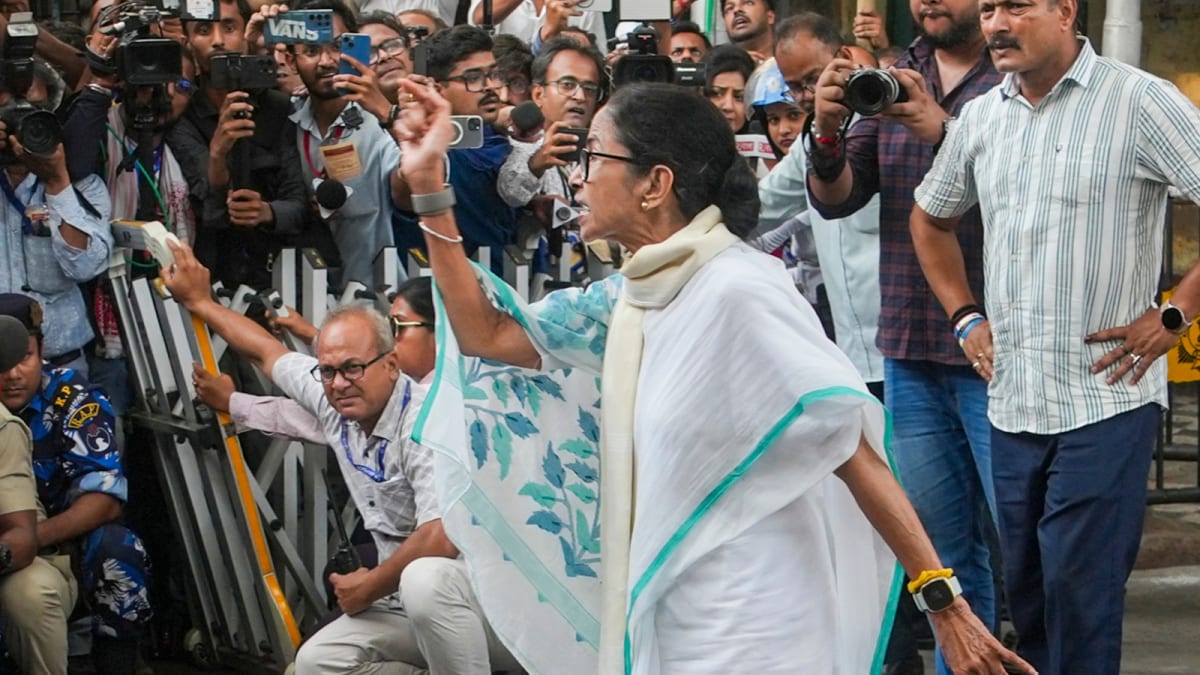
After a turbulent second phase of polling in West Bengal, Bhabanipur, the fiercely contested constituency of Chief Minister Mamata Banerjee, became the epicenter of a political maelstrom. Late Thursday night, the city plunged into chaos amidst serious allegations of EVM manipulation. This high-stakes drama, however, ultimately concluded in an anti-climactic fashion, with the Election Commission firmly dismissing all accusations.
The controversy ignited when the Trinamool Congress (TMC) circulated a video claiming “suspicious movement” within the Khudiram Anushilan Kendra in central Kolkata. This facility securely housed Electronic Voting Machines from seven North Kolkata Assembly seats. The party vehemently accused the Bharatiya Janata Party (BJP) and the Election Commission of India (ECI) of colluding in electoral malpractice, highlighting footage that allegedly showed ballot boxes being opened without the mandated presence of authorized representatives – a grave breach of electoral sanctity.
As the video gained traction around 8:30 PM, prominent TMC figures like Sashi Panja and Kunal Ghosh swiftly mobilized, initiating a sit-in protest outside the Netaji Indoor Stadium. Their sharp social media posts condemned what they termed a “midnight heist,” asserting that the BJP’s alleged schemes, from voter deletion to influencing officials, were now culminating in direct attempts to tamper with election materials.
Chief Minister Alleges Widespread EVM Manipulation
The political temperature soared as news spread of Chief Minister Mamata Banerjee’s imminent arrival. While TMC cadres massed, Banerjee personally proceeded to the strongroom at Sakhawat Memorial School in South Kolkata, spending nearly four hours demanding answers. She declared her party had received numerous reports of EVM manipulation across the state, adding that central forces initially barred her entry, despite election rules permitting candidates and their agents access to sealed rooms.
“Our agent has been arrested; there has been so much one-sidedness,” Banerjee asserted, explicitly accusing the Election Commission of India of bias. She vowed a relentless fight if anyone attempted to “steal the EVM machine” or “steal the counting.” Countering her, State Chief Electoral Officer Manoj Kumar Agarwal clarified that Banerjee, not being a candidate or authorized agent for the North Kolkata seats, was not permitted entry to the specific facility under dispute. Meanwhile, palpable tension gripped the area outside Netaji Indoor Stadium as BJP candidates raised strong objections to the escalating presence of TMC leaders and supporters.
TMC candidate Kunal Ghosh detailed the party’s sequence of events: candidates were asked to vacate the strongroom at 3:30 PM, only for it to reportedly reopen around 4 PM. He rushed back but was denied entry. However, during a midnight press conference, Agarwal decisively refuted Ghosh’s claims, attributing the incident to a “clear case of miscommunication” and reiterating that all candidates had been pre-informed about the postal ballot process.
The Election Commission of India staunchly rejected all allegations of EVM manipulation, underscoring that all prescribed procedures had been rigorously followed and strongrooms remained uncompromised. Officials confirmed that all seven strongrooms at Khudiram Anushilan Kendra were sealed promptly after polling, with candidates, their agents, and observers present, and the final room secured by 5:15 AM. They further clarified the separate arrangements for postal ballots, emphasizing that political parties had received prior notifications, including via email, concerning the segregation process.
The Election Commission’s late-night press briefing effectively defused the explosive situation, providing a comprehensive rebuttal to the charges leveled by Chief Minister Mamata Banerjee and the TMC. While no evidence of tampering was substantiated, Banerjee instructed her party workers to maintain an unwavering, round-the-clock vigil outside all strongrooms, ensuring a continuous presence. What began as a volatile evening of accusations and counter-accusations eventually subsided without concrete findings, leaving behind lingering questions about election integrity and the often-turbulent nature of Indian politics. Learn more about India’s electoral protocols from the Election Commission of India.