
Powerful magnitude 7.7 earthquake kills at least 47 in Indonesia
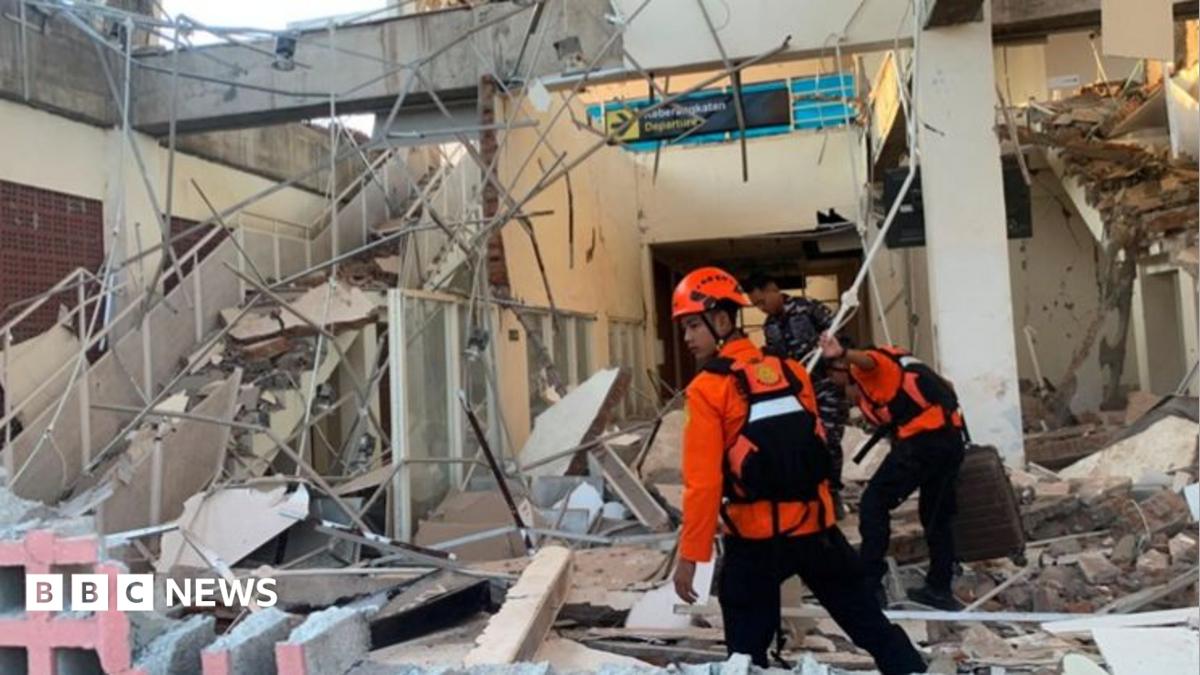
A colossal magnitude 7.7 Indonesia earthquake ripped through the island of Flores early Saturday morning, claiming the lives of at least 47 people. The nation’s disaster mitigation agency reported the devastating toll as search and rescue operations intensified across the affected region, where countless individuals have been injured to varying degrees, some critically.
The earth began to buckle just before 05:00 local time (22:00 GMT Friday), its epicentre a mere 15km deep beneath Flores. This exceptionally shallow depth amplified the tremor’s destructive power, causing widespread panic. The subsequent dozens of aftershocks, including a powerful 6.1 magnitude jolt, further terrorized residents already reeling from the initial catastrophe. Later, a distinct 6.4 magnitude earthquake struck North Sumatra, highlighting the region’s inherent vulnerability.
The Aftermath of the Indonesia Earthquake
Chaos erupted at the port in Maumere as concrete sections of the terminal building fragmented and plunged onto unsuspecting passengers awaiting an inter-island ferry. Harrowing accounts emerged of individuals being thrown into the sea following the collapse of a ship’s gangway. Emanuel Melkiades Laka Lena, the governor of East Nusa Tenggara province, somberly confirmed that many victims perished in their sleep, crushed by collapsing rubble within their homes.
Arnold Welianto, a resident of Talibura, a coastal village in Sikka, recounted the terror of being “startled awake” by the violent shaking. “I immediately went to my child’s room,” he recalled, describing how scores of people fled into the hills. The sea’s ominous recession prompted a mass exodus inland, with 2,000 individuals self-evacuating on motorbikes. A tsunami warning, thankfully, was lifted approximately three hours after the initial tremor when no significant sea level rise materialized.
Indonesia’s position along the meeting point of three major tectonic plates makes it particularly susceptible to complex geological forces, explaining the frequency and intensity of such seismic activity. This inherent instability often leads to both destructive earthquakes and volcanic eruptions across the archipelago.
The National Disaster Management Agency (BNPB) has identified Manggarai province as one of the hardest-hit areas, recording 24 fatalities. Additional deaths were reported in East Manggarai (17), Sikka (3), and at least one each in Ngada, Ende, and West Manggarai provinces. The extensive damage includes over 150 houses severely impacted, alongside numerous educational institutions, healthcare facilities, places of worship, and other public buildings. Aid convoys are now being dispatched to these remote and mountainous areas, where a full assessment of the devastation will undoubtedly take time.
Many residents, like Yulian Juita Ekalia, a university lecturer from Ruteng, remain too terrified to re-enter their homes, opting instead to cook outdoors. “It felt like we were on a trampoline – it was really scary,” she told news agency AFP, articulating the pervasive fear of further tremors that continues to grip the survivors of this devastating Indonesia earthquake.