
Rescuers search for survivors of powerful Indonesia earthquake
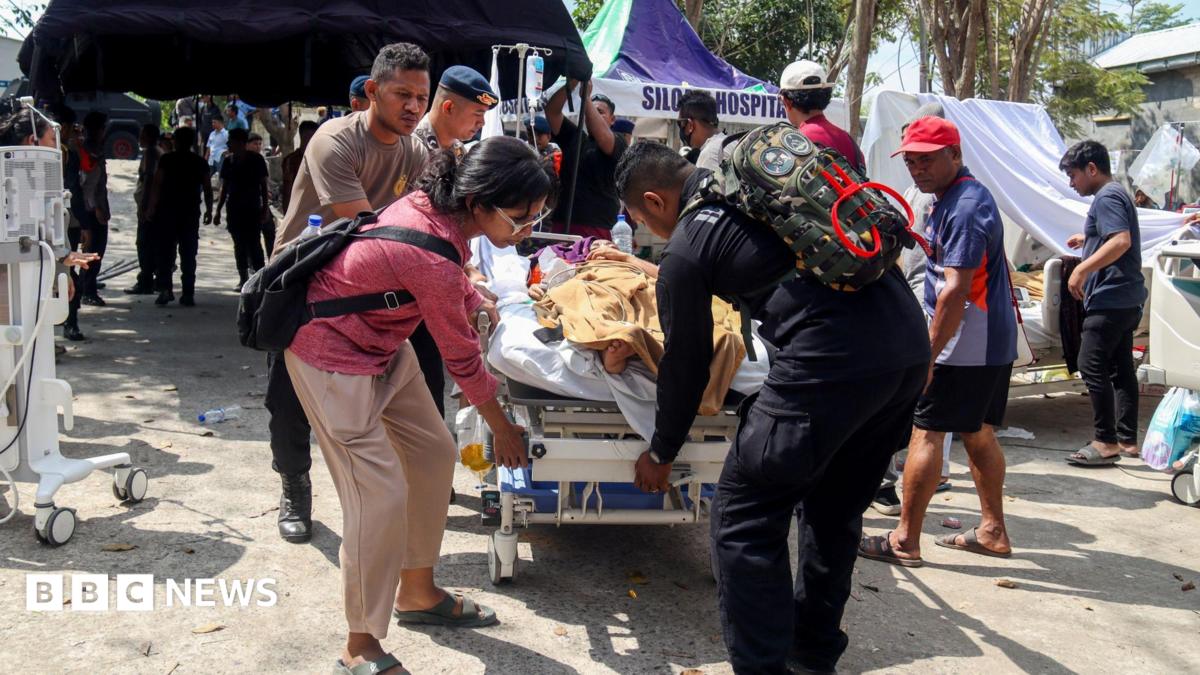
A devastating 7.7 magnitude temblor ripped through Indonesia’s Flores island on Saturday, triggering a desperate scramble as rescue teams tirelessly search for survivors of the powerful Indonesia earthquake. The catastrophic event has claimed at least 47 lives, with initial assessments revealing a grim landscape of widespread destruction across the remote archipelago.
Striking just before 05:00 local time, the quake registered at a shallow depth of 15km, according to Indonesia’s meteorology and geophysics agency. This primary jolt was followed by dozens of jarring aftershocks, transforming hundreds of buildings into unstable rubble. The true scale of this calamity, however, remains shrouded in uncertainty, especially with news of a separate 6.9 magnitude tremor striking another part of the nation, starkly reminding everyone why this volatile region is known as the Ring of Fire.
Tremors from Saturday’s seismic upheaval reverberated as far west as Bima Regency. Yet, it is Manggarai province that bears the heaviest scars, reporting 24 fatalities. East Manggarai recorded 17 deaths, Sikka province three, and at least one in each of Ngada, Ende, and West Manggarai provinces. Beyond the tragic loss of life, two individuals sustained serious injuries, with eleven others receiving minor wounds.
The Fight for Survival Amidst the Indonesia Earthquake Aftermath
The National Disaster Management Agency (BNPB) has swiftly dispatched aid, with over 10,500 packages already reaching base operations. Yet, the rugged, mountainous terrain of the affected region presents formidable challenges to comprehensive assessment and relief distribution. Early reports suggest over 150 homes are severely damaged, alongside numerous educational institutions, healthcare facilities, places of worship, offices, and other public infrastructures.
Harrowing accounts emerge from the epicenter. In Maumere, Flores’ largest town, concrete chunks rained down from a terminal building, sending passengers scrambling; some were even plunged into the sea as a gangway disintegrated. East Nusa Tenggara Governor Emanuel Melkiades Laka Lena confirmed that many victims perished in their sleep, crushed by collapsing debris. Arnold Welianto, a resident of Talibura, a coastal village, vividly described being “startled awake” and rushing to his child’s room. He also recounted to the BBC how the receding sea prompted widespread flight to the hills.
An initial tsunami warning, which prompted the self-evacuation of roughly 2,000 individuals, was thankfully lifted three hours post-quake after no significant sea level rise materialized. Despite this reprieve, landslides have rendered some villages inaccessible, further complicating rescue efforts. Temporary medical tents now serve as lifelines outside hospitals, like in Ruteng, treating the injured. The BNPB continues to advise caution: remain calm, avoid coastal areas, and steer clear of compromised structures. Indonesia, famously situated along the meeting point of three major tectonic plates, is inherently prone to such violent geological phenomena. For more information on global seismic patterns, one can consult the United States Geological Survey. This constant tectonic activity explains the region’s frequent, powerful Indonesia earthquake events.