
Rubio criticizes WHO’s Ebola response as US continues sweeping public health cuts
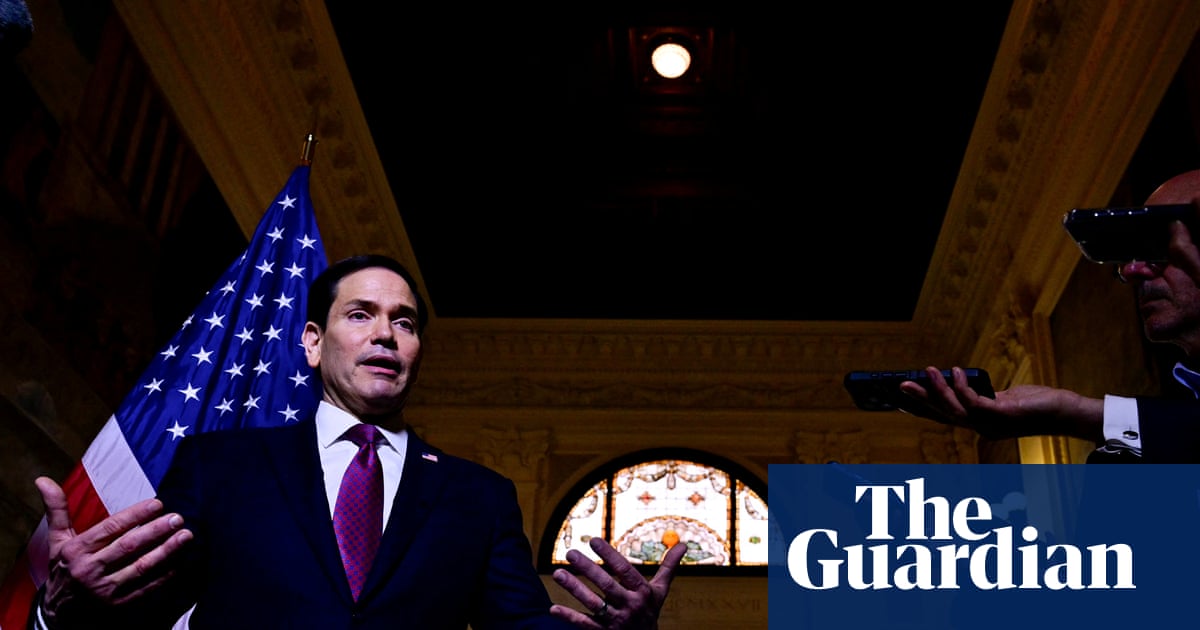
Marco Rubio, the US Secretary of State, recently delivered a sharp rebuke to the World Health Organization (WHO), alleging tardiness in their identification of the burgeoning Ebola outbreak across the Democratic Republic of Congo (DRC) and Uganda. This pointed Ebola response criticism from a high-ranking US official arrives amidst significant, ongoing public health budget reductions within the United States.
The Controversy: Analyzing Ebola Response Criticism
Rubio’s statements, made during a press briefing in Rome, were unequivocal. He asserted that while the CDC and WHO should lead such efforts, the latter was “a little late to identify this thing unfortunately.” These remarks are particularly poignant given former President Donald Trump’s decision last year to withdraw the US from the WHO, a move that public health experts universally condemned as potentially “sowing the seeds of the next pandemic.” This withdrawal decimated nearly a quarter of the WHO’s workforce—some 2,000 jobs—from its total staff of roughly 9,400.
The US, despite having slashed its own aid last year, has committed approximately $13 million in assistance, aiming to establish around 50 Ebola treatment clinics in the DRC. “It’s a little tough to get to because it’s in a rural area… and [a] hard-to-get-to place in a war-torn country, unfortunately,” Rubio noted, affirming a strong US commitment.
However, the Ebola response criticism leveled by Rubio has not gone unchallenged. Experts swiftly countered his claims, highlighting the WHO’s valiant efforts under immense constraints. Dr. Gigi Gronvall, an immunologist at Johns Hopkins Bloomberg School of Public Health, dismissed Rubio’s assertions as “misplaced.” She emphasized that the WHO operates with severely limited resources in exceptionally challenging, often insecure environments. “It is a strategic mistake – and a national security vulnerability – that we are worse off now to handle infectious disease threats than at the start of Covid-19,” Gronvall warned, urging robust investment in public health infrastructure, diagnostics, and vaccines.
Just days prior, the WHO officially declared the outbreak in the DRC and Uganda a “public health emergency of international concern,” acknowledging the high risk of further spread due to population mobility and trade. They specifically cautioned against fear-driven border closures or travel restrictions, arguing such measures are unscientific and can disrupt critical response efforts while hindering local economies. Learn more about global disease prevention strategies on the official CDC website.
US Public Health: A System Under Strain
The backdrop to this international critique is a domestically weakened US public health system. Trump’s second term has seen ongoing, sweeping layoffs across federal health agencies, including the Department of Health and Human Services, the Agency for Healthcare Research and Quality, and the National Institutes of Health. These recent cuts compound last year’s announcement by Health Secretary Robert F. Kennedy Jr. to reduce the department’s 82,000-person workforce by a staggering 10,000 jobs.
These deep reductions intensify concerns about America’s preparedness for the next inevitable pandemic. Jennifer Nuzzo, an epidemiology professor and director of the Pandemic Center at Brown School of Public Health, observed a concerning shift: “The CDC first learned of the outbreak when it was publicly confirmed, despite the fact that there’d been rumors of an outbreak for weeks.” She highlighted a departure from the historical US role in proactively investigating rumored outbreaks globally. “It feels like the US government is on the sidelines this time,” she concluded, underscoring the potential long-term consequences of this diminished engagement and the broader context of Ebola response criticism.