
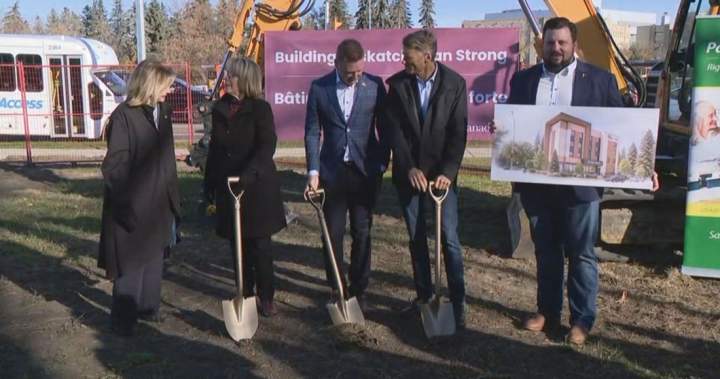
Saskatoon cancer lodge to offer temporary ‘home’ for patients and families
Introduction & Key Takeaways
The construction of a new Saskatoon cancer lodge is a pivotal development in regional health infrastructure, signaling a shifting dynamic in how the Canadian government manages medical support services. By securing a collaborative funding model involving both federal and provincial stakeholders, the project seeks to bridge the gap for patients traveling from rural or remote areas to access specialized treatment. This initiative represents a departure from historical norms where health facilities were strictly provincial domains.
- A landmark partnership between Ottawa and Saskatchewan provides $14 million in combined funding.
- The facility, located at 1036 College Drive, will feature 33 patient rooms and 14 family spaces.
- It serves a vital purpose for those commuting from northern and rural communities for specialized care at the Royal University Hospital.
- The project replaces a heritage facility built in 1928, modernizing the patient experience for future generations.
Background & Context (What Just Happened?)
For decades, the Canadian Cancer Society and various provincial bodies have recognized that the geographical expanse of Canada poses a significant hurdle for patients. The original Saskatoon cancer lodge, constructed in 1928, long served as a sanctuary for those undergoing rigorous treatment. However, the aging structure eventually succumbed to the march of time, necessitating its demolition. The current project is not merely a rebuilding effort, but a strategic upgrade designed to accommodate modern medical needs, including dedicated suites for complex procedures such as stem cell transplants.
Root Cause & Deep Dive Analysis (Why Did This Happen?)
The decision to initiate this Saskatoon cancer lodge project stems from two primary pressures: the increasing demand for decentralized care and the financial strain on provincial budgets. Infrastructure Minister Gregor Robertson noted that this is the first instance of federal participation in such a dedicated health-related facility. This is part of a broader $195 million agreement aimed at modernizing health infrastructure across Saskatchewan over three years. For more context on the ongoing debates regarding provincial versus federal health mandates, readers may refer to provincial and territorial health ministerial discussions.
By integrating the Cancer Foundation of Saskatchewan, which contributed $10 million, the project demonstrates a successful public-private-government hybrid model. This strategy mitigates risk and ensures that the financial burden does not fall solely on the provincial treasury, a common pain point in Canada’s health spending cycle.
Strategic Implications & Future Impact (What Does This Mean Globally?)
The emergence of this Saskatoon cancer lodge suggests a structural shift in how national governments prioritize regional health infrastructure. By stepping into the role of a financial partner, the federal government is implicitly acknowledging that national health outcomes are inextricably linked to local facility quality. This sets a precedent that may influence how other provinces negotiate infrastructure deals, potentially leading to more integrated, cross-government funding structures for long-term care, elder support, and specialized medical clinics.
Furthermore, the inclusion of specific amenities like an exercise room, reflection space, and family suites reflects a holistic approach to oncology. Modern research indicates that the patient experience is significantly enhanced by environments that support mental and physical well-being alongside clinical care. As global health standards evolve, the ability to centralize services in hubs like Saskatoon while maintaining a “home away from home” for patients will become the gold standard for public health policy.
Conclusion & What to Watch Next
As construction continues with an expected completion date in the spring of 2028, stakeholders should monitor how this facility manages its temporary services during the transition period. The success of this model will likely be measured by the occupancy rates and the reduction in travel-related stress for patients coming from northern and rural sectors. If successful, this collaboration could serve as a blueprint for the modernization of medical lodges across the country, fundamentally changing the logistical support provided to cancer patients in North America.