A national outpouring of fury has erupted across South Korea following their abysmal World Cup 2026 exit from the group stage. The premature departure ignited a firestorm of discontent, prompting the national coach’s immediate resignation and an unprecedented call from the country’s president for a full-scale investigation into the team’s shocking performance.
The Taeguk Warriors, who famously reached the semi-finals as co-hosts in 2002, limped out of the tournament in Mexico after failing to secure a spot among the top eight third-place finishers. Their journey, once filled with fervent national hopes, culminated in a devastating 1-0 loss to lower-ranked South Africa, a result that stunned a nation already brimming with anticipation.
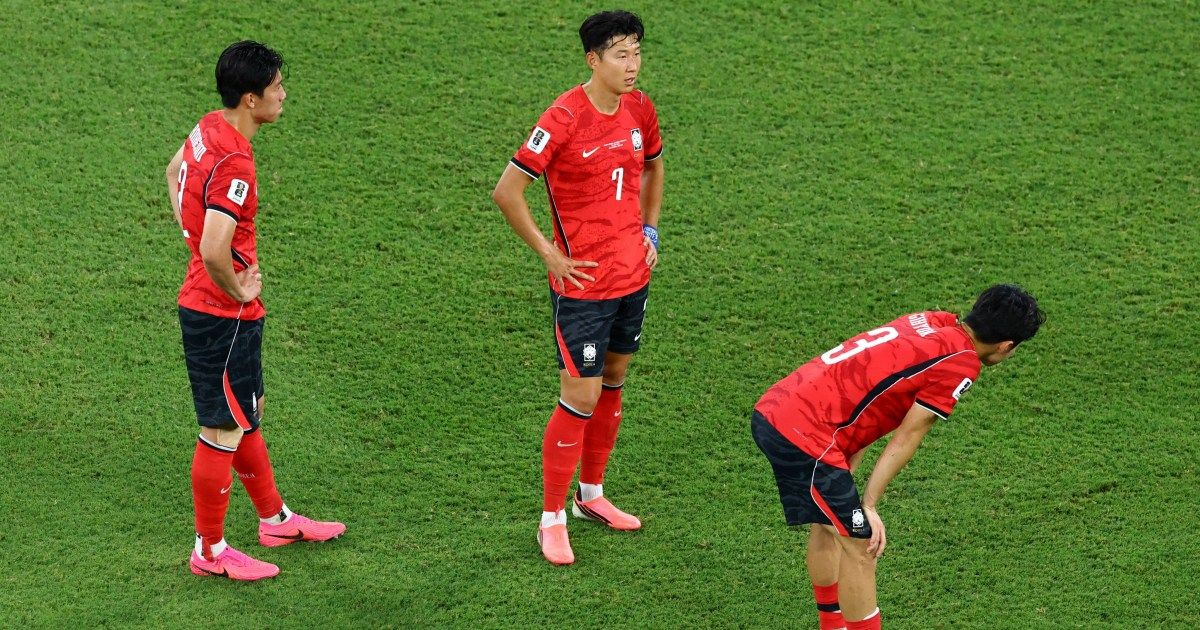
This early elimination not only saw coach Hong Myung-bo step down but also cast a looming shadow over the international future of captain Son Heung-min, whose dejection was palpable. President Lee Jae Myung himself weighed in, rebuking “incompetent people” and extending an apology to a deeply disappointed populace. Such presidential intervention underscores the simmering anger that has now reached a boiling point after years of perceived mismanagement within South Korean football.
Former captain Park Ji-sung, a revered figure, expressed a sentiment shared by many: “We may have expected this outcome years ago.” He implored for introspection, urging the nation to question why, despite decades of investment and learning, they seem to be repeating past mistakes on the global stage. This collective cry for accountability points directly at the top echelons of the Korea Football Association.
Calls for Change in South Korea World Cup Fallout
The team, initially expected to navigate Group A alongside co-hosts Mexico, South Africa, and Czechia, began with a promising 2-1 victory over the Czechs. However, consecutive 1-0 defeats to Mexico and, critically, South Africa, sealed their fate. The squad’s return home on Tuesday morning was notably devoid of fanfare, with local media reporting no planned welcome event – a stark contrast to previous World Cup returns, some of which famously saw angry fans pelt the team with candies, an insult of profound cultural significance.
Hong Myung-bo’s tenure, a tumultuous second spell since July 2024, has been a lightning rod for criticism. His reappointment, following the sacking of German World Cup winner Jurgen Klinsmann, faced intense scrutiny over transparency. The coach himself made controversial decisions, notably benching star player Son Heung-min for the crucial South Africa match, a game where a single point would have guaranteed progression. His post-match admission of struggling to comprehend what went wrong only further fueled the public’s frustration. The intricate rules governing international tournaments are set by bodies like those overseeing global football governance.
Lee Chun-soo, a member of the iconic 2002 World Cup squad, articulated the collective despair: “I felt pathetic and frustrated rooting for Uzbekistan” in the desperate hope of a favorable outcome that might have salvaged South Korea’s campaign. He declared unequivocally on his YouTube channel, “This is a message to change. Everyone should be ready to step down.”
Much of the public’s ire has been directed at KFA president Chung Mong-gyu, who, prior to the tournament, had pledged to resign, citing his “lack of virtue” amid a 13-year tenure marred by controversy. Chung, currently in his fourth term, drew significant backlash for attempting to pardon players previously banned for life due to match-fixing scandals. As the dust settles, his departure seems imminent, alongside Hong.
The most poignant question remains for captain Son. The skipper, turning 34 next month, has hinted at retiring from international football, leaving fans anxious about his future. Park Ji-sung’s concluding remarks resonate deeply: “It’s unfortunate that this kind of cycle keeps repeating. We must dream of and shape a better future, and move forward step by step so that we don’t repeat these mistakes.” The future of South Korea World Cup aspirations hangs precariously in the balance, demanding profound and immediate reform.
About the Author