
Summerland wildfire livestock ‘hero’ stopped after breaking the rules
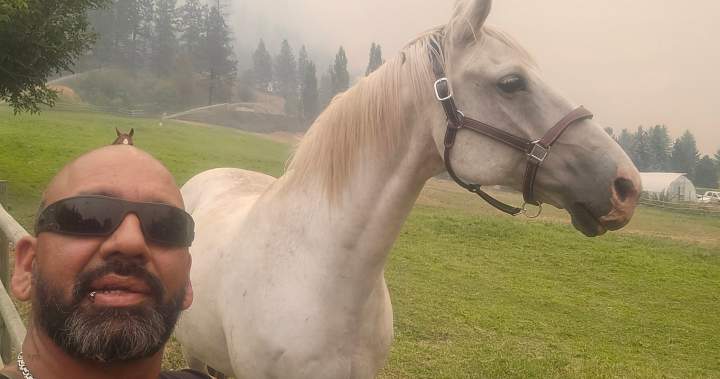
A dedicated volunteer, hailed by some as a ‘livestock hero,’ has been abruptly sidelined from the ongoing Summerland wildfire rescue efforts in British Columbia after allegedly flouting established emergency protocols. Kazimir Nowlin, who has been instrumental in evacuating animals from the perilous Summerland evacuation zone, now finds his work halted, sparking a debate between rapid, on-the-ground action and the rigid adherence to official rules.
Since last Friday, in the immediate aftermath of the massive Bald Range fire erupting, Nowlin plunged headfirst into the inferno’s periphery. “As soon as we got here, we had four horses evacuated right where the fire was,” he recounted, detailing his team’s swift actions that saw animals moved to safety in Oliver and then OK Falls. Rancher Carolyn Dobler from Stonewall Ranch expressed profound gratitude, stating, “I finally got everybody here in one place last night, and went home and had a good cry and was so grateful.” It was an undeniable testament to Nowlin’s courage and dedication.
Summerland Wildfire Rescue Efforts Under Scrutiny
However, the grassroots operation soon faced a bureaucratic roadblock. Nowlin was informed that official permits were necessary to access evacuated areas. Subsequently, he aligned himself with the Animal Lifeline Emergency Response Team (ALERT), a recognized entity aiding in disaster animal evacuation. This collaboration, however, proved short-lived. By Tuesday night, Nowlin received news that his involvement with ALERT was terminated. The reason? He reportedly violated strict organizational rules by filming animals and homes within the designated evacuation zones and then disseminating this content on social media platforms.
Daryl Meyers, a representative for ALERT, articulated the critical importance of these protocols. “If someone is sitting at home and sees it on social media, and they have a complete and utter breakdown, meltdown,” Meyers explained, underscoring the potential psychological toll on homeowners. ALERT emphasizes that such rules are not arbitrary; they are meticulously crafted to safeguard the emotional well-being of evacuees and to maintain operational credibility. “He went rogue on us,” Meyers stated bluntly, confirming that a complaint from the RCMP prompted Nowlin’s stand-down. “If we break the rules, we’ll get kicked out, and the last thing people need is for us to get kicked out.” This stark reality dictates a cautious approach, prioritizing long-term access and efficacy over individual autonomy.
Nowlin, while expressing respect for ALERT’s overall mission, found the decision disheartening. He voiced frustration over what he perceives as “too much red tape” hindering essential work. “We were doing what needed to be done, which they refuse to do,” he asserted, criticizing the leadership’s refusal to utilize a prepared sanctuary for rescued horses. He had even applied for his own permit on Saturday, a request that, as of reporting, remains unanswered. The complex intersection of urgent needs and official emergency guidelines during crises like the Summerland wildfire rescue often pits well-intentioned volunteers against established systems.
The incident surrounding the Summerland wildfire rescue highlights a perpetual tension during natural disasters: the immediate, sometimes rule-bending, heroism of individuals versus the structured, protocol-driven approach of organized emergency services. While Nowlin’s actions undeniably saved lives, the broader implications of protocol breaches in high-stakes environments remain a contentious point.