
Tens of thousands evacuated from French tourist spot and near Madrid as wildfires spread
A relentless inferno sweeps across swathes of France and Spain, leading to the urgent evacuation of tens of thousands. These ferocious European wildfires have transformed holiday havens into scenes of desperate flight, stretching emergency services to their absolute limits as a scorching summer continues its relentless grip.
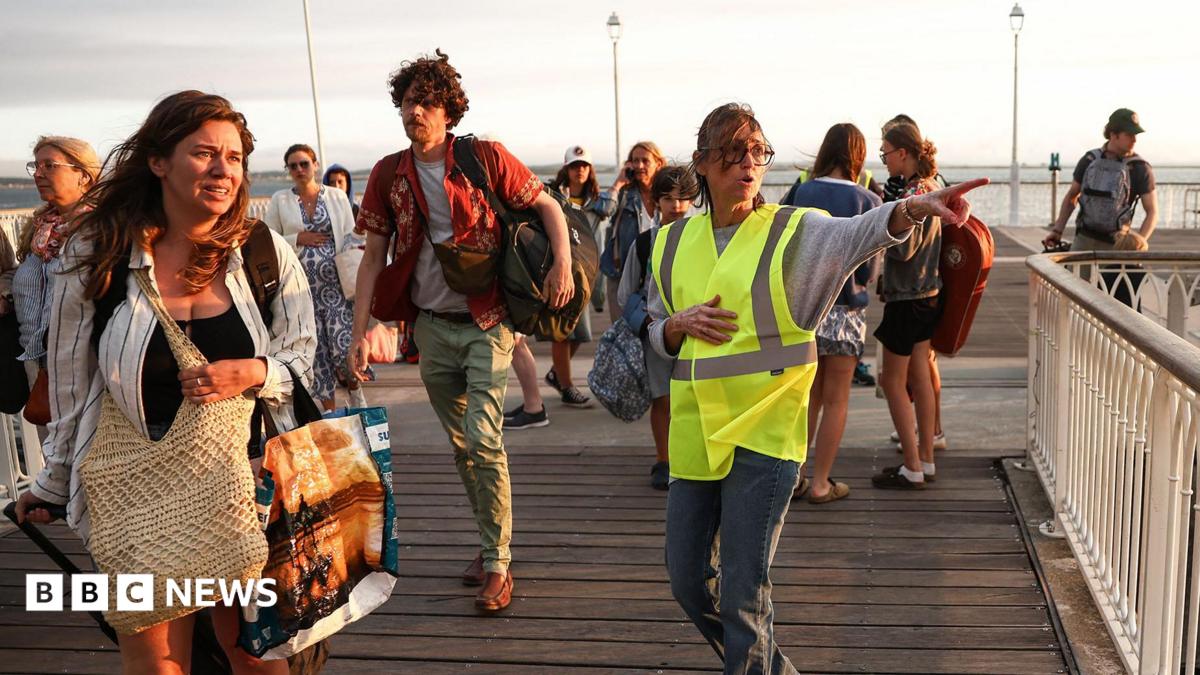
In southwestern France, the entire Cap Ferret peninsula has become a crucible of chaos. Authorities ordered a complete evacuation, with hundreds of frantic residents and tourists escaping by boat from the popular spot west of Bordeaux. Firefighters grapple with what local officials term an “XXL fire” in the Gironde region, an insatiable beast that has devoured over 10,000 hectares (nearly 25,000 acres) since Tuesday. The inferno, unlike past blazes, rages with terrifying intensity even through the dead of night, exhibiting “explosion” propagation speeds of 800 to 1,000 hectares per hour in suburban areas, a stark departure from the more predictable 2022 fires.
Meanwhile, a national emergency grips Spain as catastrophic blazes erupt near the capital, Madrid. Over 19,000 people have been forced from their homes. Isabel Díaz Ayuso, Madrid’s regional president, declared it “the worst fire in the history of the region,” citing a “perfect storm” of scorching temperatures, relentless winds, and merging fire fronts. The situation, she grimly noted, is “completely unusual and catastrophic,” with the preservation of human life paramount. Spanish Prime Minister Pedro Sánchez underscored the “dramatic situation,” urging extreme caution.
The Devastating Impact of European Wildfires
Families vacationing in areas like Petit Piquey found themselves jolted awake by harrowing emergency alerts, navigating smoke-filled roads in the eerie glow of distant flames. Olivia Jarratt, evacuated from Truc Vert campsite, described a panicked exodus, leaving behind belongings amidst blaring sirens and the struggle to comprehend French instructions. These European wildfires are not merely destroying land; they are shattering lives, livelihoods, and the very fabric of tourist economies. Franck Chaumès, president of the Gironde’s hotel trade union, called it a “tourist disaster,” underscoring the profound economic fallout alongside the human tragedy.
Experts point to a chilling reality: Europe is warming at more than twice the global average since the 1980s, creating hotter, drier summers. This escalating heat dries out vegetation, transforming landscapes into tinderboxes. While a spark is always necessary, often human-caused, these parched conditions enable fires to spread faster, burn more intensely, and become exponentially harder to control. The European Environment Agency’s climate change analysis highlights an increased forest fire risk across the continent, particularly in southern regions, where such immense blazes are fast becoming an annual terror.
From the Cap Ferret peninsula to the parched lands west of Madrid, the battle against these infernos is arduous. Brave firefighters, some tragically losing their lives, continue their relentless struggle. The European Union has deployed planes and helicopters to bolster efforts, a testament to the cross-border scale of this ongoing natural calamity. The memory of the 2022 fires pales in comparison to the present drought’s severity, signaling a dire new normal for summer in Europe, where the specter of European wildfires looms larger each year.