
The post-American Middle East is beginning to take shape
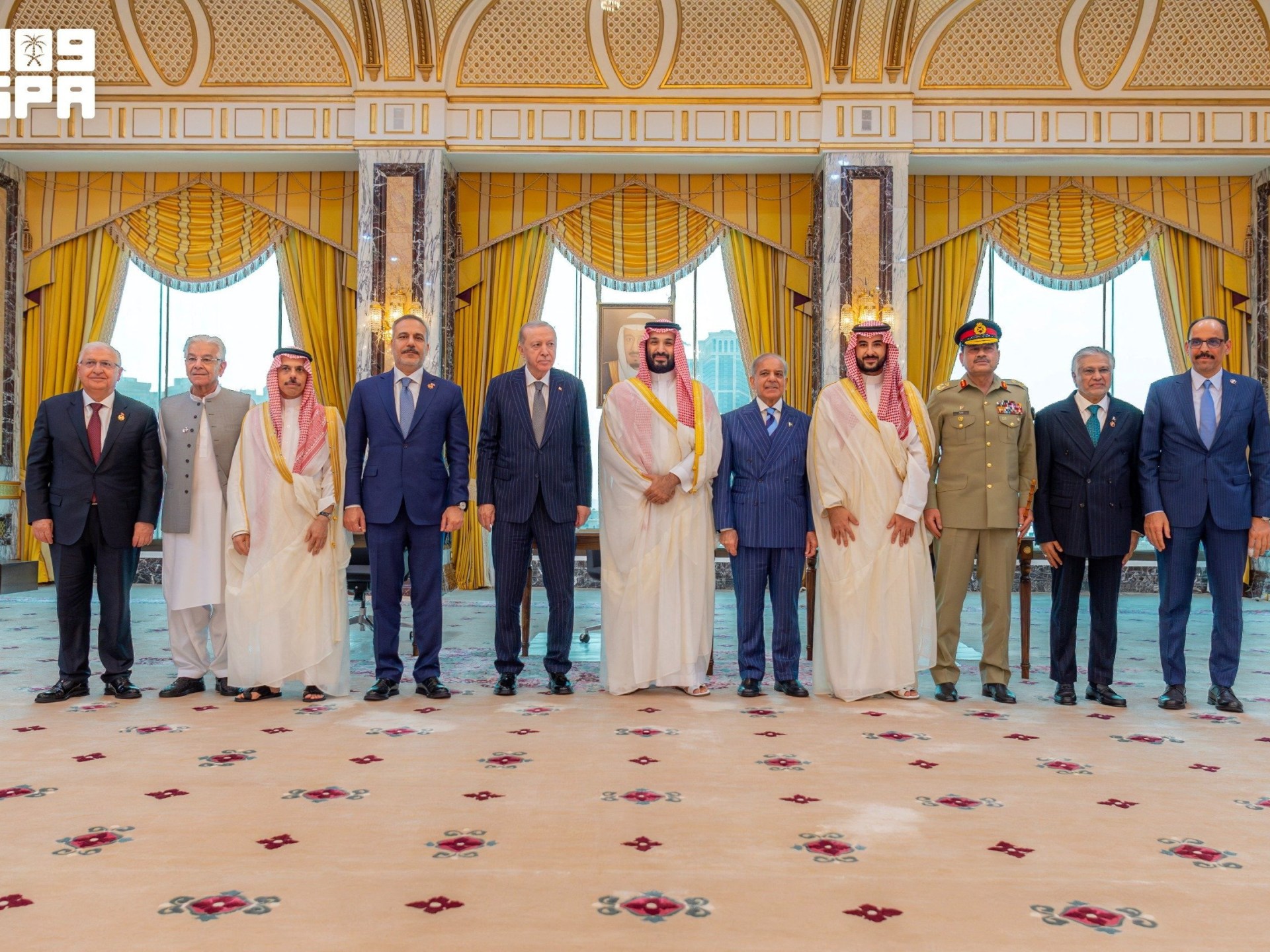
A momentous shift is unfolding across the Middle East, fundamentally altering the landscape of Middle East security. A landmark mutual defense agreement, inked just yesterday in the sacred city of Mecca, has brought together three formidable Sunni Muslim powers: Saudi Arabia, Pakistan, and Turkiye. This pivotal accord heralds the institutional birth of an entirely new regional security architecture, signalling a profound departure from decades of American strategic dominance.
For years, Riyadh’s calculated patience was often misread as passive reliance. Saudi Arabia, despite absorbing various provocations and judiciously avoiding unnecessary conflicts, never wavered in its commitment to internal transformation and development. That measured restraint was never an endorsement of an enduring American-crafted regional security paradigm.
The US-Iran war significantly accelerated a transformation already well underway. Iranian retaliatory strikes laid bare the vulnerabilities within the extensive US basing structure across the Gulf, necessitating a substantial repositioning of combat forces. Several American bases, having lost their strategic utility, are slated for eventual closure. Washington increasingly struggles to justify the sheer volume of resources required to maintain an overstretched posture from a bygone era.
Let’s be clear: America isn’t vanishing from the Middle East. Its formidable intelligence networks, sheer military might, technological prowess, and undeniable economic influence will undoubtedly persist. However, the recent conflict unequivocally exposed the inherent limits of American dominance. Regional states are now compelled to proactively orchestrate their own defense.
Forging a New Middle East Security Blueprint
The military rationale behind this groundbreaking pact is compelling. Pakistan boasts the Muslim world’s most potent army and its sole nuclear arsenal. Turkiye, with its second-most powerful military, extensive NATO experience, considerable naval capabilities, and advanced defense industry, brings substantial weight. Both nations maintain large air forces, though parts of their combat-air inventories are aging.
Saudi Arabia provides the crucial complementary capability. The Royal Saudi Air Force has ascended to become the Muslim world’s preeminent aerial power, centered on one of the planet’s largest concentrations of advanced 4.5-generation combat aircraft, alongside sophisticated intelligence, command-and-control, air-defense, and precision-strike capabilities. This evolving Middle East security framework is not merely a symbolic gesture; it’s a robust rebalancing of power.
Pakistan’s active involvement in bolstering regional security is already evident. Its forces are deployed alongside Saudi units, participating in the Kingdom’s defense. Pakistani capabilities are seamlessly integrated into Saudi-led structures, and Islamabad has issued stark warnings to Tehran against coordinated assaults on Saudi Arabia’s critical strategic infrastructure. Turkiye, therefore, is joining an already established Saudi-Pakistani strategic relationship.
The logical next phase involves the broader Gulf region. Nabeel Alhamar, a media adviser to Bahrain’s monarch, has openly advocated for a move beyond the Gulf Cooperation Council, towards a comprehensive Gulf Union where Bahrain’s future defense would become increasingly intertwined with Saudi Arabia’s. Similar arguments championing stronger collective security measures have also emerged from Kuwait and Qatar.
Other Gulf states, too, must join forces to safeguard their own security. Absent the traditional American military umbrella of the prior regional order, no single state can individually muster the requisite military mass to defend itself against a major regional power. Deeper Gulf integration, with Saudi Arabia as its anchor, represents the most rational response. While no state should be coerced, those choosing to remain outside should harbor no illusions about their comparative military weight. Strategic isolation looms for those who opt out of this principal regional defense architecture.
A wider Arab and Muslim circle can certainly develop through voluntary participation. Major states such as Egypt, Algeria, Malaysia, and Indonesia could engage where their interests align, without necessarily assuming identical defense obligations. This comprehensive approach underscores a significant shift in global foreign policy discourse.
The maritime component vividly illustrates how this multifaceted architecture can function effectively. The Saudi-led maritime coalition already encompasses Pakistan and Turkiye, alongside 11 other nations. Its critical mission: to secure the Red Sea, Bab al-Mandeb, the Strait of Hormuz, the Arabian Sea, and the Gulf coast, thereby protecting vital commercial and energy routes that traverse these waters.
Saudi Arabia’s unique geography inherently positions Riyadh as the natural anchor. It stands as the sole major regional state whose vital interests directly encompass both the Strait of Hormuz system and Bab al-Mandeb. The Kingdom physically, economically, and militarily connects the Gulf and Red Sea security theatres.
The immense economic stakes further cement this geographical imperative. Saudi Arabia, by far the largest Arab and Middle Eastern economy, remains the world’s leading crude oil exporter, OPEC’s undisputed leader, and possesses the globe’s greatest spare production capacity. Its petroleum infrastructure is not merely a national asset; its continued, uninterrupted operation is absolutely fundamental to the global economy.
For these reasons, Saudi Arabia has always been the principal regional prize. Iran cannot conceivably consolidate an order built around its power and armed non-state actors while an economically robust and increasingly militarily powerful Saudi Arabia remains at the epicenter of the Arab and Muslim worlds. Thus, diminishing Saudi power has consistently been central to Tehran’s regional strategy.
This explains why Riyadh has faced relentless Iranian-backed strikes on three distinct fronts: Iran directly to the east, Iranian-aligned Iraqi Shia militias to the northeast, and the Houthis in Yemen to the southwest. While direct Iranian attacks triggered Saudi retaliation and eventually subsided, the Iraqi and Yemeni fronts stubbornly remain active. Paradoxically, this aggression has yielded the exact opposite of its intended effect. Pressure on the Kingdom has dramatically accelerated military partnerships around it. What Iran sought to constrain Saudi power is, in fact, helping to forge an architecture uniquely capable of negating it.
Crucially, none of this implies that the emerging pact is anti-Shia. It must never become one. Iran is an undeniable regional power whose legitimate security interests must ultimately be accommodated. However, what unequivocally cannot persist is Tehran’s reliance on armed non-state organizations to exert military pressure on neighboring sovereign states.
Iran has repeatedly failed to grasp the inherent limitations of that model and, increasingly, the boundaries of its own power. Iranian-aligned militias in Iraq have already instigated confrontations with Saudi Arabia and its partners, incurring significant costs. In Yemen, the Saudi-led Joint Forces Command is actively consolidating Yemeni and allied forces for a campaign meticulously designed to degrade and ultimately neutralize Houthi military capabilities, thereby eliminating their ability to threaten Saudi territory, maritime security, and neighboring states.
Saudi-led coalition structures across these diverse theatres now encompass a staggering force of over 650,000 personnel. While not a single monolithic army, they collectively represent substantial indigenous military power, meticulously organized around a common regional security purpose. All of this, coupled with the robust maritime coalition and the recently signed pact, should send an unequivocal signal to Iran that it needs to critically reconsider its aggressive approach to regional geopolitics.
The same strictures must apply equally to Israel. Israeli adventurism will not be met with differential treatment. The strike on Qatar on September 9 served as a stark demonstration of the perilous consequences when military superiority is mistakenly conflated with an unlimited strategic license. Attacking a Gulf state is unacceptable, irrespective of who perpetrates such an act.
Israel possesses legitimate security requirements, certainly, but it absolutely does not wield an unrestricted military veto over the entire region. The burgeoning architecture will firmly establish strategic boundaries for Tehran and its proxies, as well as for Israel. A new, meticulously balanced regional power dynamic will forcefully compel restraint from both. The long-term implications for Middle East security are undeniably vast.
Skeptics may dismiss the Mecca agreement as mere symbolism. Yet, Pakistani forces are already actively involved, the Saudi-led maritime coalition is fully operational, Saudi-led military structures in Yemen are functioning effectively, and the Gulf states are actively debating deeper integration. This agreement simply formalizes, politically, an architecture that is already very much under construction.
This, indeed, marks the dawn of the post-American Middle East – not a region devoid of the United States, but one profoundly no longer dependent upon American power to orchestrate its own security. Participation remains a sovereign choice, but the immutable forces of geography and power do not. And at the indisputable center of gravity of this powerful, new order now rapidly emerging is Saudi Arabia.