
Tunisians rally amid economic crisis and political arrests
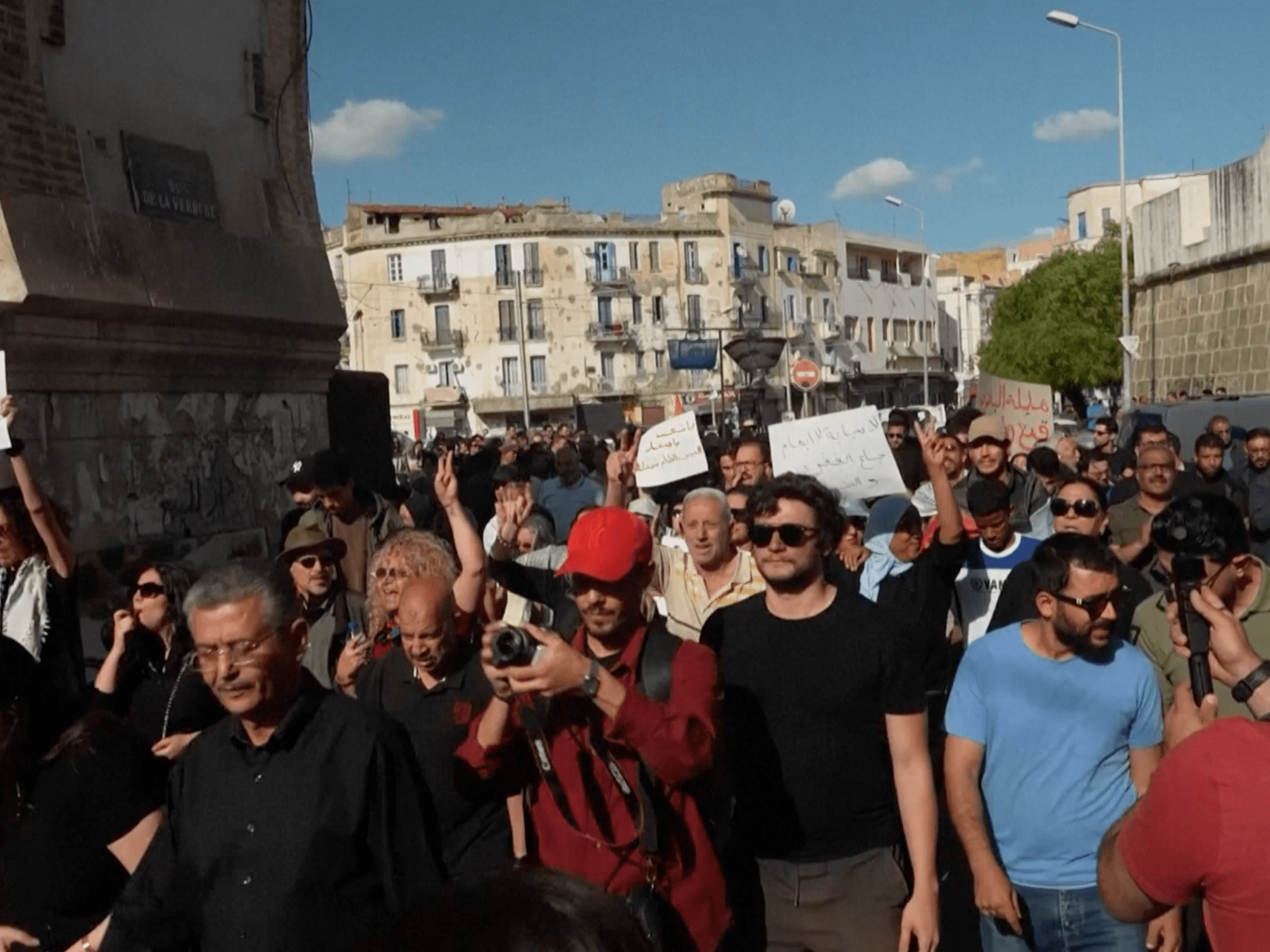
Massive Tunisian protests recently swept through the capital city, Tunis, as hundreds of exasperated citizens took to the streets. Their collective outrage stemmed from a rapidly deteriorating economic crisis and a broadening crackdown on dissent, painting a grim picture for the North African nation.
The demonstrations highlight profound dissatisfaction with the current trajectory of the country, where many accuse President Kais Saied of systematically dismantling the democratic gains painstakingly achieved following the 2011 revolution. These recent rallies underscore the deep fissures within Tunisian society, as economic hardship intertwines with mounting concerns over civil liberties.
The Echo of Discontent: Understanding Tunisian Protests
The air in central Tunis crackled with tension as protestors marched, their chants echoing the frustrations of a populace grappling with skyrocketing inflation, pervasive unemployment, and a general sense of hopelessness. It wasn’t merely a clamor for better economic conditions; it was a potent rejection of what many perceive as an authoritarian drift under President Saied’s leadership. Critics argue that the president has been steadily consolidating power, often at the expense of independent institutions and political opponents.
Indeed, a wave of political arrests has further fueled the unrest, targeting prominent figures across the political spectrum. This escalating suppression of opposition voices has sparked alarm both domestically and internationally. Observers point to these actions as direct challenges to the very foundations of Tunisia’s post-revolution democratic system.
The nation’s complex economic situation, compounded by global challenges, has intensified the pressure on ordinary Tunisians. As the cost of living continues to soar, the calls for accountability and genuine reform grow louder. These Tunisian protests are more than just isolated incidents; they are a powerful barometer of public sentiment, signaling a deep-seated demand for change and a return to the principles of democratic governance that once offered so much hope. For a deeper dive into the country’s economic struggles, you can explore reports from organizations like the World Bank.
As the political landscape remains fraught with uncertainty, the international community watches closely. The resilience of the Tunisian people, demonstrated through these persistent Tunisian protests, continues to shape the narrative of a nation at a critical crossroads, fighting to preserve the ideals it once championed.