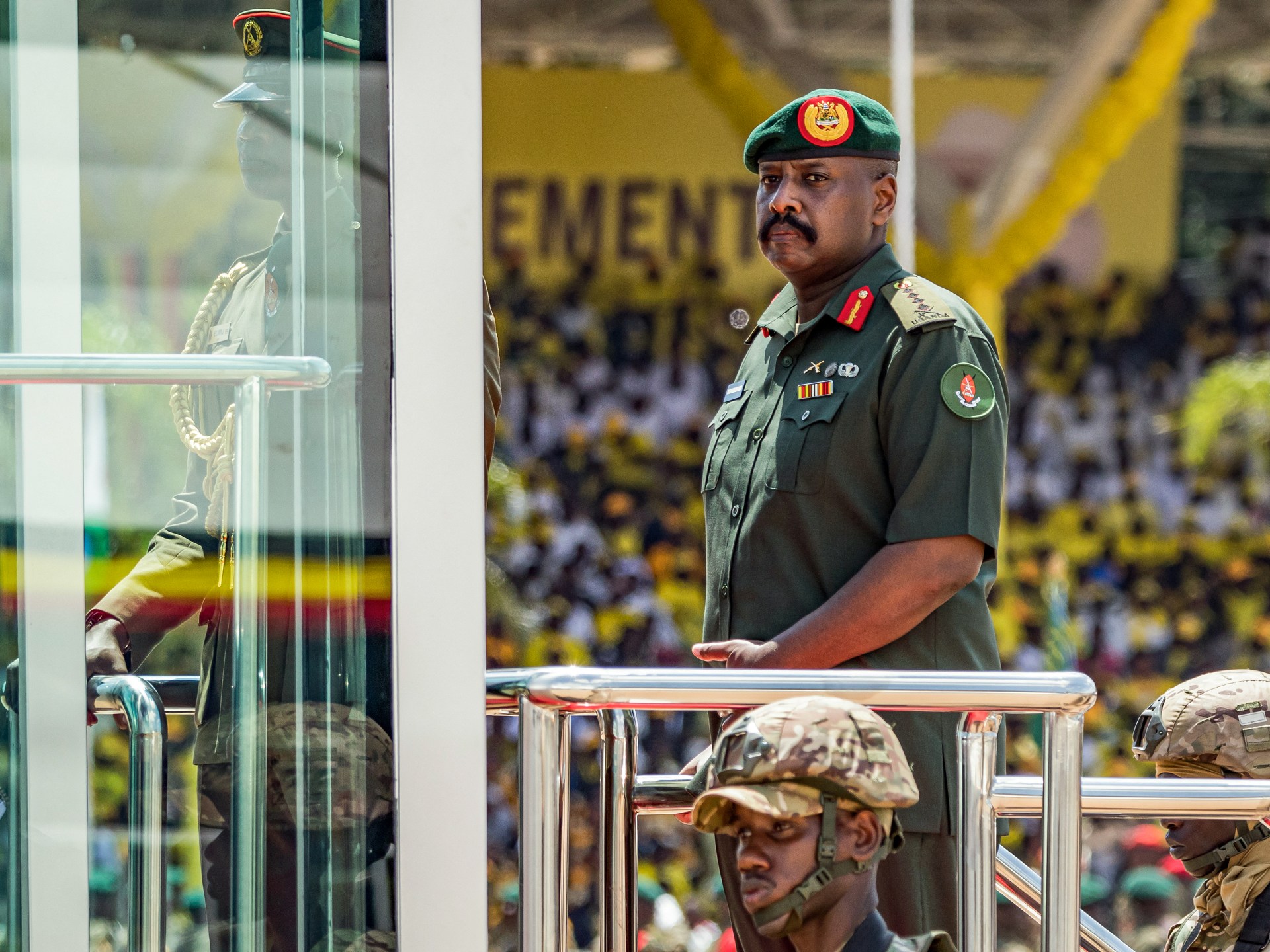
Uganda’s media landscape was rocked this Sunday by an unprecedented Uganda media shutdown, as the nation’s Chief of Defence Forces, Muhoozi Kainerugaba, declared the closure of two of the country’s most prominent independent news outlets. This drastic move sends shivers down the spine of press freedom advocates globally.
Kainerugaba, the formidable son of long-serving President Yoweri Museveni, made the startling announcement via social media platform X, stating emphatically, “In Uganda, I do not believe in a free press!” He further decreed that all “bad stories about Uganda” would henceforth require clearance from his office, signaling a chilling new era for journalism in the East African nation.
Military Enforces Uganda Media Shutdown
Swiftly following the directive, armed security personnel descended upon the headquarters of Nation Media Group (NMG) Uganda in Kampala, owners of the Daily Monitor, the largest independent daily newspaper, and NTV Uganda, a leading private broadcaster. Reports from staff on the ground indicated a complete lockdown, with no one permitted to enter or exit the premises. NTV Uganda, alongside Spark TV and other NMG-owned channels, abruptly went off-air across the country. This coordinated Uganda media shutdown has effectively silenced critical voices overnight.
Kainerugaba asserted his authority to shutter any media outlet, a power he claims was bestowed upon him by his father in 2017. This latest move echoes a troubling history; the Daily Monitor endured a 10-day closure in 2013, while NTV Uganda was forced off air shortly after its 2007 launch due to governmental disapproval of its reporting. Concerns about freedom of expression have long plagued the country, drawing criticism from global press freedom organizations.
As the international community watches closely, Uganda’s National Association of Broadcasters has voiced profound concern, monitoring the rapidly evolving situation. They highlighted the severe impact such actions could have on the nation’s media ecosystem and the fundamental constitutional rights of its citizens. The Uganda media shutdown has cast a long shadow over the nation’s commitment to journalistic integrity, leaving many to question the future of independent reporting. The Uganda People’s Defence Forces (UPDF), Uganda Police Force, and Uganda Communications Commission (UCC) have yet to issue official statements regarding the operation that has left the country’s independent media in a precarious position.
About the Author