
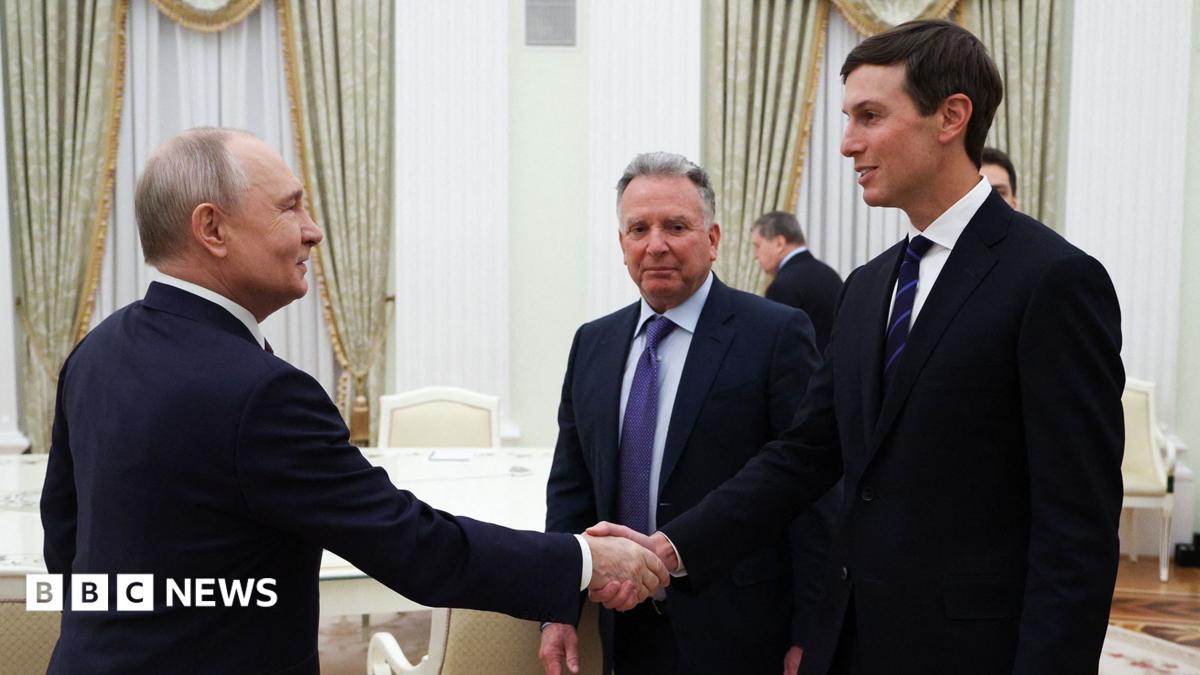
Ukraine says military Starlink disrupted again as US envoys meet Putin in Moscow
Introduction & Key Takeaways
As the ongoing conflict approaches a grim five-year milestone, the critical reliance on space-based technology has once again become a flashpoint for geopolitical tension. Ukraine recently reported systematic restrictions to Starlink military-grade services, a development that complicates Kyiv’s ability to defend against Russian drone incursions. This technological instability coincides with high-stakes diplomacy in Moscow, where US envoys Jared Kushner and Steve Witkoff have been engaged in discussions regarding the future of European security. These events underscore the dangerous intersection of private corporate control over critical defense infrastructure and the volatile nature of international peace negotiations.
- Starshield service interruptions are actively hampering Ukrainian efforts to intercept Russian jet-powered drones.
- US diplomatic envoys have entered direct, in-person negotiations with Vladimir Putin in Moscow.
- The Russian administration continues to demand the total withdrawal of foreign military influence while attempting to frame European participation as an obstacle to peace.
- The lack of transparency regarding Starlink’s connectivity status raises urgent questions about the role of private actors in sovereign military conflicts.
Background & Context: The Digital Front Line
The role of satellite technology in modern warfare has been transformative, and Starshield, the military-specific arm of SpaceX’s satellite network, has become the backbone of Ukrainian communication and targeting. When these services face interference, the immediate impact on the battlefield is severe. As reported in recent updates on the humanitarian crisis facing Ukraine, the infrastructure of the country is under relentless pressure, making the loss of precision defense capabilities particularly devastating for civilian protection.
Root Cause & Deep Dive Analysis: Why Starlink Matters
The periodic nature of these Starlink disruptions suggests either technical vulnerabilities or deliberate policy shifts within the private sector that translate into geopolitical consequences. President Volodymyr Zelensky has expressed growing frustration with the ambiguity surrounding these outages. If American-led decisions are effectively dictating the parameters of Ukrainian defensive territory, it sets a precarious precedent for the future of international security, where commercial entities essentially function as geopolitical arbiters.
Furthermore, the visit of US envoys to Moscow highlights a shift in diplomatic channels. By engaging directly with the Kremlin, the envoys are attempting to navigate a landscape where Russia aims to bypass established European alliances. This strategy seeks to force a choice upon the continent: align with a US-led security framework or risk further isolation. The diplomatic history of the region shows that direct engagement without European inclusion rarely produces a sustainable or lasting framework for peace.
Strategic Implications & Future Impact
The strategic intent behind Russia’s current position is to break the unity of Western support. By pushing for a ceasefire in specific contested zones, like Kostyantynivka, Moscow is looking for tactical pauses that allow for territorial consolidation. Meanwhile, the Starlink disruptions provide Russia with a significant tactical advantage, effectively blinding the Ukrainian defense to incoming aerial threats. If the US administration does not solidify its stance on both diplomatic transparency and the integrity of military tech supplies, it risks alienating European allies who feel increasingly sidelined by these bilateral negotiations.
The push for Europe to speak with a single voice in these talks is being met with calculated resistance from Moscow. The Kremlin’s narrative remains that Europe is a belligerent party rather than a negotiator, a framing designed to undermine the continental security architecture that has defined European history since the end of the Cold War.
Conclusion & What to Watch Next
The coming weeks will be critical. Observers should monitor whether the Starshield disruptions stabilize, as this will serve as a bellwether for the level of coordination between US political interests and their private corporate partners. Additionally, as the envoys move to meet with European representatives, the question of whether a unified European delegation can exert influence over the peace process will be the primary factor in determining if these talks lead to a meaningful de-escalation or simply a reconfiguration of Russian control.