
Why Toronto’s municipal election turnout beat the provincial average
Introduction & Key Takeaways
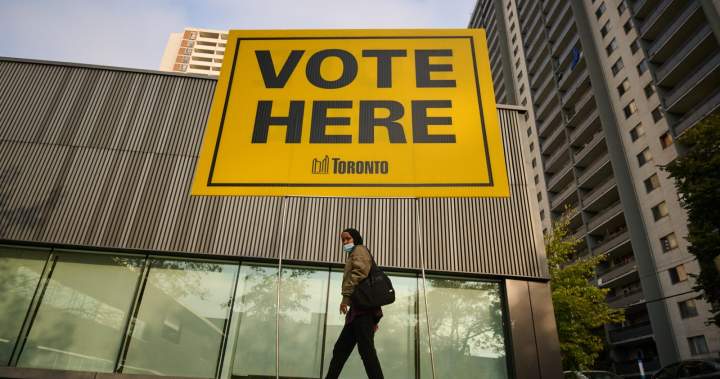
The recent municipal election in Toronto has ignited a significant discussion regarding civic engagement. With a turnout of 46 percent, the city successfully eclipsed the provincial average of 36 percent, marking its highest participation rate in over a decade. This phenomenon of Toronto voter turnout serves as a vital case study for urban governance. Key drivers included a highly competitive mayoral race, a dense information ecosystem, and a robust political culture that persists despite broader trends of apathy.
Background & Context (What Just Happened?)
During the October 2026 municipal election, nearly one million residents cast their ballots. The central contest between Olivia Chow and Brad Bradford created a sense of urgency among the electorate. Political experts note that while some municipalities struggled with low engagement, Toronto stood out as an anomaly. This surge in participation is not merely a statistical curiosity; it represents a tangible shift in how urban residents interact with their local government. For a broader look at how shifting political landscapes affect global governance, one might consider how international bodies like the UN closes Somalia mission, illustrating that political engagement is a dynamic, ever-changing process.
Root Cause & Deep Dive Analysis (Why Did This Happen?)
The primary catalyst for the elevated Toronto voter turnout was the perceived competitiveness of the race. When voters believe their individual choices can shift the outcome, the motivation to participate increases dramatically. Unlike elections where an incumbent is expected to win in a landslide, the neck-and-neck polls created a high-stakes environment. Experts like Cristine de Clercy of Trent University have emphasized that these conditions act as a force multiplier for campaign volunteerism and voter motivation.
Beyond the candidates, the city benefits from a unique socioeconomic structure. Central cities, by their nature, often foster stronger political cultures than suburban counterparts. Mississauga, despite seeing a surge, still trailed Toronto because, according to Myer Siemiatycki of Toronto Metropolitan University, Toronto maintains a deeper-rooted history of political participation. Furthermore, the availability of diverse media outlets in the city ensures that issues like transit gridlock, nutrition programs, and bike lanes remain at the forefront of public consciousness.
Strategic Implications & Future Impact (What Does This Mean Globally?)
The disparity between urban centers and smaller communities highlights a growing information gap in the modern age. As traditional media platforms contract in smaller municipalities, the lack of robust information ecosystems contributes to lower engagement. This creates a strategic challenge for democratic health. When citizens are disconnected from the discourse, their ability to hold local officials accountable diminishes. This trend is not confined to Canada; similar challenges are documented in various international democratic systems where localized communication infrastructure is declining.
Furthermore, the organizational capacity of campaigns, specifically the volunteer networks, remains a critical strategic component. The ability to mobilize, canvass, and remind citizens of their civic duty cannot be replaced by digital advertising alone. As Toronto moves forward, the challenge will be to sustain this Toronto voter turnout in future cycles, especially when races may not feature such a dramatic, high-profile clash.
Conclusion & What to Watch Next
While 46 percent turnout is a victory for local democracy, it remains objectively low compared to historical benchmarks or participation in other sectors of public life. Policy makers and community organizers must now look at ways to institutionalize the engagement seen during this election. We should watch for future initiatives aimed at closing the information gap in suburban areas, as well as potential changes in how election dates and campaign periods are structured to maintain momentum. Sustained democratic health relies on the realization that municipal issues are not peripheral, but central to the daily lives of all citizens.