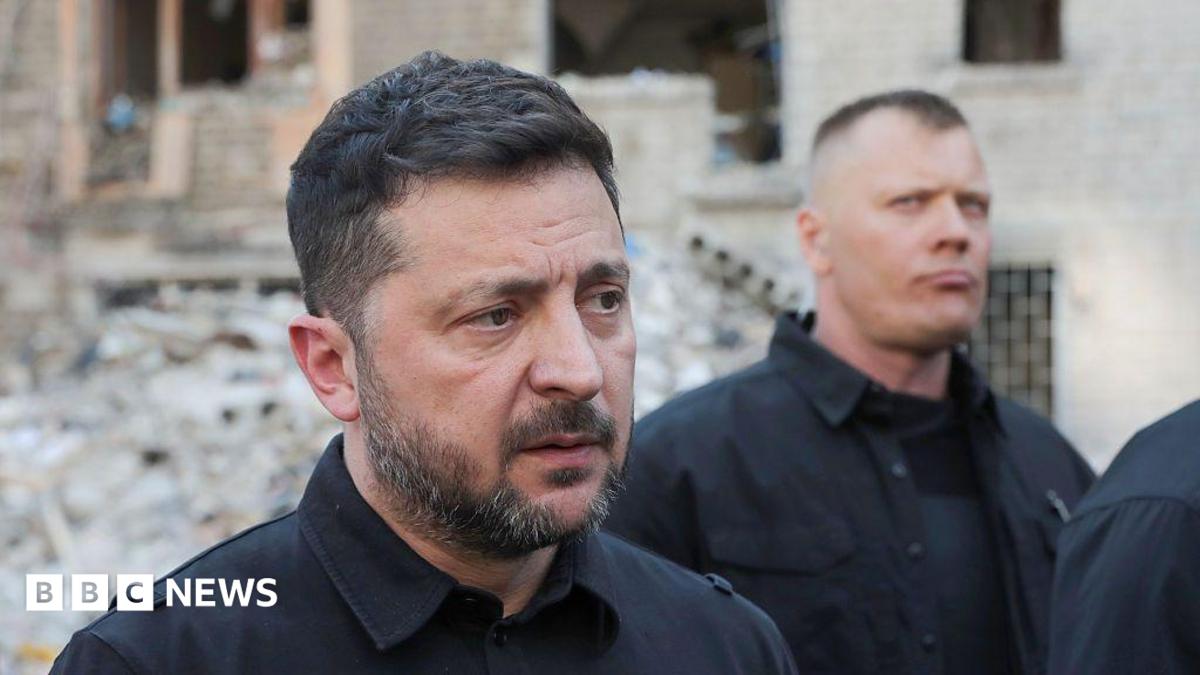
President Volodymyr Zelensky is poised to make a fervent appeal at the upcoming NATO summit in Turkey, urging Kyiv’s allies to expedite the delivery of critical air defence systems. This desperate plea arrives on the heels of intensified Russian missile barrages that have repeatedly hammered the Ukrainian capital, Kyiv, claiming over 50 civilian lives in less than a week. The tragic reality of apartment blocks reduced to rubble underscores the dire necessity for enhanced protective capabilities against the relentless aerial assaults.
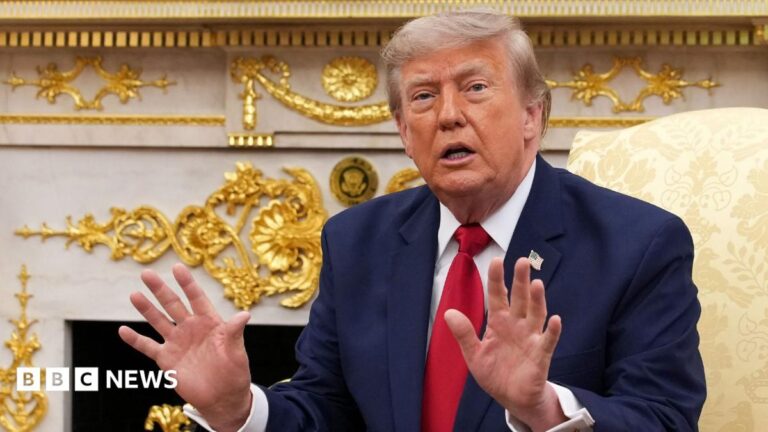
The Ankara summit presents a pivotal moment, not only for securing vital military aid but also for Zelensky to engage in a crucial dialogue with Donald Trump. Here, the Ukrainian leader intends to forcefully argue that Russia’s “brutal” and indiscriminate attacks are a profound display of weakness, rather than strength. His objective remains unwavering: to galvanize international pressure on Vladimir Putin, compelling him toward “dignified” peace negotiations.
Coinciding with these escalating conventional attacks, Ukraine has dramatically ramped up its own long-range drone operations deep within Russian territory. These targeted strikes have crippled oil refineries and military installations, precipitating significant fuel shortages and widespread power disruptions across Russia. Moscow’s mayor, Sergei Sobyanin, recently confirmed that anti-air defenses intercepted “most” of 430 Ukrainian drones launched overnight towards the capital, though the full extent of the damage remains shrouded in ambiguity. Social media platforms, meanwhile, are awash with images of frustrated Russian citizens queuing for hours, even resorting to scuffles, for meager rations of petrol.
The Critical Need for Air Defence Systems
On the eve of the two-day NATO gathering, Zelensky expressed a profound hope that the Ankara discussions would prove anything but “empty.” NATO Secretary General Mark Rutte echoed this sentiment, imploring member states to “pull their weight” and ensure Ukraine receives the necessary resources to “defend its sovereignty.” He acknowledged Kyiv’s strategic shift on the battlefield, particularly referencing efforts to stall Russian ground troops in the east. This perceived “window of opportunity,” however, is rapidly narrowing as Russia intensifies its use of ballistic missiles, posing an existential threat to Ukrainian cities.
While Ukraine’s air force meticulously tracks incoming Russian munitions, Monday’s tally revealed a grim reality: virtually all drones were successfully intercepted, but not a single ballistic missile was stopped. These incredibly fast projectiles, hurtling at thousands of kilometers per hour, are exceptionally difficult to counter. Ukraine’s current arsenal of US-made Patriot air defence systems simply isn’t sufficient to ward off such advanced threats.
“It is simply absurd that, in today’s world, production has still not been scaled up to the level actually required to protect people from ballistic terror,” Zelensky lamented in a video address. He has persistently urged European allies to release their own stockpiles of Patriot missiles, asserting that these invaluable assets serve no purpose gathering dust in storage while Ukrainian civilians perish. Russia’s reliance on ballistic weapons, he argues, demands that those committed to peace reciprocate with robust protection against them. This forms a cornerstone of his case in Ankara.
The global scarcity of Patriot systems poses a significant challenge, making it uncertain how many units would be truly enough should Russia further escalate its ballistic campaign. Consequently, Zelensky has also championed the notion of Ukraine developing its own equivalent defensive capabilities with crucial NATO assistance. These intensified Russian strikes, however, undeniably suggest that Ukraine’s deep-strike operations are, in fact, getting under the Kremlin’s skin. After years of Moscow systematically targeting Ukrainian civilian infrastructure, including power stations in the dead of winter, Russia now paradoxically condemns Kyiv’s drone attacks on its own oil refineries as “terrorism.”
Zelensky characterizes these actions as an “influence campaign,” eager to share granular details with his NATO allies. The ultimate aim is to pressure Putin into peace talks on terms acceptable to Kyiv – terms that emphatically do not include the surrender of the entire eastern Donbas region, a demand Moscow stubbornly maintains. The campaign’s targets have been strategically high-profile: an oil terminal in St. Petersburg ahead of Putin’s economic forum, a refinery in Moscow itself that sparked viral explosion videos, and a confirmed hit on an oil refinery in Omsk, Siberia – a staggering 2,500 km from Ukraine’s border. The Omsk strike, in particular, showcases the stretched nature of Russia’s own air defenses, given the drone’s undetected flight over such a vast distance.
Ukraine’s “influence” efforts extend relentlessly to Crimea, the peninsula annexed by Putin in 2014 and a region of immense personal significance to him. Daily Ukrainian drone attacks on military logistics, oil refineries, and power plants there have plunged the area into power outages, fuel and food shortages, and an officially declared state of emergency. A local resident, speaking to the BBC, described the situation as “catastrophic,” evoking grim comparisons to the turbulent 1990s following the collapse of the USSR. Putin, who prides himself on “saving” Russia from that chaos, now sees his all-out war bring fuel rationing and the tangible threat of drone strikes even to Moscow itself.
Zelensky will therefore convey a powerful message to NATO, and attempt to sway Trump: Ukraine has definitively shifted the war’s momentum. With continued assistance, its campaign of pressure can, indeed, compel Russia to engage in genuine peace negotiations. Despite a recent 90-minute phone call between Trump and Putin, allowing the Russian leader to present his narrative first, Trump has appeared increasingly impressed by Ukraine’s resolve. Above all, Kyiv yearns for a swift resolution to this conflict – achieved through either “strength or diplomacy” – before the brutal onset of another punishing winter. But to stand any chance, Zelensky insists, Ukraine desperately requires more interceptor missiles to safeguard its cherished cities and their resilient populations. This truly is about securing potent international support.
About the Author