
Germany says US troop withdrawal ‘foreseeable’ as Trump warns of more ‘cuts’
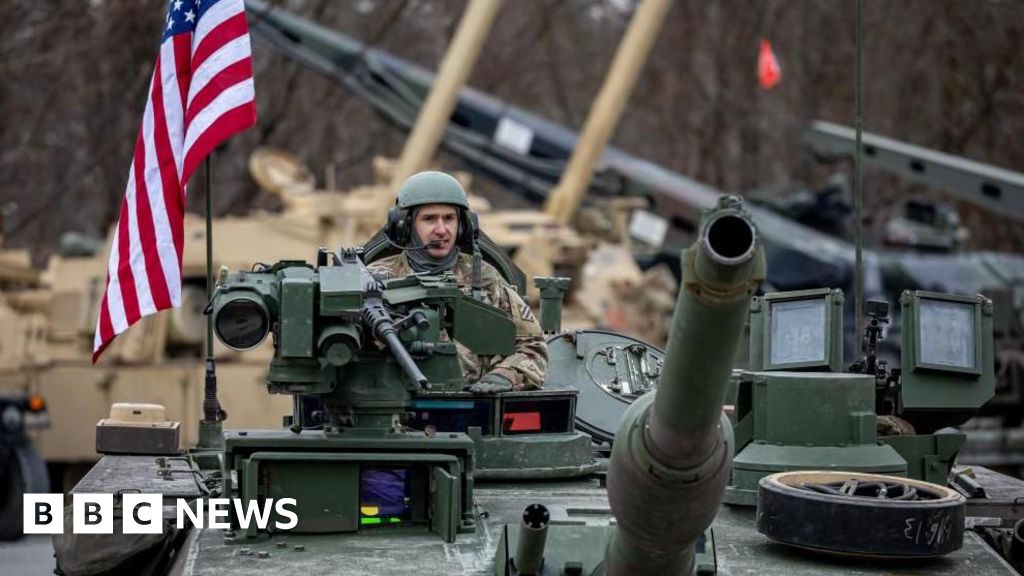
A seismic shift is underway in transatlantic relations. Germany’s defense chief, Boris Pistorius, has candidly described Washington’s impending decision to enact a significant US troop withdrawal from German soil as “foreseeable.” This comes amidst mounting alarm across the NATO military alliance, which now scrambles for clarification from the US.
The announcement follows a period of escalating rhetoric, with former President Donald Trump — a vocal critic of German defense spending — threatening cuts “a lot further than 5,000” soldiers. This dramatic development has sent ripples of apprehension throughout Europe, questioning the very fabric of collective security.
The Rationale Behind the US Troop Withdrawal
Washington’s move isn’t an isolated incident. It’s part of a broader re-evaluation of US global military posture, spurred by Trump’s persistent criticisms of European allies. The former President had earlier slammed German Chancellor Friedrich Merz, alleging the US suffered “humiliation” by Iranian negotiators in the ongoing conflict. This particular spat appears to have been the immediate trigger for the Pentagon’s withdrawal directive, which Defense Secretary Pete Hegseth reportedly issued. Officials anticipate the process will unfold over the next six to twelve months.
Currently, over 36,000 active-duty US troops are stationed in Germany, representing the largest American military presence across Europe. This dwarfs deployments in nations like Italy (around 12,000) and the UK (approximately 10,000). The current administration’s strategy, initiated previously by Trump, seeks to recalibrate US military commitment away from Europe and towards the Indo-Pacific region, evident in past reductions in Romania.
Pistorius, speaking to DPA news agency, underscored the critical importance of American soldiers in Europe, declaring their presence mutually beneficial. “The presence of American soldiers in Europe, and particularly in Germany, is in our interest and in the interest of the US,” he asserted. Meanwhile, NATO spokeswoman Allison Hart confirmed the alliance is “working with the US to understand the details of their decision.”
NATO’s Mounting Anxieties and European Resolve
The specter of further US troop withdrawal, potentially extending to Italy and Spain as Trump has hinted, casts a long shadow over the 32-member NATO alliance. Many fear this fracturing could severely weaken the organization’s deterrent capabilities against external threats.
Polish Prime Minister Donald Tusk voiced profound concern, warning, “The greatest threat to the transatlantic community are not its external enemies, but the ongoing disintegration of our alliance.” He implored all members to “do what it takes to reverse this disastrous trend.” Echoing these sentiments, two senior Republican lawmakers, Senator Roger Wicker and Representative Mike Rogers, expressed “very concerned” about the withdrawal, advocating for a strong deterrent presence in Europe as being in US interests.
In a tangible demonstration of increased European self-reliance, Germany has significantly boosted its defense spending. Berlin, once chided by Trump for failing to meet NATO’s 2% GDP target, now projects an expenditure of €105.8 billion (£91 billion) on defense by 2027. This dramatic increase, reaching 3.1% of GDP when factoring in aid to Ukraine, clearly illustrates Berlin’s commitment to taking greater responsibility for its own security. Allison Hart, of NATO, highlighted this progress, noting that such moves “underscore the need for Europe to continue to invest more in defence and take on a greater share of the responsibility for our shared security.”
The backdrop to this escalating tension is a recent public disagreement between Trump and Merz. Chancellor Merz, addressing university students, criticized American strategy regarding Iran, suggesting they “clearly have no strategy” and were being “humiliated.” Trump swiftly retaliated on Truth Social, dismissing Merz’s understanding of the Iranian nuclear issue. This sharp exchange appears to have directly preceded the military drawdown directive.
As the international community watches this evolving narrative, questions about the future of transatlantic security cooperation loom large. For those seeking to deepen their understanding of the foundational structure of this vital alliance, details can be found here.
Adding to the regional instability, Trump has also criticized allies for their reluctance to participate in reopening the Strait of Hormuz, a crucial oil shipping route now significantly restricted by Iran in response to US and Israeli actions in the Gulf.